Showing posts with label Barack Obama. Show all posts

Friday, October 9, 2009

How Obama Can Earn His Nobel Peace Prize

BROOKLYN, New York -- President Barack Obama was awarded the Nobel Peace Prize yesterday. It is not entirely clear why he deserved this award. The Nobel Committee seemed to award him the prize for his tone and aspirations rather than any concrete accomplishments.

"It was unavoidable to give the prize to the man who has improved the international climate and emphasized negotiations and dialogue," Thorbjoern Jagland, the chair of the Nobel Committee, said, as quoted in GlobalPost. In effect, he was given the award for not being George W. Bush.

George Packer made a good case for refusing the award, noting on his New Yorker blog, "The prize should be awarded for achievement, not aspiration, and so far Obama’s main achievement has been getting elected President, which is in a different category."

I wholeheartedly agree. He was already elected President of the United States - how much more validation does he need? Will this prize suddenly cause the North Koreans to surrender their nuclear weapons, the Russians to abandon their claimed sphere of influence, or the Palestinians and Israelis to get serious about peace? Certainly not. While it may affirm the Europeans' love affair with Obama, it does little to improve his position or prestige when he gets to the negotiating table.

I will give credit to Obama for staking out one particularly bold position: to rid the world of nuclear weapons. As he has stated, this goal will probably not be achieved either during his presidency or his lifetime. This marks another distinct departure from the policies of the Bush administration, as well as nearly every other administration before it.

George W. Bush did have some accomplishments in the field of nuclear non-proliferation. The nuclear smuggling ring led by Pakistan's A.Q. Khan was broken, and Libya was persuaded to abandon its weapons of mass destruction. But Bush's marks were quite poor overall. The nuclear club has expanded, not shrunk. North Korea is now in possession of the bomb, and Iran continues to make strides toward it. In addition to withdrawing from the Anti-Ballistic Missile Treaty and continuing America's refusal to join the Nuclear Test Ban Treaty (in force since 1996), Bush also supported the development and use of tactical nuclear weapons, specifically to deter the nuclear efforts of Iran.

No past president has ever made it his stated goal to make the world free of nuclear weapons. Earlier this year, Philip Taubman described in the New York Times why this goal is so ambitious and daunting, offering this analogy: "To fully grasp the political and military implications, consider what would have been involved had the great powers of the 19th century decided to abolish gunpowder." Perhaps Obama is acting more like Superman in Superman IV: The Quest for Peace than a human president. He can't gather up all the world's fissile material and throw it into the sun, but his goal is admirable, and should he go even part of the way to achieving it, his Nobel Prize will be well deserved.


To mark the president's award, I would like to share with you the 1939 cartoon Peace on Earth. This MGM short directed by Hugh Harman has been incorrectly credited with a Nobel Peace Prize nomination; nonetheless, it offers a noble aspiration of peace, and that is worthy of something, if not the Prize itself.


Finally, if you think that nuclear weapons are not scary things, or if you don't believe that just two decades ago, the world teetered on the brink of utter destruction, this recent news about the Soviet doomsday device - Dr. Strangelove for real - should terrify you. Stanley Kubrick's masterpiece is certainly a powerful piece of anti-nuclear cinema, but if you would like to be scared shitless of atomic warfare, I suggest that you watch the 1964 film Fail-Safe, starring Henry Fonda.

Thursday, July 23, 2009

Bush and Nixon: The Men Who Would Be Baseball Commissioner

BOULDER, Colorado -- President Barack Obama recently enjoyed the privilege of throwing out the ceremonial first pitch at the Major League All-Star Game in St. Louis. The tradition is nearly as old as the game itself. The All-Star Game started in 1933, and every president since Franklin Roosevelt, who first pitched at the game in 1937 at Washington's Griffith Stadium, has made the ceremonial delivery.

This is just one of many connections between the presidency and the national pastime. While attending the Louisville Slugger Museum and Factory earlier this summer, I watched a documentary chronicling this relationship. Lincoln was lampooned in a political cartoon from 1860 for his love of the game its in infancy; ambidextrous Harry Truman and Gerald Ford each threw Opening Day first pitches with their left and right arms; and Ronald Reagan, when working as a Cubs radio announcer for a station in rural Illinois, would make up colorful descriptions of the action on the field for listeners, as all he had to rely on was a play-by-play ticker tape.


Two men who achieved the highest office in the land also nearly held the highest office in baseball. The dearly departed George W. Bush (well, he's just moved to Dallas) and the irrepressible racist Richard Nixon were both considered for the job of commissioner of Major League Baseball, though both chose instead to run for president.

How different would America - and the game of baseball - be today had both of these men become commissioner? They were arguably the two worst presidents ever to be elected to two terms, yet baseball could have kept them away from the presidency. The ball club owners could have done the nation a favor by keeping these men out of public office. Nixon's presidential ambitions were clear when he declined the offer in 1965, though Bush's were not when he was considered for the job 1992. In Nixon's case, the owners could have been acting much like when a country accepts to host some deposed Third World strongman to prevent them from causing any more trouble, like Saudi Arabia did with Idi Amin, or Boston University continues to do with many former African dictators.

(Above: Nixon making a proposal to add the expansion Saigon Senators to the National League)

Nixon did cause at least one owner a headache when he became president. In 1973, Commissioner Bowie Kuhn fined and suspended newly-minted Yankees owner George Steinbrenner for making illegal contributions to Nixon's re-election campaign, something Big Stein claimed he was forced to do under pressure from Nixon campaign officials.

As commissioner, what challenges would Nixon have faced in 1965? That era saw some big changes in baseball, including expansion into Canada, the playoff system, the players union, free agency, and the growth of night games. As the man who presided over much of this time period, Kuhn was a dynamic yet controversial commissioner, and he was hardly on the cutting edge of all of these changes, especially the new labor relationships that were taking shape between owners and players. Nixon was no friend to unions as president, but during the 1960's he had been considered to head up the nascent Baseball Players Association, and long after he had left the White House, he did successfully arbitrate a dispute between MLB and the umpires in 1986 to avert a strike. With this solid baseball resume, I think it is unlikely that Nixon would have left his office in disgrace aboard a chopper flying out of Dodger Stadium, waving the "V" for Victory.

Unlike Nixon, Bush had few political ambitions, at least that anyone was aware of, in 1992, and even when he assumed the presidency just eight years later, few foresaw that his campaign promises of modest foreign policy, limited federal spending, and education reform would turn into ... well, we all know what happened. Bush also has a baseball resume, but the crises that faced the game during his potential tenure were far more serious. While still the managing partner of the Texas Rangers, Bush was a candidate to replace Faye Vincent. Steroids would become the single most important issue over the next decade, and while he did employ at least one proven juicer (Rafael Palmeiro), it's hard to say whether he would have handled the situation any better or worse (which would be quite hard to do) than Bud Selig. One decision that Bush was surely on the wrong side of was to expand the playoffs to six teams and break the leagues into three divisions, which has been an unabashed success. Every owner voted in favor of the change in 1993, with one exception - the Rangers' George W. Bush.

Bush also understood the power of baseball as a national symbol, something that he mobilized for maximum propaganda effect after the attacks of September 11th, 2001. His theatrics at Yankee Stadium a few days later would make any die-hard nationalist proud. The Yankees, true to form, have continued this ceremony to the present day, forcing everyone to sing "God Bless America" at every seventh-inning stretch. And if you don't feel like singing, then you can get your ass to jail. USA! USA!


It is an interesting bit of counter-factual history, and if I had to choose, I would gladly pick both these men to be my baseball commissioner instead of my president. Bush may still have ambitions to become commissioner, though his rock-bottom popularity make him a risky choice to replace Selig when he retires, supposedly in 2012. I can say this without exception, though; in many cases, both the country and baseball have deserved far better leadership than they have gotten.

Despite his brief term, Bart Giamatti is considered by many to be the last great commissioner. He famously banned Pete Rose for life for betting on baseball, but more importantly, he was able to eloquently express his love and admiration for the game to the public, something that Selig appears utterly incapable of doing. Giamatti also served as president of Yale University, and immediately upon assuming this post in 1978, he issued this memo:
To the Members of the University Community:

In order to restore what Milton called the ruin of our grand parents, I wish to announce that henceforth, as a matter of University policy, evil is abolished and paradise is restored.

I trust all of us will do whatever possible to achieve this policy objective.
That's a platform I can get behind, whether it be from a university president, a baseball commissioner, or the president of the United States.

Thursday, June 18, 2009

Wednesday Links: Recession Solutions

BROOKLYN, New York -- Everyone is trying to cope with economic hardships. The Russian government is giving people free lumber. New Yorkers can no longer steal paper plates from their local Whole Foods. And Oprah just wants you to read The Secret and think positively to solve all of your financial, emotional, and medical problems.

Wall Street Journal: Let the forest be your stimulus.
Despite having the third-largest hard currency reserves in the world, Russia still can't spend its way out of economic oblivion. So instead, the government is letting ordinary citizens fell timber, prospect for gold and plant potatoes for free in hopes of stimulating the economy.

New York Times: Russia's defense minister is a "stool salesman." Russia's military has long been plagued by a bloated officer corps, but in its current economic dire straits, the country can hardly afford to gently show these officers the door. They just roughly kick them to the curb.

Architects' Journal: We will build Europe's largest ... er ... parking lot.
The Russia Tower was slated to become Europe's tallest building, but financial mismanagement has brought the project to a halt, and little has been built since the cornerstone was laid two years ago. So much for Norman "The Apologist" Foster's wet dream of a building.

Geography of Jobs: Americans are equally screwed everywhere. That's not entirely true, but almost no major cities have been free from job losses. This map comes from consulting firm TIP Strategies and displays the change in the number of jobs for the 100 largest metropolitan areas since 2004.

WNYC: Forget NYSC, I'm joining the YMCA. Like the two-dollar bill story reported earlier, WNYC is asking listeners to submit their own uncommon indicators of the recession. The result is a fascinating interactive map of New York City.

Newsweek: Oprah wants you to inject things into your vagina.
Oprah got thoroughly skewered by Weston Kosova and Pat Wingert in this Newsweek cover story, where they portrayed her as an uncritical, weak-minded ninny who unflinchingly endorses crackpots and cranks. The results are hilarious.

Toronto Star: Foreigners don't like hockey. Canada has been lauded for its open and fair immigration policies. Now if they could only get the new arrivals to take up hockey.

ESPN: I wanna be like Barry. If you want to get close to Obama, join in on some hoops. This borders a bit on a cult of personality, but luckily basketball is already very popular in the US, so we don't risk facing a situation like Russia, where niche sports like tennis, judo and skiing saw their popularity skyrocket simply because the president (Yeltsin in the first case, Putin in the latter two) played them.

Metropolis Magazine: Meet America's stupidest mayor.
We have leveled our own broadsides against illiterate Boston mayor Tom Menino; now he may be facing a challenge to his authoritarian rule.

Tor Project: Help stop the Iranian thugocracy. Speaking of authoritarian rule, the Iranian government has become quite adept at thwarting journalists and would be protesters from gaining access to the Internet to get information about the unrest out of the country. This piece of software prevents the authorities from easily tracking them and cutting off their access, or worse, finding out their identity and personally targeting them. It can also be quite useful to bloggers and journalists in any part of the world.

Thursday, May 21, 2009

Obama Sets Out Postition on Future of Guantanamo Detainees

BOULDER, Colorado -- President Barack Obama Thursday laid out his positions on closing the Guantanamo Bay prison camp, handling the remaining detainees, government transparency, and combating terrorism.

Obama reiterated his pledge to close down the facility, and in the same stroke dismissed fears about relocating detainees to American soil. He cited the ability of the federal prison system to safely hold these prisoners until a final resolution of their cases can be reached, adding that no one has ever escaped from a federal supermax prison, and that they already house hundreds of dangerous terrorists.

The president broke detainees down into five categories and explained how each will be handled:
  1. Detainees found to have committed criminal acts will be tried in federal courts.
  2. Detainees found to have violated the rules of war will be tried by military commissions, a position the White House articulated earlier this week. However, Obama pledged that he will stop some of the legal practices of the previous administration, including allowing in heresay evidence and evidence gathered as the result of torture.
  3. Detainees who have been ordered released by US courts will be released forthwith, though not into the United States, as some had inexplicably feared.
  4. Detainees who can be transferred safely to another country for detention, of which there are roughly 50.
  5. Detainees who cannot be prosecuted but can also not be released because they "pose a clear danger to the American people."

Obama discussed this last category at length, though he did not say specificially how they will be handled. He did state that, "We must have clear, defensible and lawful standards for those who fall into this category. We must have fair procedures, so that we don't make mistakes. We must have a thorough process of periodic review so that any prolonged detention is carefully evaluated and justified."

Obama stated that as many as 250 detainees could be safely moved to the United States, which suggests that the administration will not be seeking to pare down the numbers of detainees through swift prosecutions and relocations within the next year, which we had earlier said was a possibility. While the 50 or so who are eligible for relocation to another country will likely be transferred soon, as many as 100 could be facing long-term detention in the US without being charged, which is the number that Secretary of Defense Robert Gates cited last month.

Here is the entirety of President Obama's speech:


I support the president for saying unequivocally that the camp at Guantanamo must be closed, and closed soon, and that there is no reasonable argument against relocating them to prisons on US soil. It still remains to be seen if the system of military tribunals will be workable and fair, even under the new parameters. And the category of detainees that will not be released or charged poses a conundrum without any easy resolution, and while the president's candor was refreshing, the problem remains no less vexing. It appears that we will still have at least a few dozen detainees who are denied the right of habeas corpus for an unforeseen period in the future; at least we can take some comfort in the fact that they will no longer be imprisoned in a legal black hole.

Also on Thursday former Vice President Dicky Cheney, speaking at the American Enterprise Institute (where he is now a trustee), decided to take the opportunity to continue his campaign of fear-mongering and justify and rationalize his indefensible record of torture, Constitutional violations, and obfuscation.

Monday, May 18, 2009

Sending Guantanamo Detainees to the Phantom Zone

BOULDER, Colorado -- On Friday, the Obama administration announced that they would be revamping the system of military tribunals established in 2006 to try terrorism suspects held at the Guantanamo Bay prison camp. The announcement seemed to come as a reversal of pledges the president had made to try the detainees in federal courts or established courts-martial.

Apparently, the government is worried that the previous administration's systematic program of torture and denial of basic rights may hinder prosecution in normal American courts. But basically Obama is making the same argument that Bush officials did: the pesky Constitution keeps getting in the way of fighting the Global War on Terror. But the decision may also be linked to the problems the government is having in finding a suitable home for the remaining detainees once the prison at Guantanamo is closed in 2010. Military tribunals would allow for speedier prosecution of the remaining detainees, meaning fewer would have to be relocated when the camp is closed.

Last month Secretary of Defense Robert Gates told the US Senate that of the 240 remaining detainees, there could be as many 100 that would not be tried or could not be transferred to another country, which means they will likely have to be relocated to US soil. This has whipped many communities that host federal prisons into a panic, and members of Congress have been scrambling to try and prevent these prisoners from being transferred to their districts. Apparently, these people are so diabolical and terrifying, if transferred to the US, they will likely immediately escape and set up the new Caliphate, with its capital in Leavenworth, Kansas.

Let us not forget that the candidates for this transfer are those detainees that the government will not even bother to prosecute, meaning that they are probably poor Pakistani farmers that their home government does not want to take back, lest they hasten the toppling of the government. But they are being portrayed as if they are General Zod and his minions, people so dangerous that they had to be cast into the Phantom Zone for all eternity in Superman 2.


There are some very unseemly and dangerous characters who will be searching for a home when Camp Delta is mercifully shuttered, but the notion that they will escape is ludicrous. The Justice Department does not publish yearly statistics on prison escapes, but the numbers that are available are remarkably low. According to data compiled by Richard F. Culp and published in The Prison Journal in 2005, in 1998 (the last year for which data were available), there were 0.4 prison escapes for every 100 prisoners in America's state and federal prisons and jails. That year, there were 6,530 escapes, the vast majority of which were prisoners who had gone AWOL during an authorized leave or walked off of a minimum security work site. Nearly all were recaptured in short order, and this was out of a prison population of 1.8 million inmates.

In the federal system, the figures are even more encouraging. Though official data are unavailable, I did a Lexis-Nexis search of US newspapers, which revealed that in 2008, there were four escapes from federal prison. Three of the fugitives escaped from minimum-security facilities, while the fourth was in a medium-security prison. All but one of the escapees has since been apprehended - only Eddie Davidson, who walked off Colorado's Florence Prison Camp in July, evaded capture. Tragically, just a few days later, he was found dead, along with his wife and daughter, the result of a murder-suicide. In 1999, there was only one escape from federal prison, and that was the first in four years.

The other puzzling thing about this controversy is that the federal government has already constructed a facility tailor made for terrorists right here in the U.S. and A. The Communication Management Unit in Terre Haute, Indiana (dubbed "Little Guantanamo" and mentioned here before) already houses a couple dozen or so "terrorists," most of them of Middle Eastern descent, in a medium-security wing. If the CMU is good enough for John Walker Lindh or the Lackawanna 6, why not Khalid Sulaymanjaydh Al Habayshi? Granted, the facility would have to be enlarged, but no one is afraid that Terre Haute will be overrun by escaped terrorists.

But not every prison town in America turns into a bunch of NIMBYs when the feds try and move Islamic terrorists there. Hardin, Montana, has actually volunteered their brand new 460-bed prison for the Guantanamo refugees, which currently sits empty and deeply in debt. Montana's senators have tried to put the kybosh on the plan, but one town official said, "Somebody has to stand up and put [the Guantanamo prisoners] in their backyards. It's our patriotic duty." He added, sensibly, "You have hardened criminals in jail all around the state, you have sexual offenders. When they're in jail, they're not a whole lot different."

Well, perhaps the Guantanamo detainees are not all sex offenders, but the notion that they are too dangerous to ever set foot on American soil, or be allowed access to due process in America's courts, is ludicrous. To defend this move as shrewd or prudent gives the president too much credit. I am tired of politicking when it comes to civil liberties and basic Constitutional rights, and Obama has backtracked on what was, for me, a key promise in his campaign. So much for the kinder, gentler GWOT.

Sunday, April 12, 2009

The Spaceman Opens Cuba

BOULDER, Colorado -- I recently watched the film Spaceman: A Baseball Odyssey, about the life and career of Bill "Spaceman" Lee, one the greatest left-handers ever to pitch for the Red Sox. The film is mostly about Lee long after he was blackballed and driven out of baseball for his outspoken opinions in 1983. Lee never stopped playing, and at the age of 62, he still travels the world looking for places to pitch. The film follows Lee on a barnstorming trip to one of his favorite places, Cuba.

"Goddammit, I love Cuba," Lee says. "They play baseball for all the right reasons. They play it because they love it." One of the most long-overdue changes in American policy that Barack Obama has promised is the lifting the punitive and useless embargo on Cuba. If it ever does happen, we should thank people like Bill Lee for maintaining strong relationships with the people of the island and showing them that we both share a deep and important love, that of baseball.

Being a graduate student, I have the luxury of being able to drive around the country for several weeks every summer. I visit friends, see various roadside attractions, fish, eat lots of catfish and ribs, but mostly I go to baseball games and listen to them on the radio. Between May and September, wherever you are in America, at nearly any time of day, you can find a ballgame on the radio. Major League, Single-A, rookie ball, college ball, American Legion, high school - I listen to all of it, and I love visiting ballparks big and small.

Lee is one of the last barnstormers, and in the film he talks about his hero, Satchel Paige, who pitched more than 2,000 games in his career. "I won't win as many games as him, but I will have pitches as many games as him." It's a damn shame that the dedicated fans in these small towns don't get a chance to see the big league stars in their backyards anymore. Lee plays the game because he loves it. He loved pitching for the Red Sox, and fans will always remember him for his abject and unbridled hatred of the Yankees. Players feel little allegiance to city or team these days, but Lee never, ever would have done what Roger Clemens, Wade Boggs or Johnny Damon did and foresake the Sox for a few extra bucks in the Bronx. Even if he hated Sox management and he hated his coaches, he loved his team and his adopted city, and we loved him back.

Friday, February 27, 2009

Recession Special Series Finale: Three to Finish 'Er Off (Part 6 of 6)

NEW YORK, New York -- After an eventful day of political and economic policy (see here if you've just emerged from a cave), it's time for us to finish off the special recession-related series "Three-fers." We initially billed the series as picking up marketing hints from dime stores ("dollar stores," as I believe the youngsters call them today), so we'll hope that, after this grand finale, our batches of "three-fers" don't fall apart on you like the last SuperSoaker I bought at a dime store did.

THREE TO FINISH 'ER OFF


1. Allow gay marriage. No, "finish 'er off" here does not refer to the "institution of marriage as we know it." I don't know what that's supposed to mean, anyway; the only water that nonsensical phrase holds is as potable as St. Petersburg's tap water. Granting gay couples the right to marry may not fix the economy (or would it?), but extending the rights of some to all has historically and without exception made America a better, freer place for all.


2. Overturn the stem-cell ban. This appears to be in the works, but until it's a done deal, any rational person should be demanding it. The positive economic gain from this, by the way, would extend well beyond wedding cakes and plastic, tuxedoed figurines.

3. Bust the trusts.
Whatever happened to the trust-busting ethos of the man whose name became synonymous with political courage and reform among both parties this election cycle?


I'm referring, of course, to T.R. himself, Theodore Roosevelt. It was pretty bully when Teddy broke the stranglehold of the quasi-monopolies that had wrapped around the US economy during the Robber Baron era -- a time of great consolidation of power among a few tycoons; plutocratic neutering of government; gaping wealth disparities; and rising angst and social instability among the working classes.

Sound familiar? It's not without reason that the suddenly distant-seeming Bush years were dubbed by many as a
second "Gilded Age." But while the period from 1865-1910 laid
the groundwork for much of industrial America (e.g., railroads, steel smelters, etc.), it was actually not a particularly economically robust time. The Long Depression of 1873 to 1897 kept growth low to the turn of the century; and a quick look at the original Dow Jones Industrials Average belwether companies in 1896 betrays a fairly top-heavy, monopolistic and nearly Soviet economic structure, dominated by regional monopolies. Take the first 5 companies (by alphabet) in the original DJIA: American Cotton Oil; American Sugar; American Tobacco; Chicago Gas; Distilling & Cattle Feeding. You could substitute in "Romania" for "America" and you'd have some nice Ceausescu bluechips.


But where are we today? The government is eagerly consolidating the financial sector, herding the tottering small -- and not so small *cough, cough, Wacoughia* -- banks into a small number of big, supposedly safe banks. The effect, naturally, is to create a class of banks that are systemically "too big to fail" ... and may not be so safe, after all.

The financial industry is not alone, however. The chemicals industry, whose products are in nearly everything we use and consume, saw
great consolidation in recent years. After the industry was ravaged by high input costs during the peak of the oil boom last summer, its road to recovery appears to be through ... more mega-mergers and a folding up of players with the prodding of the state-owned Gulf majors like Saudi Arabia's SABIC and the Kuwaiti government that are increasingly powerful (and as closely held and opaque as ever) in the industry -- and cognizant of that new power.


In pharmaceuticals: Consolidation. Here, it's Pfizer potentially starting a
trend of major pharma players buying one another (as opposed to picking off biotechs, as had been the trend).

How about retail? The
extinction of Circuit City means that in many markets Americans will buy almost all of their electronics at Best Buy -- if they can afford not to shop at that monopolist of monopolists, Wal-Mart.


And the struggling auto industry is also likely to see consolidation, a surprise to few at this point.


But while governments and big corporations are eager to shepherd weaker companies
into bigger ones to keep tottering industries alive, is anyone, anywhere asking questions about the longer-term repercussions of increasingly monopolist industries? You don't have to be a WTO protester ... or a US Army lackey sent to a future where one massive corporation controls production and distribution of everything that an unthinking, debased human species uses ... or a decidedly 20th-century robot in the year 2700, to realize the ill effects of monopolization.


The genius of capitalism, especially in the US, is the diversified and vibrant private
sector it brings about, where "regular folk" own their businesses, giving them greater incentive to do a good job at what they do. And when there are lots of businesses out there, each one competes to offer customers better products, services and prices. But once you have a few quasi-monopolies in a sector, there's a fine line between private corporations and government-run "state champion" industries with little need to compete against anyone in quality, service or price. Going back to our buddy Nicolae, Soviet-era Romania may have had a few things in common with, say, the US electronics retail industry in the coming months.

If you have a creeping feeling that the products we buy and the service involved in
their distribution and maintenance is getting worse and worse, this consolidation may be why. While that's all a speculative theory, it does stand to reason: When pharmacies or retail outlets are staffed by low-paid zombies who work for store managers who don't really care about the store ... and themselves work for mid-level corporate managers who don't really care about a company they'll only be at for a short time ... all of whom sell products sent by multinationals made in town-size factories in a country they've never been to ... at what stage can you expect anyone to care about the product they're making, or service they're offering?

For all the scorn the likes of
Flaubert and other ... ehm, French people ... hurled at the petit bourgeois in past centuries, the independent shopkeeper or small manufacturer's ownership in his trade, his work ethic and, ultimately, his quality of life outshine those of the vast majority of Americans (or anyone else, for that matter) today.

George W. Bush actually seemed to have a sense of this when he spoke of his
"ownership society" -- and the germ of his idea wasn't so off, I think. Unfortunately, though, for him "ownership" meant: You own a home, and a handful of massive banks owns your mortgage. A pretty stunted ownership society for our 7th-worst president. Perhaps if No. 44 wants to do better, he should realize that when the banking sector is dominated by companies called Bank of America and CitiBank, the parallels to the era known as the Long Depression are, at least semantically, fully in place. That would be change you can say "bully" to.

Tuesday, February 24, 2009

State of the "Obamanation"

NEW YORK, New York -- Obama's speech was pretty good, but it could've and should've been better.

A more basic, fundamental, FDR-style explanation of why banks are important -- and why, if necessary, nationalization should not be held up for ideological reasons -- would've been nice.

And all this crap about how people need to get new mortgages and banks need to be forced to lend ... uh, terrible idea. This mess came about because banks were giving too many people too much money. Real disposable income was stagnant for the last 9 years while credit and mortgage lending exploded.

The answer is not to keep giving any schmuck a mortgage to prop up house prices that are still artificially high (remember: during the prime boom years, house prices were rising at nearly 20% nationally while median incomes actually decreased; dangerously easy credit and huge inflows of Chinese Central Bank investment made this possible, not any increase in income). House prices, unfortunately, need to keep falling until demand catches up with supply. The other alternative is to bulldoze the massive housing surplus.

Here're the ingredients in the witch's brew:
-A vacant homes for sale inventory at 2.6 million homes -- versus a historical average of 1.3 million
-A net change in households at approximately 700,000 in 2008
-Historical home ownership rates of 65% (it's closer to 68% now, down from 70% a few years ago, and it will probably fall to the sustainable historical average)

If we assume housing starts stop tomorrow (and they won't, unfortunately -- they're still actually outpacing housing sales!), then we have excess supply of 1.3 million homes, and a net change in home-owning households of about 500,000 per year. That means it'll take 2.6 years -- with no new houses built -- to work out the excess supply.

Obama and Congress need to stop incentivizing builders to construct new homes, and they need to stop giving huge tax breaks on mortgages (encouraging people to buy homes rather than rent, even if they don't have the money for a down payment or have a long-term stable job justifying mooring oneself to a home). The huge pustule of housing inventory needs to be burst either by destroying excess homes, or by slowly letting the people who can actually afford them buy them. Insofar as the second option leads to wrenching, gradual declines in house prices, the first is far preferable.

Instead, Obama seems to want to re-grease the credit wheels. That may mean buyers will burn off the supply a bit quicker, but it'll also encourage irresponsible developers to keep building (bad), and it will result in lots more people who can't afford homes buying them (really bad).

Similarly, Obama's comments that "I intend to hold these banks fully accountable for the assistance they receive, and this time they will have to clearly demonstrate how taxpayer dollars result in more lending for the American taxpayer" are a horrible, horrible move. I hope it's populist, political posturing. Banks have lent way, way too much. Debt-service ratios are at record highs versus real personal disposable income.

What's needed is to increase income and get bank leverage (the amount of debt a bank has versus its capital) to normal levels. The first can be done only by creating good, high-paying jobs. And Obama's smart enough to realize that investment in education, healthcare and energy is what'll do that. I'd add immigration reform and infrastructure investment to that list, along with a number of smaller policies, but his Big Three sure kick the crap out of their Detroit counterparts.

And nationalization of banks in order to clean out their debts via asset sales, including to a money-printing Treasury, is needed to get them out of the bad situation they're in -- which was caused by a government that encouraged increased mortgages and lending to people (see a pattern?). Obama needs to bite that bullet and, while I know Taro Aso was in the White House today and Japan's a pretty cool place, stop mimicking Japan on playing coy with bank losses. Clean them up by nationalization sooner rather than later.

The "pretty good" grade I'd give Obama comes from the fact most of his speech excellently pointed out the need for long-overdue in energy, healthcare and education -- the fundamental elements of an equally long-overdue US competitiveness strategy. But the banks, oh, the banks. Stop playing dumb, Barack, and put the silver bullet of nationalization in the heart of the insolvent zombie banks.

Monday, January 26, 2009

Emanubamaisms?

NEW YORK, New York -- President Obama has gained fame and, to some degree, the presidency thanks to his silver tongue.

But just as Obama is known for his particular eloquence, his chief of staff, Rahm Emanuel, is notorious for his particular ... way of speaking.

The lips of Rahmbonics

Politico.com was quick to note shortly after Obama's election victory that Emanuel's lexicon -- Rahmbonics -- relies to an unusual degree on certian pat phrases. Foremost among them (aside from the four-letter, er, phrases) is "kicking the can down the road." As in, "The American people are ready and willing to start to tackle those problems. You cannot afford now to kick those down the can any longer." Meaning that one has to get down to business.

Rahmbonics is all well and fine, I guess, but it's interesting that it appears to be contagious, even for the country's most esteemed political orator. Obama dropped the phrase a number of times in the run-up to his inauguration:
  • A week and a half ago, the president promised to stop kicking some can that has to do with Social Security (canned prunes, mayhaps?)
  • And almost two weeks ago, Obama said he would no longer kick a certain Hamas-and-Israel can (a can of gefilte fish?). See the third quote from Obama in his interview with Katie Couric
What's arguably even more interesting is that this rather-odd-but-suddenly-hot phrase is also getting picked up by the media and NGO leaders that follow Obama:
  • The Heritage Foundation gets its kicks
  • As do ACLU leaders
And even by political opponents (who are possibly emulating him to capture some of his success):
  • Minnesota Gov. Tim Pawlenty (R) may be kicking for the fences (zing) in 2012
Not always all thumbs

So kick me a river. I just wish, however, that Obama would follow the normally lead-tongued Gordon Brown's lexicon and purge the term "war on terror" as the Brits have but Obama, distressingly, has not. The new US president, to the chagrin of the Walter Duranty Report, used the term "war on a far-reaching network of violence and hatred" (i.e., terror) prominently in his inaugural address.

Where Did Obama's Economic Policies Go?

NEW YORK, New York -- As a candidate and president-elect, Barack Obama's websites (BarackObama.com and then Change.gov) featured a comprehensive economic agenda that included broad, ambitious plans for energy, manufacturing and tax policy.

I give your new economic agenda a thumbs ... down!

Obama's new site, however, WhiteHouse.gov, seems to have ditched all those candidate pipe dreams (otherwise known as the reason he was elected) in favor of a much, much thinner agenda: Obama's economic agenda is now confined exclusively to the bullet points of his stimulus plan ("The President's Recovery and Reinvestment Plan"):
  • Doubling the production of alternative energy in the next three years.
  • Modernizing more than 75% of federal buildings and improve the energy efficiency of two million American homes, saving consumers and taxpayers billions on our energy bills.
  • Making the immediate investments necessary to ensure that within five years, all of America’s medical records are computerized.
  • Equipping tens of thousands of schools, community colleges, and public universities with 21st century classrooms, labs, and libraries.
  • Expanding broadband across America, so that a small business in a rural town can connect and compete with their counterparts anywhere in the world.
  • Investing in the science, research, and technology that will lead to new medical breakthroughs, new discoveries, and entire new industries.
Those are all well and good, but what else can we expect Obama to stand for once the stimulus plan passes (or, even moreso, if it doesn't)? The Walter Duranty Report sent in an e-mail to the contact address on WhiteHouse.gov, but not surprisingly have not heard anything back.

No other policy areas on the site have been altered from what Obama has proposed all along. While it's good for the president to get the Republitards and "Blue Dog Democrats" (doesn't it feel stupid to say that?) to focus on the stimulus package as proposed and not spout off on what else he'd like to do, it makes me wonder whether the other ambitious items (including creating a Manufacturing Investment Bank and Advanced Technologies Fund to create long-term jobs growth) have been abandoned indefinitely, which would be a very bad thing.

Wednesday, January 21, 2009

No. 1 Obama Disappointment: The Stimulemon

NEW YORK, New York -- So that's it. Barack Obama is president. That's a relief. But as CNN, CBS, MSNBC and whoever else continue to marvel at how cute Obama's daughters are or for the 89th time ask Puff Daddy, Kevin Johnson and Seal how they feel about the fact that a black man is president (they still feel pretty good), somebody has to keep the president on his toes. So, as promised, we'll be doing some dirty dancing at the Stimulemon Ball to cap off the inaugural evening -- expressing why we feel the proposed stimulus package is the greatest Obama disappointment thus far.

First of all, here's my understanding of the plan, with line items expressed in $bn:

$300 - tax breaks
$177 - education spending
$102 - benefits for low-income/unemployed
$90 - infrastructure
$87 - Medicaid assistance for states
$70 - energy/science/broadband
-------
$826


There are three main problems with it: It may be too small; less of it should go toward tax refunds; and more of an emphasis should be put on what will streamline, transform or update the economy and workforce for the future.

1. First, size: I've hardly done my own analysis, but I haven't heard anyone effectively rebut Krugman's critique, so in my mind it stands: http://www.nytimes.com/2009/01/09/opinion/09krugman.html

Put more succinctly, as Martin Wolf of the Financial Times noted, if the CBO is estimating output to be 7% less than its potential the next two years, a stimulus of 5% is too small.

(See also the FT's Clive Crook on this.)

2. Tax refunds: $300 million, or 40% of this, is going toward tax refunds.

Over $100 billion was for businesses, which seems absolutely unnecessary. Democratic legislators seem to have realized this as well, since reports now say this part of the tax cut is in jeopardy.

The rest of the tax cut is to be directed at people in the form of $500 checks. People earning up to $200K get these. Here's the rub: These tax cuts are being given with the sole and explicit purpose that people spend them to revive the economy. In reality, very few people will spend these.

I earn substantially less than $200K, and I have no intention of spending the money. I don't think anyone but the poorest among us is going to spend this money. The problem isn't that most people don't have any cash; the problem is that they're afraid they might have less of it in a year. Giving fairly well-off people checks isn't going to stimulate anything; it'll just result in huge fiscal deficits that will take years of tax increases to pay off -- or, if not paid off, much worse consequences. (Again, Crook is smart on this issue.)

I find this part of the plan (also known as the "John Boehner part of the plan") to be the most frightening thing about it. The fiscal deficits we're facing are unprecedented and 40% of what we're now adding to them comes from greasing businesses and people who don't need the money, because John Boehner (pronounced "Boner") thinks it's a good idea? That's a big mistake.

3. Focus on transformative infrastructure that puts this $800bn toward giving us long-term economic competitiveness: Obama and his aides have put a consistent emphasis on "shovel-ready" projects, with the tacit understanding that this means repairing roads and bridges. That's not good enough. There are huge needs for long-term investment in infrastructure to amend the 20th-century infrastructure we have. Car traffic cuts billions from GNP. Port, air and rail delays hurt efficiencies (and GNP) more. Why spend billions to get a few freshly paved roads that, in 20 years, will be as cracked and congested as they are today? In a word, transportation system needs a major rethink, and lots of investment.

The current infrastructure plan seems like it will rely on fixing roads in Iowa that neither transform the economy, create new sources of long-term demand for the private sector to meet, nor streamline our efficiencies as an economy. That sort of transformative infrastructure is needed, as Joe Garreau wrote last year in the Wilson Quarterly, and as cities like New York are strongly urging Congress -- with some success -- to undertake.

Fired up and ready to go: Congress passed this idea for a system of regional high-speed train networks in October 2008

Moreover, despite what Congress takes as conventional wisdom, this can all be done quickly, since many people have spent many years thinking about it (including banker and diplomat Felix Rohatyn).

Let's also take a big step back into the fun land of fiscal deficits. As Martin Wolf has harped on, the country's biggest problems down the road will be the deleveraging and growth in the private-sector "real economy" needed to fix the current-account structural deficit. Deleveraging isn't really the purview of the stimulus, it's more to do with TARP. But creating real growth hinges on finding new sources of demand and new ways to be competitive. New sources of demand come about when you have a transformative public-works package. Putting tar on roads in Alabama does not do that. Investing in public-private high-speed train lines does: It creates demand to employ large numbers of people to build items for which there is a long-term, constant need.

NYC alone has tens of billions in backlogged large-scale mass transit and other projects (and many worthy smaller ones), which are getting dusty as the city's own coffers run dry, deprived of real estate income from bankers buying condos. And the country as a whole should be reconnected by rail to improve regional commerce and make it more attractive for people to travel from, say Cleveland to Kansas City on business (since commercial air service is dying in second-tier cities), or to manufacture and ship things quickly and cheaply to other cities in their own region.

So what do we do? Well, take that $300M in tax cuts, and slash it. Give people earning $40K and less the $500 checks, because they'll spend them. Don't give them to the rest of us, because we won't. Let's say that's about $140 billion in tax cuts. We take the leftover $160 billion and give it to infrastructure -- transformative infrastructure -- so that what we have looks like this:

$140 - tax breaks
$177 - education spending
$102 - benefits for low-income/unemployed
$87 - Medicaid assistance for states
$70 - energy/science/broadband
$250 - infrastructure
............$50 billion - traditional infrastructure
............$175 billion - new/ "transformative" infrastructure
..................................$100 - mass transit (high-speed intercity rail, light rail, subway, BRT)
..................................$25 - airports (renovations, new airports/runways in places like NYC)
..................................$25 - ports
..................................$20 - sustainable construction (urban infill, brownfields, green buildings
and, most importantly, mass-transit hubs -- high-density mixed-use
development built around transit stations; to be achieved primarily
through tax incentives)
..................................$5 - public art projects (see WPA precedents)
...........$25 - "manufacturing infrastructure" -- in the form of funds for research into advanced
manufacturing processes and greentech research to create the infrastructure for a large new class of jobs; biotech/health, defense and space research could also be eligible for these funds
-------
$826


How do you manage this? Public-private partnerships should be sought out as a way of determining what sort of projects can make money and should be pursued. Additionally, giving infrastructure into private management cuts down on public costs in the years to come.

And a blue-ribbon Infrastructure Reinvestment Bank should oversee funding decisions on what what big-ticket (>$500 million) items get built, not congressmen or state governments. Only that way would Obama cut down earmarks and focus on projects that would benefit the long-term structural competitiveness of the economy.

Other creative ideas abound; clearly, repaving Alabama backroads like Cool Hand Luke is hardly the only way to guarantee that projects with an immediate impact on the economy are chosen. The only benefit of those "shovel-ready" projects is for the congressmen who get donations from construction companies (aka the Mob) that are too thick to think a little bit more creatively.

In short, there is no shortage of ways to spend money that could put people back to work and meet long-needed structural demands of the economy/society. Bush famously didn't invest in this country for eight years. Obama was elected to do that, and now he's bending over backwards to compromise with Boehner and McConnell. And what we seem to be getting is an Obama who doesn't want to be Obama, when he was resoundingly elected to be just that -- himself, and not Bush.

The WSJ/NBC poll shows that Americans by a 2-to-1 margin think the stimulus should have more public spending and less tax refunds than it does -- alas, Mr. Obama is forcing us to take money we don't want because we know we won't spend it and that what we need is structural change to create medium- to long-term jobs growth.

Tuesday, January 20, 2009

Speech! Speech!

NEW YORK, New York -- It's done. The oaths have been given, the Bushes have been choppered off to the brushlands of Texas. (Well, not really.) And Barack Obama gave a fairly lackluster speech.

Why was it so lame? Some reports quoted Obama's press secretary saying the new president wrote the speech last weekend, while others said Obama and his "boy-wonder" speechwriter had collaborated for months. Given the inaugural speech's reliance on fuzzy generalities and flat prose, my money says John Favreau, the wundaboy, wrote it -- and that Obama should look for a new writer, someone more on his own level (assuming his race speech was his own material). I mean, what the hell does it mean to "harness the power of the sun and the wind"? I wanted Obama to yell out, "I am Master of the Waters!" or strike the Hellespont a la Xerxes. As the Legionnaire put it, it sounded like the speech was written by "a twenty-something who was watching Charlton Heston movies." And the rhetoric about how we will "live on," "unbroken" as a people? How our children must inherit freedom? Are we facing a recession or a vodka-soaked debate with Igor Panarin?

This isn't all that's sloppy

And finally, thematically this thing was all over the keister. We had talk about recession, but Obama couldn't focus on that, instead moving to the abstraction of "stormy weather," then insisting the country wouldn't fall off the face of the earth. Mix that in with responsibility -- but don't link them -- and how America is capable of unspecified great projects, which (also without specifics) it's undertaken in the past. It was all over the place, long-winded, meandering and vague. Favreau, you need to get back to work and stop drinking with cardboard cutouts of Hillary.

(After initial breathless praise for the speech by most media other than Slate and TNR, even CNN is now beginning to note that the speech wasn't so hot.)

Inauguration Day Brings Wind of Change

BOULDER, Colorado -- We have recently been criticized for not writing enough about Russia, instead focusing our attention on such trivial matters as the global recession, America's trade deficit, and the dwindling squirrel population. But this is a special day for America, and I don't want to talk about basket case countries where oratory skills are measured by how much you can sound like a KGB thug.

The theme of this year's election - and the new administration - is "change." By coincidence, it so happens that one of the most popular songs in Russia, both today and 20 years ago when it was released, is all about change. So please enjoy this classic song from the German supergroup, The Scorpions:


As Itchy noted, if Barack Obama were Russian, these guys would be headlining his inaugural concert.

Obama's 10 Greatest Transition Disappointments

NEW YORK, New York -- Barack Obama is to be sworn in tomorrow (make that today -- it's early, early in the morning now), and this is a good thing.

I put in a few weekends of hectoring sometimes-hostile Pennsylvanians to do my part to get Obama elected. I am fully, fully convinced that America picked the best of all the candidates running at any point in this election. And I'm cautiously encouraged that something like 75% of Americans now support Obama, a show of moving national unity.

But at the same time, in the past two months the coverage of Obama has been almost worryingly positive. From time to time, it seems almost to justify Fouad Ajami, who wrote days before the election that the messiah-like status Obama can be argued to have taken on was somehow un-American, that it was more evocative of the Middle East he grew up in during the 50s and 60s. That region then dipped from one would-be redeemer Arab nationalist to another, with Egyptians and others taken with the charisma of men like Nasser and duped wild dreams of what they might do for them. The unspoken connection is that the American people should be more self-reliant than to look for deliverance -- economic, social, or otherwise -- from a politician.

Sing, Muse

Mr. Ajami's probably overstating the case a bit -- great hopes do ride on President-elect Obama, arguably too great, but in times of great difficulty, the public has swooned for Roosevelts (T. and F.D.), Washington, Jefferson, Jackson, Lincoln and (here's looking at you, Alex P. Keaton) even Reagan. Nonetheless, I think the Legionnaire and I, though openly supportive of Obama, will gladly take up Mr. Ajami's challenge and do Tocqueville some justice. It's exactly when someone's popularity is at its height that we must be most vigilant (as Alan Greenspan failed so stupendously to realize).

So we'd like to christen the Obama presidency with a list of the Obama Transition's Top 10 Disappointments:

10. Inexperienced military man may head NASA: At a moment when the existence and success of NASA hang in the balance as seldom in the last 45 years: with the emergence of a host of wannabe space powers (China, India, Japan and Europe), with both Russia and China outwitting the US in gaining valuable commercial business (not to mention international goodwill and dependencies) in launching satellites, warnings of a "perishable" American lead in space, and with NASA riven by infighting and soon to be reliant on Russian rockets as it retires the shuttle and dithers about what comes next while the military and intelligence services want a piece of NASA -- at a moment, in short, when NASA can either become a better-funded organization by expanding a mandate to work commercially and internationally or grow more inward and militarily focused -- Obama is reported to have chosen Major General Jonathan Scott Gration, a lifelong military man with no experience at NASA. We don't need military thinking or unfamiliarity with space and rocket science here. Not now. Mr. Obama, America hopes these rumors are unfounded. Pick a capitalist-minded NASA man or scientist.

9. Wall street donor with no car experience may be car czar: Steve Rattner, head of private equity firm Quadrangle and a big-time Democratic donor, is rumored to be tapped to be Obama's "car czar."

Rattner has no experience -- as in ZERO experience -- in the automobile or manufacturing industries. Manufacturing is still about 15% of the US economy, and auto is its crown. And, given the fall of finance and the unsustainable trade deficits facing us, manufacturing and auto-making will only grow in importance, if we're lucky. Now, if you're going to put one person almost singlehandedly in charge of rebuilding the auto industry and the billions in government money that will take (and already has taken), wouldn't it be nice if his experience went beyond buying up movie studios and being part of the leverage orgy that got us into this mess, as Slate asks? Even the normally stoic Bloomberg thinks Rattner would be a disaster. Not to mention that Detroit will be automatically suspicious and resentful of any Wall Streeter who comes in telling them why they don't know their own trade. Obama, you're a masterful politician. Think like one here.

8. Obama nominee for Secretary of Agriculture, Tom Vilsack: This is a place where Obama has failed to bring change to a post that was ripe for it. (It's also one of three traditionally neglected Cabinet posts that should have become as important as they deserve to be but continue to be neglected. See below for the other two.)

Why is the Agriculture Department ripe for change? Well, although many voices from the center, south and west of the United States are always vigilant about any government interference in any aspect of life, many of the residents and businesses of these regions benefit from the most egregious warpings of free trade and government interference that, if it were transposed to television (by better funding, say, a PBS science-focused network to finally offer people smart science programming where the Discovery Channel and Discovery Science have so failed) would create outrage in these very constituencies.

Three areas of the economy that we allow government to run roughshod over are infrastructure, which is normally publicly owned but might be better served by public-private partnerships; water, which is wastefully used in the West, where rivers and lakes are dying because of a publicly subsized thirst for precious water resources by farms and unsustainable cities (what privately owned water utility would ever give Las Vegas golf courses water?); and agriculture, the biggest source of market-distorting government subsidies in America, and one of the biggest WTO complaints against the US.

Additionally, the Department of Agriculture has for years been little more than a lobby for big industrial farming conglomerates. They're given handouts of cash and allowed to run almost unregulated. While America's farms are one of its largest sources of exports and the most productive food-producing concerns in the world, the big industry farms that dominate sales are incredibly wasteful, feed people unhealthy food, and are actually one of the most socialist industries in the country.

As Nicholas Kristof said last month, when more than one-third of Americans were farmers 100 years ago, the Agriculture Department made sense. Today, when fewer than 2% of Americans farm, it doesn't. What we all do, however, is consume food; and broadening and restoring the Agriculture Department into a Food Department would have been the true "change" play.

An interesting pick -- though no doubt a problematic one given his lack of managing a large organization -- would have been the writer Michael Pollan, who has also spoken of the need to shift the Ag Dept into the Food Dept.

So why doesn't Tom Vilsack appear to be on the cusp of reforming the Agricultural Department in 21st-century America's image?

Well, Vilsack is a major supporter of arguably the dumbest use of farmland ever to be implemented outside the Soviet Union or Maoist China: corn ethanol.

Additionally, Vilsack has proven himself to be a staunch defender of genetically modified food, which, while extremely profitable, cooler heads might argue should be treated skeptically until the jury has definitively spoken in favor of its safety.

Finally, and perhaps the most nakedly disturbingly, Vilsack has directly benefited from the US's agricultural subsidies to the tune of $40K+. Why did this not come up during his hearing, where, as the LA Times reports, he "sailed through" apparently promising ever more ill-conceived subsidies?

7. Obama nominee for Secretary of the Interior, Ken Salazar: OK, this isn't just another department that's traditionally treated as unimportant. It's an unbridled wreck. It's 10,000 times more corrupt than Agriculture. For crying out loud, it's so corrupt that there was barely a stir when it was revealed that Interior officials were taking drugs and sex from the oil companies they allegedly regulate.

It's gotta be hard not to improve this beast, right? I'd say so, but Salazar seems like a pretty crappy pick -- and it's not (just) the annoying cowboy hat. As the Legionnaire is out in Salazar's home state of Colorado, I'll let him speak at greater length if he chooses. But, given the mandate of the Interior Department to protect the United States' flora and fauna -- as it was envisioned by conservationist-extraordinaire Teddy Roosevelt -- it's quite disheartening, for starters, that Salazar threatened in the 1990s to sue the Interior Dept if it put the black-tailed prairie dog on the Endangered Species List.

But much more importantly, as the New York Times reported last month, Salazar appears to be a pushover harlot to mining and fossil fuels interests (just like almost all Interior Secretaries -- why the F&$# can't any president name a competent, serious person to this post who does what the job entails rather than fully undermine it? If nobody else wants it, give it to me).

Salazar has pushed for legislation to make it difficult to sue mining concerns and to allow oil and gas drilling in Colorado. His statements about the misguided notion of "energy independence" absolutely miss the mark as we thought only Sarah Palin could. Salazar thinks it somehow helps the US if we drill more oil, failing to realize that 1) US oil peaked in 1973 and will never again be a majority of the oil we use; 2) oil is fungible, so when the US drills more and uses more, it pushes up prices on the world market, enriching Iran and Venezuela; 3) fossil fuels cause global warming and while we all would like to live in Palm Springs, this is a bad thing.

The answer, of course, is to seek energy independence via alternative fuels. But that's too nuanced, perhaps, for Senator Salazar. Anyway, we'll shut up now and let his colleagues speak for him.

Luke Popovich, spokesman for the National Mining Association, released this statement upon Salazar's nomination: “Nothing in his record suggests he’s an ideologue. Here’s a man who understands the issues, is open-minded and can see at least two sides of an issue.”

Daniel Patterson, a former official in the Interior Dept's Bureau of Land Management and current Colorado legislator: “Salazar has a disturbingly weak conservation record, particularly on energy development, global warming, endangered wildlife and protecting scientific integrity. It’s no surprise oil and gas, mining, agribusiness and other polluting industries that have dominated Interior are supporting rancher Salazar — he’s their friend.”
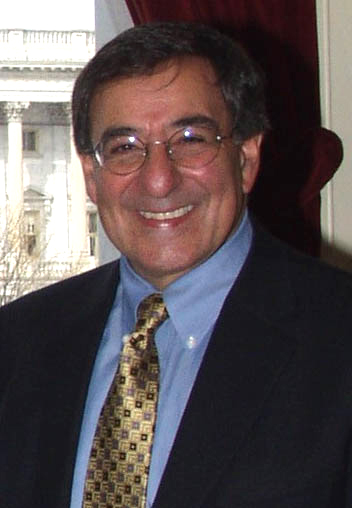
6. Naming Leon Panetta to head the CIA: This is pretty well-publicized. His lack of experience seems galling for someone at so important an agency. Panetta has his supporters, and he may well turn out to be an inspired pick. But he's on the list (and at #6) because if it doesn't go well, it'll be a disaster. Playing with the CIA is like playing with matches.


5. The fifth columnism of Obama nominee for Secretary of Energy Steven Chu: As chronicled in an earlier Walter Duranty post from January 15. Never good when accomplished scientists start saying they support "clean coal." Or the Tooth Fairy.


4. Obama's choice of mega-pastor Rick Warren to provide his inaugural invocation: Not only is this bloated televangelist a vehement homophobe, but as the also-bloated Christopher Hitchens notes, he's got a touch of the anti-Semite to him as well as the anti-Mormon. And he propagates the black-and-white anti-evolution views that retard the development of science and generate hostility to modernity in America.

Maybe you don't like gays, Jews, Mormons, or nerds. But can you really say that someone who openly disdains all of them should be giving the invocation at the inauguration of the president who seeks to represent the inclusiveness of America and govern for the entire nation?

Let's keep this short. Barack, WTF?

3. Amnesty for Bush: This seems like a simple one. We were lied into a war. There should be a truth panel for this (see Yale Law's Professor Jack Balkin for more). And if crimes are revealed, nobody can ever be above the law, as Paul Krugman argues here and Dalia Lithwick here.


2. Obama nominee for Secretary of Transportation, Ray LaHood: This is indeed the #2 greatest disappointment.

The Transportation Department has traditionally been a back-burner agency (the third one, as mentioned above). Perhaps that's why our country is unparalleled in the developed (and much of the developing) world in its astouding lack of mass-transit options. There is, effectively, no commercial train travel, depriving regional economies (the Northeast, Mid-Atlantic, Florida, Midwest, California, Northwest all could benefit) of a powerful engine of commerce and trade. Subways in big cities are underfunded and disgusting. Almost nowhere can you take good public transit to the airport. Airports and ports are a mess.

Things need to get done, in short. Transformative transportation policies could be a major driver of US business. The kind of US business that isn't selling Chinese crap at Wal-Mart, outsourcing banking jobs to Mumbai, or giving people NINJA mortgages. The kind of business we need if we want to revive the economy in the long-term. Investing in mass transit would improve the economy's efficiencies and logistics to the tune of hundreds of billions of dollars; encourage and grow regionally based economies; and create demand for high-tech, expensive products like trains and light-rail that would be best made in Detroit.

Moreover, moving from highways to transit-based infrastructure would create huge demand for transit-oriented development. Just as the exurbs empty as a result of the financial crisis, gasoline volatility, increasing traffic congestion and aging Boomers looking to scale down their homes as well as younger people wanting to live out the urban "Seinfeld" life, there's a huge opportunity to build new, dense communities around new transit hubs: rail, light-rail, and subway -- a construction trend which could help house prices find a bottom, or at the least create construction jobs. With all these opportunities to make transit transform, and as the guy who'll have a big part in doling out the tens of billions of stimulus bucks marked for infrastructure, the transportation secretary should be an important player.

Enter Ray LaHood, a second-tier House Republican known for being a friend of Obama. Oh, and for being a notorious earmarker, as the Legionnaire recently noted. Indeed, LaHood has taken many contributions from paving companies (aka the mob), exactly the kind of 1950s infrastructure we need to move away from. And, as the Post reports, he's gone hat in hand for federal money to provide hundreds of thousands to a local Illinois cemetery to repave its paths. Hmm. Sounds like we have Jimmy Hoffa for Transportation (and they look slightly alike too).

So is this the guy who's going to be able to direct public and private partnerships toward building a comprehensive national high-speed train network? Dramatically expand light rail and transit-oriented development to reconfigure decades of suburban sprawl across the country? The person who will fix the chronic airport backlogs and plane delays? Fix Mike "Heck of a Job, Brownie" Brown's destruction of FEMA?

I somehow doubt it. (So do The New Republic and the cutting-edge media crew at Worldchanging.) No need to pick a token Republican when there's real work to be done at the Dept of Transportation. Time will tell what LaHood is able to do, but there's real work to be done and this guy is part of the congressional establishment that for years hasn't done a damn thing.


1. The stimulus package is shaping up to be a non-stimulating raft of rebate checks for people who won't spend them: This one deserves its own post (yes, again). We'll save it for Inauguration Day.