Showing posts with label Recession. Show all posts

Saturday, July 25, 2009

Gambling in Russia and the Rust Belt

BOULDER, Colorado -- Earlier this month, the Russian government implemented a ban on gambling, restricting casinos to four special zones scattered across the country. The Western press was all atwitter over this story, acting as if the Kremlin had declared over night that casinos be shuttered.

The deadline of July 1, 2009 to close or relocate all gambling establishments had actually been established two and half years ago, but due to a lack of planning by the government and the general arbitrariness of the law in Russia, few operators chose to close before the deadline, and none have yet moved to the new gaming zones.

The four tiny enclaves to which gambling is now restricted are located in the Kaliningrad Region along the Baltic Sea; in the Altai Region near the border with the Altai Republic in southern Siberia; near the Far Eastern city of Primorye; and along the border between the Krasnodar and Rostov regions along the Sea of Azov.

The regions have been described in the press as "remote," "far-flung," and "far from Moscow." It should be noted that the last casino zone listed above is not far from Sochi, the city that will host the 2014 Winter Olympics. Like the casino operators view of the ban, I have a similar attitude towards the Sochi Olympics - I'll believe it when I see it.

Says one resident of Siberia, "When do we get the showgirls?"

The Russian Ministry of Finance has plans to spend $31 billion of public and private money (roughly 80% from the private sector, the rest from the state) developing these gambling regions, but so far no one has stepped up to invest anything. Some operators have even chosen to move to the hermit kingdom of Belarus rather than open up shop in the Russian enclaves.

As this ban was taking force, I found myself driving across America's rust belt - though upstate New York, Pennsylvania, and Michigan - where casinos are popping up everywhere. Many of these dying post-industrial cities have decided to bet their chips on gambling to improve their fortunes.

Downtown Detroit is now dotted with massive new hotel casinos, built to compete with the establishments across the river in Windsor, Ontario, a city hit just as hard by the decline of the auto industry. Meanwhile, the landmarks of Detroit's city center remain dilapidated, the city remains as dysfunction and destitute as ever, and the crushing competition for gambling dollars has driven Windsor to become one of the worst cities in Canada.

Bethlehem, Pennsylvania, once one of America's colossal steel centers, has turned to the golden gambling goose to at least slow its breakneck decline. A massive steel crane that in a previous era may had carried iron ore to the blast furnaces is now adorned with a massive sign welcoming you the new Sands resort casino.

This is not a new trend, of course - the former steel town of Gary, Indiana opened its first casino over a decade ago, and a growing list of cities and states with nowhere left to turn to improve their economic plight fight and claw with one another to attract the next gleaming casino to their city.

Not only do casino operators squeeze the most desperate municipalities for tax breaks and financing, but they then turn around and squeeze their profits out of the most destitute members of the population. Anyone who thinks that casino revenues come from high-rollers, or from people who are making a reasoned, informed choice to gamble, has clearly never been to the casinos outside of Las Vegas or the Riviera. Bethlehem, Detroit and Gary will never become vacation destinations, meaning the casinos will sell their "entertainment" to the unemployed citizens of these impoverished cities.

This was the case in Russia as well. Yes, the law was poorly planned and badly executed, but gambling had become a serious social ill in the country. Roughly 400,000 people have lost their jobs as a result, a tough pill in Russia's faltering economy, but I have little sympathy for the operators who are mostly homegrown gangsters or foreign profiteers. I can say from personal experience that the expats working in Russia's gambling industry are some of the worst people in the world.

One of the most depressing sights I have ever seen was a man, drunk and likely homeless, pouring 1 ruble (roughly 3 cents) coins into slot machine outside a Moscow subway entrance. The machine was nothing more than a steel box with three digital clock-like displays that flashed random numbers. No bells, no pictures of fruit, and no waitresses plying him with free drinks. For millions of people, this is the so-called glamorous world of gaming.

Thursday, June 18, 2009

Wednesday Links: Recession Solutions

BROOKLYN, New York -- Everyone is trying to cope with economic hardships. The Russian government is giving people free lumber. New Yorkers can no longer steal paper plates from their local Whole Foods. And Oprah just wants you to read The Secret and think positively to solve all of your financial, emotional, and medical problems.

Wall Street Journal: Let the forest be your stimulus.
Despite having the third-largest hard currency reserves in the world, Russia still can't spend its way out of economic oblivion. So instead, the government is letting ordinary citizens fell timber, prospect for gold and plant potatoes for free in hopes of stimulating the economy.

New York Times: Russia's defense minister is a "stool salesman." Russia's military has long been plagued by a bloated officer corps, but in its current economic dire straits, the country can hardly afford to gently show these officers the door. They just roughly kick them to the curb.

Architects' Journal: We will build Europe's largest ... er ... parking lot.
The Russia Tower was slated to become Europe's tallest building, but financial mismanagement has brought the project to a halt, and little has been built since the cornerstone was laid two years ago. So much for Norman "The Apologist" Foster's wet dream of a building.

Geography of Jobs: Americans are equally screwed everywhere. That's not entirely true, but almost no major cities have been free from job losses. This map comes from consulting firm TIP Strategies and displays the change in the number of jobs for the 100 largest metropolitan areas since 2004.

WNYC: Forget NYSC, I'm joining the YMCA. Like the two-dollar bill story reported earlier, WNYC is asking listeners to submit their own uncommon indicators of the recession. The result is a fascinating interactive map of New York City.

Newsweek: Oprah wants you to inject things into your vagina.
Oprah got thoroughly skewered by Weston Kosova and Pat Wingert in this Newsweek cover story, where they portrayed her as an uncritical, weak-minded ninny who unflinchingly endorses crackpots and cranks. The results are hilarious.

Toronto Star: Foreigners don't like hockey. Canada has been lauded for its open and fair immigration policies. Now if they could only get the new arrivals to take up hockey.

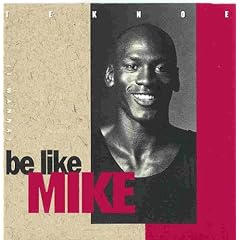
ESPN: I wanna be like Barry. If you want to get close to Obama, join in on some hoops. This borders a bit on a cult of personality, but luckily basketball is already very popular in the US, so we don't risk facing a situation like Russia, where niche sports like tennis, judo and skiing saw their popularity skyrocket simply because the president (Yeltsin in the first case, Putin in the latter two) played them.

Metropolis Magazine: Meet America's stupidest mayor.
We have leveled our own broadsides against illiterate Boston mayor Tom Menino; now he may be facing a challenge to his authoritarian rule.

Tor Project: Help stop the Iranian thugocracy. Speaking of authoritarian rule, the Iranian government has become quite adept at thwarting journalists and would be protesters from gaining access to the Internet to get information about the unrest out of the country. This piece of software prevents the authorities from easily tracking them and cutting off their access, or worse, finding out their identity and personally targeting them. It can also be quite useful to bloggers and journalists in any part of the world.

The Recession and $2 Bills

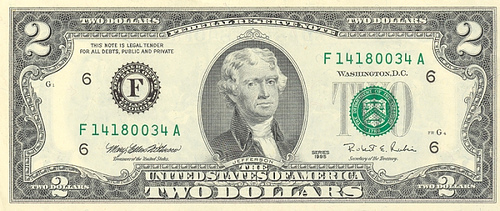
BROOKLYN, New York -- Recently a friend took a trip down to Baltimore for a family wedding. During that trip, something rather curious happened: on multiple occasions while making commercial transactions - usually with cab drivers - he received back in change the elusive two-dollar bill. He returned to New York with three of them in his wallet, totally befuddled as to why Thomas Jefferson's visage was in such regular circulation in Maryland.

Just last week, I took a trip back to my hometown of New Haven, and I retold this story to a mutual friend of ours at a local bar. We were both equally puzzled about this strange occurrence. I have never in my life been in possession of a two-dollar bill, and we both thought perhaps that Baltimore was such a backwards place that the bills had never fallen out of use. The bartender overheard us and said that he had two in his pocket that he had received from customers that week.

"It's the recession," he said simply. His theory was that when economic times are tough, people start dipping into any reserves of cash they might have on hand, whether those be collectible coins, loose change in the couch, or a stash of two-dollar bills.

The two-dollar bill has actually never been pulled from circulation. They currently make up roughly 1% of the money supply, and the Federal Reserve continues to print the bill. According to the Fed, "The $2 bill has not been removed from circulation and is still a circulating denomination of United States paper currency. The Federal Reserve System does not, however, request the printing of that denomination as often as the others. The Series 2003 $2 bill was the last printed and bears the names of former Secretary of the Treasury John W. Snow and Treasurer Rosario Marin. As of April 30, 2007 there were $1,549,052,714 worth of $2 bills in circulation worldwide."

Most of the bills, however, are not in regular circulation. Banks hold on to them and usually only distribute them to customers when they are specifically requested. Most of them end up, for example, stashed away in the pockets of bartenders instead of in the register to be given out in the normal course of transactions.

Perhaps the cab drivers of Baltimore are simply following the orders of the Federal Reserve to use the bills like you would any other currency, and our neighborhood bartender just happened to get lucky. I have not found any evidence or research about links between the resurfacing of two-dollar bills and recessions, but it seems to make logical sense.

For the past several years, the two-dollar bill has started to become more and more common. A Reuters story from 2006 reports increased orders for the bills from banks since 2001, though it is hard to say why. The piece cites the bills' popularity among strip clubs, as they mean double the tips for the dancers. It is possible that the combination of increased supply and less reluctance on the part of spenders to use them due to the recession has led to their increased visibility.

The bill has been linked to the current recession, but in a different way. Recently a story appeared in several news outlets about a pharmacy owner in Alabama who earlier this year gave his employees his own economic stimulus. Danny Cottrell gave each of his full-time employees bonuses of $700 and his part-time staff $300, with two conditions: they had to give 15% of the cash to charity, and the remainder had to be spent in local businesses. To track his employees' spending, he handed out the bonuses entirely in two-dollar bills, so that if they did as they were told, the local market would be flooded with the bills (A similar scheme was tried by the Geneva Steel Company in Utah in 1989 to show the economic importance of the company and its employees. The bills have subsequently been used to show the impacts of the plant's closing in 2001.) Interestingly, Mr. Cottrell also wrote an article in 2004 for VFW Magazine about a limited-time release of uncirculated two-dollar bills from the Federal Reserve. Perhaps that is how he managed to get ahold of $16,000 worth of the bills to dole out to his employees.

Is the two-dollar bill really an indicator of the recession? It is hard to tell. I think we will only know how bad things really are when people start paying for their beers and cab rides with their own gold teeth.

Tuesday, March 24, 2009

CNN-sheviks Out to Destroy Capitalism?

NEW YORK, New York -- We all knew that Ted Turner was married to Hanoi Jane some years ago, but only now is it becoming clear how much of her former ideology he seems to have adopted.

The nation is in a massive recession, jobs are vanishing like hotcakes, we're crippled by unprecedented household debt, a deflationary environment is setting in, individual net worth is plummeting faster than any time since the Depression, structural deficits are looking at long-term unsustainability, the financial sector is broken. And those are only the most obvious things that immediately leap to mind.

So with all that on your plate -- plus an ominously rising China demanding an end to the dollar as the global reserve currency of choice and long-term economic competitiveness issues that continue to go unaddressed -- what does CNN want to focus the American people's attention on? Why, the fact that a few bankers took home a bonus, of course! That's right, CNN has a weird, 7th-grade-crush-style obsession with the fact that a number of AIG employees were given bonuses after the firm was bailed out (numerous times) by the US government.

A good time to manufacture populist rage against the wealthy, no?

We can all agree that AIG's decision to pay out bonuses at a most inopportune moment is pretty boneheaded, but let's take a look for a moment at how pointless this issue is. It is neither the cause of the recession and financial mess, nor is fixating on it the solution to getting us past our woes. Moreover, the $162 million dollars paid out in bonuses at a company of tens of thousands of people was less than 0.1% of the total aid that AIG received. And since money is fungible, it's impossible to say that those bonuses "came from" government aid any more than they "came from" AIG revenues collected from families with policies in Iowa -- or Japan, for that matter. What it is, however, is a populist rage-inducing story that gives the public an easy villain and a comprehensible plot. Never mind that it's irrelevant, distracting and counter-productive.

I've been increasingly repulsed in recent months by CNN's dumb-it-down tabloid journalism, the most recent exacerbation of which is undoubtedly the thoughtless Campbell Brown. But the channel's most recent decision to take a turn as the crusading populist mouthpiece of choice is truly disturbing. I luckily wasn't near a TV most of last week when the "AIG bonus story" broke, thank God. But the two hours of CNN coverage I saw tonight, a week and a half after the fact, was appalling.

For anyone who has the sense not to watch CNN, I should add that at tonight's presidential press conference that channel's correspondent asked an inane question about why Obama hasn't macheted all AIG employees because some workers there were given bonuses. You can see the question asked here. No less than CNN's own Bill Bennett, one of the most destructive and shameless political figures in late-20th-century America, harped on the non-issue in the chatter that followed the press conference, leaving idiots-in-chief Campbell Brown and Ed Henry to blather on (and on and on) about those nefarious bonuses. Fast-forward 6:20 in for a glimpse of the idiocy:


The evening's edition of "Anderson Cooper 360" continued to beat its breast over this non-issue, marveling at what a doozy that Ed Henry laid for the finance-loving (and therefore untrustworthy) President Obama. And CNN's web site -- itself as well-designed as an AOL forum circa 1997 -- made sure to give top billing to the fact that Obama gave its correspondent a "tough answer" in a typically half-witted, solipsistic article. (Like almost all CNN web articles, it generally serves to do little beyond publicize some "event" that occurred on a CNN television program.)

But here's what really bothers me. No successful capitalist society can exist without a robust financial system able to give businesses the capital they need to grow. What we need to do is revive the financial sector, not make its individual members say "Uncle" and flee to Abu Dhubaibi, or whatever half-witted Emirate is offering free housing and lap dances to any Westerners willing to defect these days. The Obama administration is fortunately toning down its rhetoric, paving a path to hopefully returning to normalcy, despite earlier missteps.

But restoring the health of the financial sector becomes a lot harder when the country's largest cable news network is engaged in a full-fledged witch hunt against bankers. Indeed, CNN's stab at nascent Bolshevism is reminiscent of 1930s Europe and is beginning to make me frightened. The incessant tirades against "greedy bankers" and "pigs" -- how much farther do we have to go before we begin to hear talk of "Zionist conspiracies"? Europe has dabbled in hatred of financiers throughout its history. There's no need for the US, prodded by CNN, to go down that path traveled, appropriately enough, by fascist and Bolshevik alike.

Luckily, most actual humans don't seem to be very interested in the media's latest false god. As Joe Klein notes in Time, "Most of the anger we see and hear comes from people who are paid to be angry, on cue, on cable television--as opposed to people with actual grievacnes. ... It is said that the bonuses are an aspect of the bust that the "public" can understand; in truth, the bonuses are an aspect of the bust that reporters can understand."

A glance at the "blog" that accompanies "Anderson Cooper 360" shows a preponderance of viewers who are sick and tired of CNN's crucible of bonus-boners.

"I think Ed Henry thought he was going to get the President on a “gotcha question” but the President really got him," as one viewer said. "The media is seeming more out of touch all the time. We’re over AIG–we’ve all got bigger things to worry about. If you’re not part of the solution you’re part of the problem!" added another.

I tried to add a comment four times but was filtered out each time. The comment said, "Can we please stop fixating on the bonuses? We need a healthy financial system to get the economy back on track, yet CNN seems bent on turning Americans against bankers. This is a frightening development, and we'd all be better off if the media turns its attention toward the more serious questions of where we'll find economic growth in the future given that the country's most successful sector has imploded and taken millions of high-paying jobs with it."

That comment was apparently too critical. CNN's comments guidelines state that topics not use foul language or be off topic ... yet the vast majority of comments that did make it onto the "blog" were along the lines of: "@ John King is a pity … you are a great “blogger”! I love when you are blogging with us" or "I really don’t want to know who on Earth would want Michael Jackson’s socks. That’s icky to infinity." Good thing CNN is ready to ask the hard questions, huh?

So CNN has developed the sensibilities of Soviet Russia in pushing its anti-bonus agenda and frittering out criticism by viewers. This is a rather sad development for the country. The problems are vast. But the opportunities are even bigger. The time is ripe to be asking the questions whose consideration will hopefully set the path toward longer-term growth. What industries will fuel growth in the future? How do we train people to work in them? How do we get those businesses financed? When will the economy turn around? Why are deficits (structural and current-account) so big? How do we reverse them? Do we need to have a manufacturing sector again? If so, how do we compete against China?

Those questions are clearly very dull, though. Obviously people would rather focus on hating their slightly wealthier neighbors than determining where their own future prosperity will come from, right? Well, possibly not. For those of us who have half a brain and need something a bit less demagogic than CNN, I can wholeheartedly recommend the program that ran against AC360 on PBS tonight: "Ten Trillion and Counting." It's a fascinating account of the structural debt that George W. Bush left us. Watch the program online and ask yourself how we can get out of that debt. After all, somebody has to start asking these questions while Anderson Cooper warbles on about the Zionist bankers' plot to destroy "Main Street."

Tuesday, February 24, 2009

State of the "Obamanation"

NEW YORK, New York -- Obama's speech was pretty good, but it could've and should've been better.

A more basic, fundamental, FDR-style explanation of why banks are important -- and why, if necessary, nationalization should not be held up for ideological reasons -- would've been nice.

And all this crap about how people need to get new mortgages and banks need to be forced to lend ... uh, terrible idea. This mess came about because banks were giving too many people too much money. Real disposable income was stagnant for the last 9 years while credit and mortgage lending exploded.

The answer is not to keep giving any schmuck a mortgage to prop up house prices that are still artificially high (remember: during the prime boom years, house prices were rising at nearly 20% nationally while median incomes actually decreased; dangerously easy credit and huge inflows of Chinese Central Bank investment made this possible, not any increase in income). House prices, unfortunately, need to keep falling until demand catches up with supply. The other alternative is to bulldoze the massive housing surplus.

Here're the ingredients in the witch's brew:
-A vacant homes for sale inventory at 2.6 million homes -- versus a historical average of 1.3 million
-A net change in households at approximately 700,000 in 2008
-Historical home ownership rates of 65% (it's closer to 68% now, down from 70% a few years ago, and it will probably fall to the sustainable historical average)

If we assume housing starts stop tomorrow (and they won't, unfortunately -- they're still actually outpacing housing sales!), then we have excess supply of 1.3 million homes, and a net change in home-owning households of about 500,000 per year. That means it'll take 2.6 years -- with no new houses built -- to work out the excess supply.

Obama and Congress need to stop incentivizing builders to construct new homes, and they need to stop giving huge tax breaks on mortgages (encouraging people to buy homes rather than rent, even if they don't have the money for a down payment or have a long-term stable job justifying mooring oneself to a home). The huge pustule of housing inventory needs to be burst either by destroying excess homes, or by slowly letting the people who can actually afford them buy them. Insofar as the second option leads to wrenching, gradual declines in house prices, the first is far preferable.

Instead, Obama seems to want to re-grease the credit wheels. That may mean buyers will burn off the supply a bit quicker, but it'll also encourage irresponsible developers to keep building (bad), and it will result in lots more people who can't afford homes buying them (really bad).

Similarly, Obama's comments that "I intend to hold these banks fully accountable for the assistance they receive, and this time they will have to clearly demonstrate how taxpayer dollars result in more lending for the American taxpayer" are a horrible, horrible move. I hope it's populist, political posturing. Banks have lent way, way too much. Debt-service ratios are at record highs versus real personal disposable income.

What's needed is to increase income and get bank leverage (the amount of debt a bank has versus its capital) to normal levels. The first can be done only by creating good, high-paying jobs. And Obama's smart enough to realize that investment in education, healthcare and energy is what'll do that. I'd add immigration reform and infrastructure investment to that list, along with a number of smaller policies, but his Big Three sure kick the crap out of their Detroit counterparts.

And nationalization of banks in order to clean out their debts via asset sales, including to a money-printing Treasury, is needed to get them out of the bad situation they're in -- which was caused by a government that encouraged increased mortgages and lending to people (see a pattern?). Obama needs to bite that bullet and, while I know Taro Aso was in the White House today and Japan's a pretty cool place, stop mimicking Japan on playing coy with bank losses. Clean them up by nationalization sooner rather than later.

The "pretty good" grade I'd give Obama comes from the fact most of his speech excellently pointed out the need for long-overdue in energy, healthcare and education -- the fundamental elements of an equally long-overdue US competitiveness strategy. But the banks, oh, the banks. Stop playing dumb, Barack, and put the silver bullet of nationalization in the heart of the insolvent zombie banks.

Monday, February 16, 2009

Florida and the Atlantic

NEW YORK, New York -- Unfortunately, this isn't about a Hemingway short story, as the title may imply. It's about Richard Florida, author and urban theorist; and The Atlantic magazine.

Florida's piece "How the Crash Will Reshape America" in this month's Atlantic is well worth reading for two reasons. But before that, it's worth pointing out the flaws both of this piece and of The Atlantic as a whole, of which they are indicative.

The article, like so many The Atlantic now publishes, takes a huge theme and offers it up for some mind-onanism/voodoo thought exercises. Like many of these Atlantic pieces, it takes a trend and projects many, many years into the future to tell us how this trend will permanently make an imprint on history. In Rome, they called this Bitingoffus Moreus Thanus YouCanChewus.

A classic example is the May 2001 cover story "Russia Is Finished." It explained in the broad detail expected of a child using sidewalk chalk why Russia was totally irrelevant and doomed to eternal penurity. As anyone who has read a newspaper in recent years knows, stories about the "resurgent Russia" have flooded the presses since, well, June 2001. (Tayler is now writing for The Atlantic about the resurgence of Russian professional hockey, of all things -- another dubious claim.)

For his part, Florida makes lots of ridiculous generalizations about why he *feels* that New York will benefit from the crisis and Detroit will become a "ghost town." Most of this is based on his definining argument, outlined in his book The Rise of the Creative Class, that "knowledge economy" types are the way of the future -- scientists, singer-songwriters, novelists, and Farrah Fawcett. The dots are connected by the claim that New York has lots of these creative types, while Detroit has few. As Florida tells it, "New York is more of a mecca for fashion designers, musicians, film directors, artists, and -- yes -- psychiatrists than for financial professionals."

Has this man been to New York? The 3,000 hipsters in Williamsburg are neither a large part of New York's population nor of its economy. The economy is based on finance -- every one of New York's 200,000 finance jobs supports 3 other jobs, according to the city's comptroller. And those jobs pay 33% of income in the city. The population, meanwhile, is largely individuals of minimal education and income. Despite the many Wall Street jobs paying on average nearly $400,000, income in New York City is below the national median. And poverty levels are 150% that of the national level. Not to sound like John Rocker, but most of the teenage mothers of 3 I share a subway with every morning are neither stylish, hip, nor especially "creative" as far as I can tell. Florida's "evidence" for his statement is that New York "is home to high-tech companies like Bloomberg, and boasts a thriving Google outpost in its Chelsea neighborhood." Calling Bloomberg, a financial information provider, a high-tech company along the lines of Apple or Dell is absurd. And the Google floor of office space employs about 100 people and is similar to other outposts in Boston and elsewhere. The truth is, New York has very, very few life sciences, engineering, high-tech manufacturing or even non-financial management jobs per capita when compared with San Francisco, Boston, North Carolina, Seattle, Chicago or even Austin or Minneapolis.

The "creative class," titans of commerce, descend on Bedford Ave.

Moreover, Florida's underlying assumption -- that production jobs are dead and the future economy is in film directors and grunge rockbands, and that this is a good and viable thing -- makes me think he's on crack. A typical statement would be this: "Jobs in the 'tangible' sector -- that is, production, construction, extraction and transport -- declined by nearly 1.8 million between December 2007 and November 2008, while those in the intangible sector -- what I canll the 'creative class' of scientists, engineers, managers, and professionals -- increased by more than 500,000."

Yeah, those 500,000 fairy-dust "intangible" jobs make up for the loss of 1.8 million lesser, "tangible" jobs. I guess "tangible" jobs only get 3/5 of a vote. So Florida's claims are delusional and counterproductive. Let's count the problems: Not everyone can be in the "creative class" because scientists and executives are culled from the highest ranks of graduates; the "creative class" exists largely because of capital generated by years of production that is now migrating away as quick as possible (goodbye, career in YouTube filmmaking; hello, RiteAid job!); and if manufacturing is in China, you can be sure management and R&D will be there soon for logistical as well as cost reasons.

More reliable and profitable than the Hipster Sapiens

Because of the fundamental idiocy of Florida's argument and of so much of what The Atlantic prints in its quest for that evasive Best Reporting in Futurology and Speculation Pulitzer, I am skeptical of the parts of his article that make sense and have begun doubting myself and pulling at my hair.

Nonetheless there are two valuable points that make this article worth reading:

1. The spatial economy: Florida raises an interesting point about the relationship between our spatial/geographic existence and economic trends. Before the Long Depression of 1873, the US economy was based on an agricultural-cottage industry model wherein most people lived in rural areas and small mill towns like Lowell, MA, were the centers of industrial production. Afterward, and until the Great Depression, large industrial concerns gained predominance, with mass migration to man factories in cities where people rented space in tenements. But after the Depression and war, the creation of Fannie Mae and use of tax deductions on mortgage payments, which effectively subsidizes home ownership over renting, saw home ownership rise from 44% to 62% between 1940 and 1960 as people fled to the suburbs and affordable homes.

Owning a home, with the government's prodding, came to be a symbol of freedom and end in itself. Moving from dirty cities made sense for residents as well as businesses that could buy land cheaply in the suburbs. And the automobile and Interstate Highway system meant people could easily get to work from any suburban location. And in recent years, President Bush's "ownership society" and homeownership drives by both parties in Congress led to homeownership rates of 70%. It also became the greatest source of both equity and debt for people -- and was directly to blame in building a debt-laden, consumer-based economic order that has proved to be disastrous.

This all seems like an accurate telling of history, and clearly leaves us wondering what, if anything, comes next. Florida argues there will have to be a return to cities to allow for the cross-pollination that fuels the "creative class." I think he's partly right -- cities will increase in importance in part because of young people wanting to be hip and to be among other hip people. Of course, the "creative class"'s engineers aren't the heppest cats out there, and I wonder if anyone's ever told Florida that they really don't feel a need to be near a Nobu. And if there is to be any viable economy, manufacturing will have to return in some form or other to make the products the "creators" dream up, or else there'll just be more capital flight along with RiteAid clerks taking out loans based on their future rent payments or what-have-you in order to buy the imported products the "creators" dreamt up.

The next great spatial/geographic/economic step?

2. Make cities more attractive to power a new economy: Given the crisis in the prevailing model of life/geography/economy that we've adopted since WWII, the other interesting point Florida makes is that government now needs to act to make cities relatively attractive just as at different key moments it acted to make various geographies and spatial arrangements attractive to people. Subsidies for homeownership, he argues, deprive more important programs like alternative energy or medical or research spending from funding. Moreover, the cult of homeownership has left the population less flexible -- a smaller portion of Americans moved last year than at any time since 1940. With economic uncertainty and companies folding and (hopefully) opening at a quickened pace, restoring that mobility will be very crucial.

Moreover, with the popping of the credit bubble, people simply won't be able to afford homes. And with the popping of the home equity lines of credit bubble, they won't be able to fill McMansions with baubles. With the threat of gasoline price volatility affecting people's ability ot commute from one suburb to another, smaller, denser, rented homes will by necessity gain in prominence.

Florida is convinced that an ever-smaller number of mega-cities in the US (and world) will have larger and larger shares of output. I think that's a lot of speculation. But he's right to note that the US has succeeded so well in part because it has traditionally been farsighted enough to invest in new means of transportation that open new sectors of the economy and new geographies to exploit them: from canals that allowed fur and timber from the Old Northwest to reach the Atlantic; to railroads that shipped agricultural products, minerals and manufactured goods West; to the sewers that gave rise to cities; to the Interstate Highway that brought us suburbia -- we have always been progressive in transportation. Until recently.

Obama will have to pick up the ball that he dropped in his attempt to "bipartisanate" with the Republicans. New realities have developed in the environment, society and the economy. While production is a necessary part of a healthy economy, new modes of production will have to come about. And yes, the "creative class" will remain important -- as it always has been. While it'd be nice to think every American will be a researcher, that's not going to happen. But that doesn't mean Florida's focus on cities is wrong -- building links between colleges, hospitals, consumers and business is key; so is living more sustainable, affordable lives. The city will need to shave a few points off the exurban model for this to happen. There will have to be spending, and change. Mortgage subsidies need to end (no, that won't encourage people to buy more of the many homes going unsold now -- but they shouldn't be encouraged to buy them anyway; government needs to plow down the 1.5 million surplus "zombie" homes that were idiotically built in the Sunbelt if there isn't any demand for them). Zoning codes will need to be changed to allow denser, taller development, with mixed-use neighborhoods (i.e., a mix of retail, institutions and homes, as opposed to the cul-de-sac developments of tract housing miles from any retail or services). Transit-oriented hubs (housing development around mass-transit stations). Trains to go between cities. Subways to go within them. And light rail and commuter trains to move from suburb to city or, importantly, suburb to suburb. Key to it all is a variable gas tax to discourage wasteful driving and ensure gas-price stability once the price of a barrel of oil shoots up again, which it will as soon as the economy returns to health. On these points, Florida is dead on.

Wednesday, February 4, 2009

Of Human Idiocy

NEW YORK, New York -- Bad news loves company, eh? While the Republitards keep up their thuggery to get all of the spending -- i.e., the stuff that works -- cut out of the stimulus, they wield a knife in one hand and spoon on horrible additions with the other.

The Times reports tonight that the Republitards hope to "address the recession" by throwing $15K at anyone dumb enough to buy a home now. It's like the opposite of survival of the fittest -- encourage people to do the dumbest thing they could right now. It makes me hope that Washington, DC, will flood not only with unemployed graduates looking to join Obama's administration but also with some goons looking to push Mitch McConnell into the Capitol's choicest puddle.

McConnell and the Republicans continue to meddle with a stimulus package that Americans support 2 to 1, and the Democrats seem to roll over like the Obama's dog-in-waiting. Congress needs to get it into its collective head: encouraging people to take on more assets they can't afford is NOT a solution. The solution is creating work so they actually have some income. Ok, so we now encourage people who can't afford to buy homes to buy homes because they get $15,000 in subsidies. That's maybe 5-10% off the sticker price. If you can't afford a mortgage on $250,000, you probably can't afford $235,000.

One of the big problems now is that there are too many homes -- there's a 13-month inventory. If you can't get that down to 7 months, the problem won't go away. Government should start paying construction firms NOT to build homes and start demolishing them, not encouraging people to buy them.

Moreover, contrary to both Dem and Republican conventional wisdom, home ownership is not in itself an innate good. Especially in times of recession, distorting markets to force more people than is natural to buy homes is a shit idea: It means the labor market is much less flexible as people are tied to their home. In a poor economy, you want to give people maximum flexibility so they can head to the jobs they're qualified for, wherever they may be. Don't encourage people to stay in Cleveland or LA for that matter if the jobs are in Phoenix (or Flint for all I know). Idiotsidiotsidiots. Is there an enlightened nation (Lilliput? Laputa? Eldorado? Canada?) that can pleaseprettyplease invade the US South?

P.S. When someone gorges themself on Mal-o-mars, do you pay them to eat more? That's probably the aptest analogy I can think of with trying to reinflate the housing bubble. There are too many houses, and there's no underlying demand for them in a normal credit environment. Propping them up seems akin to Japan Syndrome -- there is no plan to create a "bad bank" or nationalize the banks to cough up the poison they've got, nor is there a willingness to let house prices hit a bottom the market supports. Until we recognize the losses, it'll be a long, hard climb to move on. Obama and the Democrats were elected to take action, and they seemed to want to do that. Instead, they seem to be mucking about and overly willing to bring themselves down to the level of John Boner. They need to return to Earth.

Monday, January 19, 2009

Pets or Meat II: The New Squirrel Economy

BOULDER, Colorado -- As our country spirals deeper into recession, the delicacies that we have enjoyed over these past fat generations may be beyond our reach - beef, pork, even the lowly chicken. Instead, Americans will come to rely on small woodland rodents for their protein, and if we're lucky, we can have a horse meat steak on Christmas.

But it appears as if the foodstuff of the future is in jeopardy. Up and down the east coast, acorns have vanished, and the squirrels that depend on them are dying off in large numbers. As you can see in my neighborhood, the squirrels have resorted to eating bagels.

The squirrel population is dwindling, but so are our resources to catch them. At least, that is according to the crazy customers in the gun store where my brother works; they are all convinced that Barack Obama is poised to strip us of our right to bear arms. So, when our guns have been taken away, and the few remaining squirrels are our last hope for survival before we begin consuming the flesh of other humans, we must all learn to master the slingshot. And the master of the deadly art is Rufus Hussy of Ashboro, Indiana:


Thanks to Andrew for the video link.

Tuesday, January 13, 2009

Rhode Island: The Michigan of New England

BOULDER, Colorado -- While Michigan is often cited (including in this blog) as being on the leading edge of America's economic downturn, many people would be surprised to learn that Rhode Island also has one of the country's highest unemployment rates, which hit a whopping 9.3% in November. This ranked second behind Michigan's figure of 9.6%, and the two states have seesawed back and forth for the top spot over the last few months.

There are many reasons for this terrible situation - the collapse of manufacturing, poor job retraining, and low levels of education. Rhode Island ranks well behind every other New England state except Maine in terms of the percentage of the workforce with a college education - Massachusetts and Connecticut rank first and sixth, respectively, nationwide, while Rhode Island sits in 19th place. The Washington Post recently posted this video about the state's economic plight, and the New York Times ran this piece on the subject back in October.


Rhode Island is a very provincial place, and residents are struggling to cope with economic transition. Mason Briggs is reluctant to take a job in Oxford, Massachusetts, a town a mere 40 miles away from Pawtucket. His wife catalogs all the towns she has worked in, but they are all only a few miles apart. I am not blaming these people for their hardships, but there are reasons why the state's economic malaise has been confined within its short borders. I am not callously suggesting that they pick up stakes and move, but some measure of economic relief is just a short communte down I-95.

I have always believed that reviving America's manufacturing base will be a critical component of restoring the country's economic competitiveness and fixing the imbalances and inequalities that currently exist. But it is important not to get too nostalgic about the post-war golden age of the American industrial worker that so many pine for. As Itchy mentions about battery manufacturing, many of these jobs and industries are dirty and unpleasant, and few of us would like a factory like this in our backyard. Manufacturing may have given every American family an icebox and a wireless, but it also gave us the Love Canal.

These industries also had an impact on education. In places like Michigan, and to a lesser extent Rhode Island, the existence of high-paying, low-skill manufacturing jobs actually created huge disincentives for people to pursue an education, when they felt confident that as soon as they graduated high school, they would be able to get lifetime employment at the local plant. As a result, Michigan languishes in 36th place when it comes to educational attainment, when its industries should be a source of innovation and research.

To combat this problem, some communities have adopted innovative plans. Last year the city of Kalamazoo introduced a plan they called "The Kalamazoo Promise," which established a scholarship fund that would pay full tuition to any Michigan state college for any student that graduated from the school district. The program has not only increased school enrollment, but it has boosted property values, and cities across the country are hoping to imitate it.

Of course, there is one growth industry in Rhode Island: incarceration. The immigration detention center in Central Falls has been doing booming business, especially since Rhode Island became the only state to mandate that all state and local law enforcement agencies enforce federal immigration law. This is a story that has been repeated across the country from Flint, Michigan to Susanville, California, when laid-off workers move from the assembly line to the corrections academy. Let's all hope that the next generation of workers is made up of more engineers than prison guards.

Sunday, January 11, 2009

Pets or Meat: Squirrels to Become Staple of American Diet

BOULDER, Colorado -- Did you know that squirrel can be a delicious and nutritious meal? No, this is not a message from the Arkansas Chamber of Commerce, but rather from the people of England, who are gobbling up the rodents in everything from stews to Cornish pasties.

Annoyed at the infestation of their country by the American gray squirrel (an invasive species), which is squeezing out their beloved native red squirrels, the Brits have decided to kill and eat the interlopers. And as part of their effort to convince you that the United States is just weeks away from complete collapse into an Omega Man-style dystopian future (or perhaps another Charlton Heston film is a more appropriate analogy - Planet of the Apes? Soylent Green?), the New York Times wants to tell you all about this absurd new cuisine. But the reporter concludes:
One might think that because of easy availability, squirrel would be the perfect meal-stretcher for these economically challenged times, but it takes a lot of work to get the meat off even the plumpest squirrel.
Squirrel is not that hard to skin and gut, actually. As the article points out, it is important not to eat the brains, as some people down in Appalachia have contracted ailments similar to mad cow disease from them. Today my friend Tyler sent me these helpful instructions from a Russian book about how to gut a rabbit, but this method could be easily applied to squirrels or other small woodland creatures (the original is posted here):


[A method for disemboweling the carcasses of wild rabbits

1. Firmly wrap your hands around the carcass in the area of the ribcage.

2. Strongly squeeze the carcass in the direction of the stomach, lift it above your head, and with one sharp, strong motion, similar to swinging an ax, swing it downward, bringing your hands between your legs.]
As an additional step, make sure no one is standing behind you when you fling the rabbit's innards out of its anus. As Michael Moore pointed out in his film Roger & Me, rabbits are often the first victims of a recession, as they are one of the few animals that American culture finds acceptable as both pets and meat. But if you lost all of your money in a pyramid scheme, and you are forced to rely on in-home animal husbandry for both your income and your sustenance, make sure you have the proper facilities to legally slaughter, dress, and butcher your furry friends.


Finally, I recently discovered a follow-up documentary that Moore made three years after Roger & Me, which includes interviews with many Flint residents from the first film, including the rabbit lady, Rhonda Britton. The title of the film is, fittingly, Pets or Meat, and you can watch it here on Youtube.

Saturday, January 10, 2009

How many yuan (or is it renminbi?) does Michigan cost?

NEW YORK, New York -- This is so sad it's funny. Luckily, rather than invest money in moving the country toward the mass transit the rest of the world has embraced for decades (and we embraced pre-WWII), which would create a recession-shielded, massive source of demand for trains and light-rail that could be produced in Michigan, Obama's following Dubs and giving us all $500 checks to (in my case) put in our savings account, (in most people's cases) pay off debt, or (in a few people's cases) buy Chinese electronics. Enough $500 tax refunds and we can re-prop up demand for consumer goods so China can afford Michigan. Bravo.

Dear Economist: What should I charge China for Michigan?

By Tim Harford

Published: January 10 2009 02:29

Here in Michigan we have a problem: the automobile industry. Thanks to foreign competition and the doubtful management of the Big Three, the state’s economy is in serious trouble. Should we just sell the state to the Chinese? There is a history of this in Michigan – we once traded the city of Toledo to Ohio in exchange for the upper peninsula. So perhaps it would be a good idea. But what would be a good price?
Mrs J, Michigan

Dear Mrs J.,

Make sure you don’t sell yourselves cheap. According to the US Bureau of Economic Analysis, Michigan’s GDP was $382bn in 2007. This is an attempt to measure the value added to all goods and services in Michigan, which includes anything from haircuts to assembling a car – but not, for instance, any components imported from out of state.

The $382bn figure is impressive. It would sneak Michigan into the top 25 economies in the world. Even China’s GDP is less than nine times greater.

So how much would it cost to buy $382bn of productive power? No corporation adds nearly as much value; the economist Paul de Grauwe reckoned that in 2000, value added was $67bn for Wal-Mart and $53bn for Exxon, the two largest companies. Their market value at the time was about five times their value added.

If the same ratio applies, buying Michigan would cost the Chinese almost $2 trillion –roughly what China’s State Administration of Foreign Exchange has to spend. All this assumes that Michigan’s residents, like Wal-Mart’s employees, would be free to leave if they didn’t like the new management.

Still, don’t hold out too long: even before the credit crunch hit, Michigan’s GDP per head was falling in real terms. This may be the right time to sell.

Questions to economist@ft.com