Showing posts with label New York Times. Show all posts

Friday, October 9, 2009

How Obama Can Earn His Nobel Peace Prize

BROOKLYN, New York -- President Barack Obama was awarded the Nobel Peace Prize yesterday. It is not entirely clear why he deserved this award. The Nobel Committee seemed to award him the prize for his tone and aspirations rather than any concrete accomplishments.

"It was unavoidable to give the prize to the man who has improved the international climate and emphasized negotiations and dialogue," Thorbjoern Jagland, the chair of the Nobel Committee, said, as quoted in GlobalPost. In effect, he was given the award for not being George W. Bush.

George Packer made a good case for refusing the award, noting on his New Yorker blog, "The prize should be awarded for achievement, not aspiration, and so far Obama’s main achievement has been getting elected President, which is in a different category."

I wholeheartedly agree. He was already elected President of the United States - how much more validation does he need? Will this prize suddenly cause the North Koreans to surrender their nuclear weapons, the Russians to abandon their claimed sphere of influence, or the Palestinians and Israelis to get serious about peace? Certainly not. While it may affirm the Europeans' love affair with Obama, it does little to improve his position or prestige when he gets to the negotiating table.

I will give credit to Obama for staking out one particularly bold position: to rid the world of nuclear weapons. As he has stated, this goal will probably not be achieved either during his presidency or his lifetime. This marks another distinct departure from the policies of the Bush administration, as well as nearly every other administration before it.

George W. Bush did have some accomplishments in the field of nuclear non-proliferation. The nuclear smuggling ring led by Pakistan's A.Q. Khan was broken, and Libya was persuaded to abandon its weapons of mass destruction. But Bush's marks were quite poor overall. The nuclear club has expanded, not shrunk. North Korea is now in possession of the bomb, and Iran continues to make strides toward it. In addition to withdrawing from the Anti-Ballistic Missile Treaty and continuing America's refusal to join the Nuclear Test Ban Treaty (in force since 1996), Bush also supported the development and use of tactical nuclear weapons, specifically to deter the nuclear efforts of Iran.

No past president has ever made it his stated goal to make the world free of nuclear weapons. Earlier this year, Philip Taubman described in the New York Times why this goal is so ambitious and daunting, offering this analogy: "To fully grasp the political and military implications, consider what would have been involved had the great powers of the 19th century decided to abolish gunpowder." Perhaps Obama is acting more like Superman in Superman IV: The Quest for Peace than a human president. He can't gather up all the world's fissile material and throw it into the sun, but his goal is admirable, and should he go even part of the way to achieving it, his Nobel Prize will be well deserved.


To mark the president's award, I would like to share with you the 1939 cartoon Peace on Earth. This MGM short directed by Hugh Harman has been incorrectly credited with a Nobel Peace Prize nomination; nonetheless, it offers a noble aspiration of peace, and that is worthy of something, if not the Prize itself.


Finally, if you think that nuclear weapons are not scary things, or if you don't believe that just two decades ago, the world teetered on the brink of utter destruction, this recent news about the Soviet doomsday device - Dr. Strangelove for real - should terrify you. Stanley Kubrick's masterpiece is certainly a powerful piece of anti-nuclear cinema, but if you would like to be scared shitless of atomic warfare, I suggest that you watch the 1964 film Fail-Safe, starring Henry Fonda.

Thursday, October 8, 2009

Borders and Migration: Erecting Fences On the Canadian Border

BROOKLYN, New York -- Borders are never as straight and bright as they appear on maps. They are messy. They are uneven. Due to a whole lot of messiness - in the form of the drug trade, illegal immigration, arms smuggling, and a vicious war between drug cartels and the government - a lot of attention is being paid to the US-Mexico border. But changes are also taking place along America's northern frontier, and they deserve attention and concern.

Earlier this week, authorities erected gates along the border in the towns of Derby Line, Vermont and Stanstead, Quebec. The two towns are essentially one - due to an incorrect survey, the American town was founded north of the 45th parallel. When the border was corrected, nobody saw the need to move the town, so the border line runs through homes and streets, and even through the town's lone public library. American authorities decided last year to clean up the warren of streets that crisscross the border by erecting these gates which will force travelers to move through designated border crossings.

This summer I visited Derby Line, and I went poking around the border to see what changes had been made. The library was closed that day, so I could not go and see the border line painted on the floor, but I did see some shiny new signs advising me to turn back and go through the crossing. When I did turn my car around, I was bombarded by sirens from the border post. When I pulled over, the visibly angry American agent accused me of illegally crossing from Canada and threatened me with a $5,000 fine. When I told him I had made a wrong turn, he lectured me some more and then directed me to the Canadian border crossing, where I continued on my way to Quebec City.

Apparently, turning a small, remote Vermont town into Belfast or Nicosia is what we must endure to be safe from terrorists. While some increased security measures may be necessary along the Canadian border, the problem is that the logic of these changes focuses entirely on security without acknowledging the other impacts of the border. Rather than a zone of interaction, the border is seen as a barrier to keep people out of the United States, thus completely ignoring trans-border social and economic relations.

Fear mongers in the Bush administration like former Secretary of Homeland Security Michael Chertoff pushed for draconian border measures, even suggesting that British citizens of Pakistani origin should be subjected to stricter passport controls than other Britons. The new DHS chief, Janet Napolitano, has not softened the line when it comes to the US-Canadian border. She has repeatedly stated that she wants the border with Canada treated like the border with Mexico: hardened, strengthened, and more closely monitored.

This has had dire economic impacts, especially along the highest-traffic section of the border, that between Michigan and Ontario. Over the past few decades, the American Big Three automakers have have built up networks of production facilities and suppliers that capitalize on certain cost advantages on both sides of the border. NAFTA only accelerated this trend, and last year, Ontario surpassed Michigan as the world's largest auto producing region. Stricter border controls have hampered this model, and this has been a contributing factor to the uncompetitiveness of North American-built cars; the result has been that the recession and unemployment have cut deepest in these two regions. Here's one example of this impact from the Economist last year:
Now the stickier border is adding to the troubles of Detroit's uncompetitive carmakers. A ship carrying 4,000 cars from Asia landing on the west coast of the United States undergoes just one inspection; the components in a car made in North America will, all told, have gone through thousands, notes Jayson Myers of Canadian Manufacturers and Exporters, an industry body.
Conservatives harp on the point (listen to Bill Kristol's points here) that President Obama's positions on many issues related to national security have been and will remain largely unchanged from the policies of the previous president. They see this as a vindication of the their beliefs and proof that history will look kindly upon the Bush presidency. What this opinion fails to acknowledge is that security policy is more often driven by inertia and fear than by reason. It is always easier build a border fence than to tear one down, for fear of accusations of being "soft" on crime or terrorism or illegal immigration. Dick Cheney repeats this line over and over again, maintaining that illegal renditions, vicious torture, and various other war crimes keep us all safe at night. Add to this list the requirement that Americans and Canadians carry passports to cross the border. It is impossible to know how Barack Obama would have reacted had he been president on September 11, 2001, but it is patently absurd to claim that the Bush administration took the best course of action given the circumstances.

This is not to discount the fact that suspects who were plotting terrorist attacks have been apprehended while trying cross the border from Canada, the most notable being Ahmed Ressam, the so-called Millenium Bomber, who was arrested in Washington state in December 1999. However, I believe that many of these border policies are driven by a piece of mythology about the September 11 attacks. In the days and weeks following the attacks, reports began circulating that some of the hijackers had entered the US from Canada. As it turned out, the two men who flew from Portland, Maine to Boston and then hijacked the Los Angeles-bound Flight 11, crashing it into the North Tower of the World Trade Center - Mohammed Atta and Abdulaziz al-Omari - had long been residing in the United States. None of the hijackers sneaked across a land border; they all traveled here by air and entered the country legally. Nonetheless, the mystique of this erroneous report remains, and it contributed greatly towards transforming our land borders, both literally and rhetorically, into front lines in the Global War on Terror.

For a good portion of America's history, the border with Canada has been an area of conflict and division. In addition to the American Revolution and the War of 1812, when Americans twice invaded Canada, the two countries have fought a number of other small conflicts, including the Aroostook War, the Pig War and the Fenian Raids. In hindsight, these incidents seem preposterous, but we are continuing to move on a path towards greater division and securitization of a region that should be a zone of interaction and cooperation between our two countries. Unfortunately, border policy is formulated and implemented at a national scale, directed from Washington, and successive administrations have shown an inability to consider the local-scale impacts of a tightened border. Maybe we should start listening to the residents of Derby Line instead of Dick Cheney.

Well, not this resident. Nobody should listen to him:

The Daily Show With Jon StewartMon - Thurs 11p / 10c
Law and Border
www.thedailyshow.com
Daily Show
Full Episodes
Political HumorRon Paul Interview

Monday, September 21, 2009

Washington Post, Daily Telegraph Shilling for Russian Government

BROOKLYN, New York -- Everyone knows the sorry state of affairs of America's newspaper business and its derelict advertising revenue models, but I didn't think that one of the nation's most prestigious newspapers would sink to this.

Well, let's not get ahead of ourselves - I totally did think they could sink to this, but I'm still disappointed that they have. Earlier this summer, my compatriot Itchy forwarded me a link to an advertising supplement on washingtonpost.com titled "Russia Now." I had thought that it was a one-off insert, but I have now realized that the Post is making this a regular monthly feature in its newspaper.

The segment is filled with articles lauding Russia's political leaders and celebrating its business-friendliness. But more troubling than the propaganda is that while the Post does rightly place the words "A Paid Supplement to The Washington Post" at the top of the Russia Now webpage, nowhere on the site does it say who is actually paying for it. On its website, it bills the supplement as an "Advertorial," a chilling new word which suggests that the paper's own editorial content may be up for sale (and a word, I was saddened to learn, that has entered the dictionary, alongside the likes of "edutainment" and "celebutante.")

Much of the content of Russia Now appears to be original, with hard-hitting articles like "How to Register Your Stay and Stay [With?] Friends" (it's a simple matter of going to the post office, apparently). The rest is press pickups from other news agencies, most of them owned by the Russian government - for example, there is a great interview by RIA-Novosti with South Ossetian leader Eduard Kokoity, who speaks unchallenged about the "thousands" of civilian deaths as the result of "Georgian crimes."

Another participant in this scheme, Britain's Daily Telegraph, is a bit more forthcoming, advising: "This online supplement is produced and published by Rossiyskaya Gazeta (Russia), which takes sole responsibility for the content." More honest, however, would be to point out that not only is Rossiyskaya Gazeta wholly owned by the Russian government, it is in fact the official mouthpiece of the government, as it is the paper of record for all decrees and legislation. In addition to the Post and the Telegraph, the supplement is also printed by Indian newspaper The Economic Times, Bulgaria's Duma and Brazil's Journal do Brasil. Russia Now is also produced by The Voice of Russia, an answer to America's similarly-named government broadcaster. Russia Now can also be found as a stand-alone English-language website called "Russia Beyond the Headlines."


The pages of newspapers are filled with advertisements from private businesses, multi-national corporations, and even sovereign governments who are trying to sell you something. Newspapers regularly print advertising inserts imploring readers to visit Ireland or not to be racist. They even sometimes print ads that look like news stories right next to real articles, as the Los Angeles Times did earlier this year on their front page, or the New York Times does on its website every day.

The difference here as that the drivel printed and broadcast by the likes of RIA-Novosti, Russia Today, or Rossiyskaya Gazeta, and here reprinted by Russia Now, is regarded as legitimate news in the completely unfree Russian news media market. The Russian government is paying money to foreign media to reprint its sham news - news which it foists on its own citizens on a daily basis, and which is rightfully disregarded by the legitimate independent press. Is this the state of America's newspapers then? Accepting money from foreign governments to reprint their vile propaganda? So much is being made of the advertisers fleeing Glenn Beck's program on Fox News for his outrageous demagoguery; I think it is time that the news media start turning away certain advertisers, especially one that poses as large a danger to the legitimate news as the Russian government.

Tuesday, September 8, 2009

Nantucket Overrun By Deer, Ticks, and Idiots

BROOKLYN, New York -- Over the weekend, the New York Times ran an article about the accelerating spread of Lyme disease and other tick-borne illnesses on Nantucket. We have blogged about this disease in the past, and its (alleged) origin in an offshore military research laboratory. Most people I tell this story to are incredulous and don't believe any of the links between Lyme disease and Plum Island, but I again implore you to read Michael C. Carroll's Lab 257.

Personally, I think that deer should be eradicated from the island. They are not native to Nantucket, but were introduced in 1922, a time when deer were quite rare in the northeast. Now we have no shortage of deer, and an aggressive culling and birth control program would do wonders to reduce the danger of tick-borne illness to the island's human residents. Nobody needs to go around blasting the island to pieces killing 2,500 deer, but the visitors have outlived their usefulness.

Other islands have experienced a similar deer tick menace, such as Fire Island, off the coast of Long Island, which has "the highest concentration of deer ticks of any National Park area in the Eastern United States." This problem is often exacerbated by people feeding deer (as insane as that sounds). Said one Nantucket resident who opposes efforts to control the deer population, "I really love the deer, and I can’t help it. My mother took me to see ‘Bambi’ when I was little." Well, my mother took me to see "Lady and the Tramp," but that does not make it okay for me to spread garbage all over my front lawn to attract stray dogs, which I also really love.

Thursday, June 18, 2009

Wednesday Links: Recession Solutions

BROOKLYN, New York -- Everyone is trying to cope with economic hardships. The Russian government is giving people free lumber. New Yorkers can no longer steal paper plates from their local Whole Foods. And Oprah just wants you to read The Secret and think positively to solve all of your financial, emotional, and medical problems.

Wall Street Journal: Let the forest be your stimulus.
Despite having the third-largest hard currency reserves in the world, Russia still can't spend its way out of economic oblivion. So instead, the government is letting ordinary citizens fell timber, prospect for gold and plant potatoes for free in hopes of stimulating the economy.

New York Times: Russia's defense minister is a "stool salesman." Russia's military has long been plagued by a bloated officer corps, but in its current economic dire straits, the country can hardly afford to gently show these officers the door. They just roughly kick them to the curb.

Architects' Journal: We will build Europe's largest ... er ... parking lot.
The Russia Tower was slated to become Europe's tallest building, but financial mismanagement has brought the project to a halt, and little has been built since the cornerstone was laid two years ago. So much for Norman "The Apologist" Foster's wet dream of a building.

Geography of Jobs: Americans are equally screwed everywhere. That's not entirely true, but almost no major cities have been free from job losses. This map comes from consulting firm TIP Strategies and displays the change in the number of jobs for the 100 largest metropolitan areas since 2004.

WNYC: Forget NYSC, I'm joining the YMCA. Like the two-dollar bill story reported earlier, WNYC is asking listeners to submit their own uncommon indicators of the recession. The result is a fascinating interactive map of New York City.

Newsweek: Oprah wants you to inject things into your vagina.
Oprah got thoroughly skewered by Weston Kosova and Pat Wingert in this Newsweek cover story, where they portrayed her as an uncritical, weak-minded ninny who unflinchingly endorses crackpots and cranks. The results are hilarious.

Toronto Star: Foreigners don't like hockey. Canada has been lauded for its open and fair immigration policies. Now if they could only get the new arrivals to take up hockey.

ESPN: I wanna be like Barry. If you want to get close to Obama, join in on some hoops. This borders a bit on a cult of personality, but luckily basketball is already very popular in the US, so we don't risk facing a situation like Russia, where niche sports like tennis, judo and skiing saw their popularity skyrocket simply because the president (Yeltsin in the first case, Putin in the latter two) played them.

Metropolis Magazine: Meet America's stupidest mayor.
We have leveled our own broadsides against illiterate Boston mayor Tom Menino; now he may be facing a challenge to his authoritarian rule.

Tor Project: Help stop the Iranian thugocracy. Speaking of authoritarian rule, the Iranian government has become quite adept at thwarting journalists and would be protesters from gaining access to the Internet to get information about the unrest out of the country. This piece of software prevents the authorities from easily tracking them and cutting off their access, or worse, finding out their identity and personally targeting them. It can also be quite useful to bloggers and journalists in any part of the world.

Thursday, June 4, 2009

Wednesday Links: Baseball, Batons, and Bankruptcy

BROOKLYN, New York -- I have spent the past week wending my way across the United States (and Canada), seeing as many roadside attractions and minor league baseball games as humanly possible. In the coming days I will be publishing dispatches from Sioux Falls, South Dakota, and Buffalo, New York, as well as some links on places worth visiting should you ever find yourself in northern Iowa or southwestern Ontario. Itchy has also promised to emerge from hiding and complete his series on America's immigration policies.

This was a week of landmarks - of bloody crackdowns, bloody pogroms, and bloody bankruptcies. My brief detour through Ontario yielded a number of interesting stories, courtesy of CBC radio, and some old demagogues have found their singing voices.

Guardian: The internet is for porn, not protest. This week China chose not to commemorate the 20th anniversary of what they refer to as the "June 4th Incident"; instead, they marked the occasion by shutting down all manner of websites. In protest, many websites shut down voluntarily, citing Thursday as "Internet Maintenance Day."

CBC: Why read books when you can burn them? This week also marked the 28th anniversary of the destruction of the Jaffna Library (pictured) in Sri Lanka by a Sinhalese mob. The library, which housed one of the largest collections of Tamil-language texts in the world, was burned as part of a pogrom against ethnic Tamils after two policemen were killed at a Tamil nationalist rally on May 31, 1981. The destruction was a key moment in the formation of the violent separatist Tamil movement, which has supposedly been "defeated" by the Sri Lankan military after a 25-year civil war. Dr. Rebecca Knutsen, a professor of library science at the University of Hawaii-Manoa, has written extensively on the topic of "biblioclasm" and "libricide," including on the Jaffna incident.

The Wall Street Journal: P.J. O'Rourke hates pointy-headed busybodies. After driving more than 2,000 miles across 10 states, one province, and countless dirt roads and wide-open highways in my V-8 pickup, I must say that I sympathize whith O'Rourke's frustration. Trains and bicycles and other greener forms have transport have their romance, but it is tough to compete with the automobile as a symbol of freedom and exploration. So the next time you fill up your tank, pour a little out for GM and Chrysler.

CIUT.FM: Al-Jazeera English is not propaganda.
Tony Burman, the former editor-in-chief of the CBC, is now the managing director of Al Jazeera English. In this talk aired on the University of Toronto's community radio station, he speaks about his new network's focus on coverage of the global south, accusations of bias, and their efforts the secure a license to broadcast in Canada. Listen to this talk, and you will definitely consider tuning in to Al Jazeera English if you haven't already.

New York Times: Maybe if they made Freedom Toast.
In more depressing idiotic American immigration policy news, a French couple who immigrated to this country to open a bakery in the struggling logging town of Colebrook, NH are denied visas by the State Department.

Financial Times: Here's that green-collar job you've been promised, America.
The green energy sector has long been touted as a savior of American manufacturing, but the experience in the solar cell industry has not been encouraging. Like so many other industries, despite government subsidies and the need for inputs of advanced technology, solar cell manufacturing is drifting away from the US, Germany and Japan to lower-cost locations like China.

Toronto Star: The SkyDome seems much older. Toronto's SkyDome, now dubbed the Rogers Centre, turned 20 this week. Once the paragon of modern sports stadiums, back when it appeared every baseball and football game was destined to be played on turf in climate-controlled domes, the SkyDome has fallen behind the times, as have its occupants, the struggling Blue Jays.

Livejournal: Prokhorov will punch your face.
Russian metals magnate Mikhail Prokhorov was quite upset about something somebody said about his sister in the press. So, in true billionaire fashion, he has threatened to punch the person responsible in the face if they don't apologize within the week. He made this threat on his personal blog.

Youtube Stand-off: Churchill vs. Hitler. Here we bring you two videos that have brought me endless pleasure. The first comes from the geniuses who created the Autotune the News videos (I challenge you to find a more satisfying sound than Katie Couric singing the news). They have also remixed some historic speeches (the autotuned version of Martin Luther King, Jr.'s "I have a dream" speech is sublime), including these words from Winston Churchill. In similarly inspired fashion, someone else has taken the wild gesticulations of Adolf Hitler and set them to the theme song from The Jeffersons. I guess by "east side," he means "Poland." You decide which is more awesome.


One final note ... Last week the Memorial Cup, Canada's premier tournament for major junior hockey, was won by the Windsor Spitfires of the Ontario Hockey League. Located just across the river from Detroit, Windsor has fallen on hard times as jobs in the auto industry evaporate. Winning the Memorial Cup was a real bright spot for the city, but it was especially meaningful because the victory was dedicated to Mickey Renaud. Renaud was the Spitfires captain who died in February 2008 of a rare heart condition at the age of 19. Congratulations, Windsor, and Mickey and his family are in our thoughts.

Thursday, May 21, 2009

Wednesday Links: Screw you, GPS

BOULDER, Colorado -- This week we offer you new rights for Gurkha soldiers, stomach-turning photos of children dressed like adults, and Russia's war on GPS.

Urban Oyster: Brewed in Brooklyn.
After twelve months of researching, interviewing, and exploring the streets of Brooklyn, Urban Oyster, which offers unique, hands-on experiences in some of New York City’s most fascinating neighborhoods, is ready to launch. In two weeks their new tour on the history of brewing in Brooklyn will start, and they will be offering their bus tour of the Brooklyn Navy Yard. If you're in New York, this is definitely the way to see some of the city's out of the way places.

Gurkha Justice Campaign:
Jai Mahakali, Ayo Gorkhali! Nepalese Gurkhas have long served in the British army and are renowned for their courage and tenacity. Despite this, they have been denied the right to become British citizens or even reside in the UK. The campaign to win them this right won a huge victory today when the British Home Secretary announced that Gurkhas who have served four years in the armed services would be allowed to settle with their families in Britain.

Financial Times: Why interview anyone else? The rivalry that may play out between Russian President Dmitry Medvedev and Prime Minister Vladimir Putin over who will stand in the 2012 elections is interesting, by the FT's reporter may want to ask someone other than a longtime Kremlin stooge with close ties to the intelligence apparatus.

Baseball Analysts: The new Yankee Stadium is three times better than any other ballpark. And its premium seats are six times better, which is why they cost $1,250 (down from $2,500 on opening day) as compared to a league average of $203 for front-row seats.

Youtube: Get a three-course meal for a dollar.
Take a gleeful romp through the bodega economy of the Bronx, which has rendered it, and much of inner-city America, a food desert. Why eat fresh produce when you can get two honey buns and a forty for $2.50?


Jezebel: Which one is the tireless human rights campaigner?
In case you are confused, here is a rundown to help you distinguish between anti-death penalty advocate Sister Helen Prejean and beauty pageant loser Carrie Prejean.

Anna Skladmann Photography: Russia has pageants, too.
These aren't beauty pageant photos, but they possess the same creepy aesthetic of children's pageants in which these young Russian girls and boys are made to ape the poses, mannerisms and dress of Las Vegas strippers. The results are terrifying (as pictured above).

Zagolovki: GLONASS will dominate the heavens.
GLONASS, the Russian government's answer to America's GPS satellite navigation system, is having trouble catching on. Perhaps that is because it is unreliable, and they have yet to develop any sort of workable, hand-held consumer electronics that can interact with the system. But now the government is going to make people use it, by banning any foreign navigation devices that do not use the GLONASS frequency.

New York Times: One man's freedom fighter.
This article needs no introduction. I will just say that writing an imperialist travelogue of Israel does not help convince people that the New York Times is not part of a vast liberal Jewish media conspiracy.

Thursday, April 16, 2009

Mustache of Globalization Headed for Poorhouse

BOULDER, Colorado -- General Growth Properties, the second-largest mall developer in the US, filed for Chapter 11 bankruptcy Thursday. It is with no small amount of glee that we report this news because of the connection between this company and the world's worst geographer, Tom Friedman.

Friedman's wife Ann is the daughter of Matthew Bucksbaum, who founded GGP in 1954. The family's net worth was estimated at $4.1 billion just two years ago, but as the company's stock has fallen in value to 50 cents from over $40, that fortune has shriveled by 97%.

The man who waxes (his mustache) on endlessly about how the world is flat, and globalization will make the poorest of the poor richer than their wildest dream, if only they can get on Facebook, or something, and has all of a sudden developed a superficial, pop environmental sensibility, is actually a multi-millionaire spouse of a strip mall empire heiress. The poor and destitute of the world certainly look different when you are flying business class on Lufthansa and playing golf at an exclusive Bangalore country club.

I won't waste my time or yours by rattling off all the inane, sophomoric, bewildered things that Friedman has said over the years in his books and his unreadable New York Times column. I will leave that job instead to former Moscow Times reporter and Mongolian basketball star Matt Taibbi, who offers two masterful take-downs of Friedman in New York Press. I will just say this - globalization is interesting not because it makes the world "flat" and even, but because it is highly uneven, which is what leads to things like growing income inequality, the explosion of slums, and the creation of new migration and citizenship regimes. Any geography student worth their salt knows this, but Tom Friedman is too busy sucking down the climate-controlled air in his 11,400-square-foot mansion in Maryland to recognize this simple fact.

So, let's just enjoy watching him getting pied in the face and do some Tom Friedman column Mad Libs from McSweeney's.

Wednesday, April 15, 2009

Wednesday Links: Happy Tax Day

BOULDER, Colorado -- Today we are going to ignore all of the teabagging that is going on across the nation, because those people are nuts and ignorant. Instead, we bring you news about race in America (the two stories may be linked, however), as well as stories about the dastardly deeds of the unhirable fools from the Bush administration and some urban ruins of bygone eras.

Colorado Matters: Come fly the racist skies.
Until 1963, there were no black commercial airline pilots in the United States. Carriers actively discriminated against black pilots, claiming that racist passengers would refuse to fly with them if they hired blacks, or that they would not be able to put them up in hotels during layovers in segregated southern cities. Then Marlon Dewitt Green took his case all the way to the Supreme Court, which ruled in Green v. Continental Air Lines that the practice was unconstitutional.

Hartford Courant: Do-over! In more recent race-and-hiring-practices news, my hometown could be approaching a landmark Supreme Court case. A group of 15 New Haven firefighters have taken the city to court over its hiring practices. The men all took a test to determine promotions, and they received the top 15 scores - unfortunately, 14 were white, and one was Hispanic, and there were only 15 promotion spots available. Because there were no black candidates who scored in the top spots, the city decided to hire nobody. The Court will hear oral arguments in the case, Ricci v. Destefano, later this month.

NASHI: All deposed presidents of former Soviet republics may now begin boarding.
Everyone's favorite government puppet right-wing youth movement, Nashi, demonstrated earlier this week at the Georgian embassy in Moscow to show their "solidarity" with the Georgian people who are clamoring for President Saakashvili to resign. They've even bought Mikhael a ticket to DC, where everyone (especially John McCain) loves him. It's worth noting that these are the same people who were baying for the blood of every last Georgian during last summer's war over South Ossetia.

The New Yorker: Mr. Feith, there are some men here to see you. They have a warrant.
At looks like at least six members of the Bush administration can look forward to a life like Henry Kissinger - that is, they can never leave the country, and probably can't travel to some US states, for fear of being arrested. British attorney Philippe Sands first identified the "Bush Six" in his book Torture Team, and Spanish Judge Baltasar Garzon has upheld the indictments of the former officials on charges of torture.

Strange Maps: The Rochester Subway. From 1927 to 1956, Rochester, NY, once one of America's most successful boomtowns, had its very own subway. The system consisted of a single line that was placed in the former bed of the Erie Canal, which had been diverted around the downtown. Today, all that remains are a few concrete trenches and overpasses.

New York Times: Keep smallpox alive.
One of New York Cities oft-forgotten islands is the quaint Roosevelt Island, located in the East River between Manhattan and Queens. Perhaps it's forgotten because for most of its history it has been home to prisoners, mental patients, and people suffering from wildly-infectious diseases. Now the city is trying to keep part of that history alive by restoring the ruins of the island's famous smallpox hospital.

Thursday, April 9, 2009

America's Love-Hate Affair With Educated Foreigners: Stop Hating, For the Love of God (Pt. 1 of 3)

NEW YORK, New York -- President Barack Obama is planning to push a comprehensive immigration reform bill that would include legalizing the status of the estimated 12 to 20 million illegal aliens in the United States, the New York Times reported today.

That news came amid both a period of media attention toward illegal immigration and a number of immigration-related political decisions. While the political events have unfortunately tended to take aim at highly educated would-be legal immigrants, it is clear that the role of illegal migrants in the United States is becoming increasingly relevant on the back of concern about the economy and jobs.

The illegal migration issue heats up again

The Times’ report may be the most significant development since the illegal immigration began bubbling up in recent weeks, but it is already not the most recent. Following this news, the Wall Street Journal reported this evening that Obama chief of staff Rahm Emanuel has lately softened his stance on illegal immigration.

The Walter Duranty Report has previously advocated the need for comprehensive immigration reform and increased numbers of legal immigrants. However, I find the Obama plan, as described in the New York Times, to be a potential disaster for including what appears to be a blanket amnesty for illegal aliens – something that I find morally debatable but unacceptable from the point of view of upholding the rule of law, giving all would-be immigrants an equal playing field, justifying the considerable effort and blood expended by the country’s 1 million annual legal immigrants, and the way it may threaten any lasting reform.

Over the next few days, I'd like to put together a few pieces representing my thoughts on this subject at the moment. Those pieces will cover three areas: Why Immigration Reform Is Necessary; Why a Blanket Amnesty for Illegal Aliens Is Wrong; and What to Do.

WHY IMMIGRATION REFORM IS NECESSARY

America’s immigration system is broken. We have previously said that fixing it is the single most important thing the country will need to do to prosper in the long term, and that continues to hold true. Without going into the moral or historical arguments in favor of immigration, we'll focus on three economic arguments that present a case for reforming a system that keeps out skilled immigrants:

1. Today's antiquated, restrictive system cannot accommodate the numbers of skilled immigrants who want to enter the United States, especially in relation to unskilled immigrants;

2. Skilled would-be immigrants not allowed into the United States are wooed by other nations to improve their economic competitiveness; and

3. Our biggest pool of skilled immigrants (foreign students) is increasingly alienated.
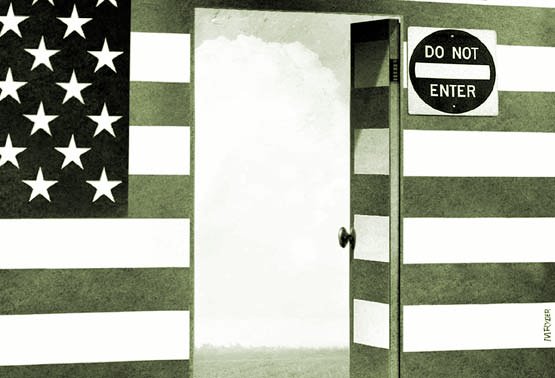
Let's look at the system first. It's safe to say that under our current system gaining a visa or green card to work in, live in or immigrate to the United States is incredibly difficult and confusing for people in most countries. Most visas and green cards, for instance, are given out via a random lottery that grants randomly selected people the right to enter the US. Would-be immigrants-cum-lotto winners from various countries, however, have different numbers of green cards and visas they can bid for. Until this past year, for instance, Russians were ineligible for green cards entirely.

Not only is this system totally random (literally) and based on opaque nation-based quotas, but even the types of visas that exist is labyrinthine and confusing: The best-known visa program is the green card, but while nearly a quarter of all US naturalized citizens in 2008 were Mexicans, for example, zero qualified for a green card.

Meanwhile, the status quo allows a mere 65,000 work visas under the H1-B program that brings in high-skilled immigrants. Last year, however, over 1,000,000 people became naturalized citizens. So at best 6.5% of people receiving citizenship are skilled workers -- not a good sign for a country that wants to compete with the rest of the world in a high-tech, globalized 21st century.

This, however, is not due to a lack of skilled workers who want to enter the United States. As the Economist reported last year, hundreds of thousands of doctors, computer programmers, engineers, lawyers and businessmen apply for H1-Bs each year.

So what happens to the many, many skilled immigrants who aren't among that 65,000? While in years past, those people would apply year after year hoping to one day get into America, other rich-world countries have caught on to the gains they can make while the US shooes away the world's best and brightest.

Canada, New Zealand and Australia now grant visas and residency based on "points" systems that allot points for education and skills. The UK allows in anyone who has graduated from the world's top business schools. For its part, America spins the PowerLotto wheel to let in 65,000 out of hundreds of thousands of educated would-be immigrants.

What do we have to show for this? Well, 25% of Silicon Valley companies were started by Indian or Chinese immigrants, and 40% of US PhDs are annually earned by foreigners. Sending that large number of Indian and Chinese PhDs home means the Silicon Valleys of tomorrow may be quite foreign-sounding places.

And not only do our immigration policies improve the competitiveness of other countries, but they objectively hurt the US as well. The Labor Department is projecting 2 million unfillable vacancies in US tech positions by 2014 because we send home all of the engineering graduates of US universities. Meanwhile, tech giants like Microsoft are rightly basing ever more of their operations in Canada, where immigrants are more welcome.


Perhaps not surprisingly the Economist also recently reported that new studies show American policies that restrict skilled immigrants are hurting our ability to innovate and create new, competitive companies. Another study released last month showed that the Chinese and Indian PhDs who once applied to remain in the US now simply go home to start their companies, given the economic growth in their home countries and the small chance of being allowed to stay in the US. Whereas 50,000 immigrants from those countries returned home in the last 20 years, the next five years are projected to see 100,000 Indians and Chinese leave the US.

Realizing the deleterious effects of US immigration policy, American technology executives, business leaders and academics have long called for dramatically increasing the cap on H1-B visas, or eliminating it entirely.

Instead, Congress seems eager to do just the opposite. The Employ American Workers Act (EAWA), part of the stimulus, bans banks that receive TARP money from hiring foreign workers, and Bank of America has already withdrawn offers to foreigners. Meanwhile, Indian media are reporting that Senators Charles Grassley (R-Iowa and a co-author of the EAWA) and Dick Durbin (D-Illinois) are trying to prevent foreign IT professionals from gaining H1-B visas.

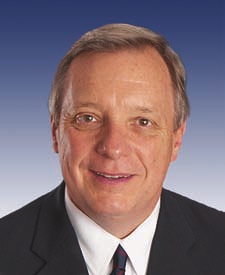
These men want you to be poorer and dumber: Grassley (left) and Durbin

Again, business leaders (who argue we need the world's best to fix our broken finance system and corporations) and academics (realizing that fewer job opportunities for foreigners means fewer foreign students means less revenue for US universities) are aghast that Congress is again taking aim at its own foot. But even the ultra-conservative Heritage Foundation is now worried, demanding a large increase in the number of H1-Bs because it reasons that having more smart people in the US is -- surprise! -- good for the economy. Unfortunately, Dick Durbin is unlikely to be influenced by that particular think tank, which may have had better luck gaining Washington's ear in the Bush days.

Finally, the largest source of high-skilled immigrants -- international students at US universities -- is increasingly fixing its sights on other destinations for study because of difficulties in obtaining a visa to stay in the United States, as the New York Times reported last month.

Who needs scientists?

That's only logical, given that the entire academic continuum of a foreign student's life in the US is under close scrutiny by the government. Yep, foreign students are monitored at all times under the SEVIS system that, as of January 2009, turns university employees into agents able to access student files and write about anything suspicious they do.

Once those foreign students who make it past SEVIS graduate, there's another juncture at which they may choose to go home. Any American who went to college probably knows a number of smart international kids who left the US after graduation either because they couldn't find a job "directly related" to their major and were not given a visa to stay, or because they didn't want to put up with the bureaucracy and uncertainty of trying to stay.

A Canadian acquaintance's story is indicative of the absurdity of demanding that foreign workers be employed in fields "directly related" to one's major. The acquaintance works at a charity that helps young Bronx residents learn computer and other job-related skills. She went last winter to the Caribbean for vacation and to apply for a new visa (an annual endeavor). She was denied a visa, however, because her degree (a Bachelor's and Master's in English from Cambridge University) did not "qualify" her for her job, which the consulate staff told her was in "social work." Since she still had a month left on her current visa, she flew back to the US planning to get some advice from her lawyer and reapply in a few weeks.

When transferring in Houston, however, she was stopped, handcuffed, and held in a Texas detention center for a night without being allowed to make a phone call or given a blanket to keep warm in her cold cell. She was then put on a plane to Toronto, where she had no friends, family or place to stay. Her crime? Because she had a month on her visa, she was an "immigration risk." Intervention from her employer and New York politicians helped her to renew her visa and re-enter the US.

This is how we treat the world's most educated and ambitious people. The people who can help America remake its banking sector, its energy economy, its healthcare networks, and its education system -- all while ensuring that our technology, software and entertainment companies stay at the top of the pack -- are told not to apply, and at risk of being handcuffed if they do.

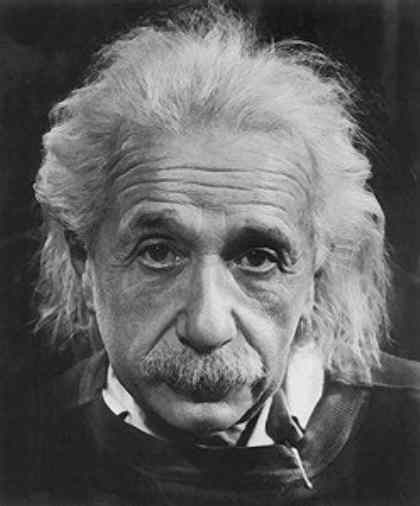
Do we need foreign workers to fix the economy? Who knows. What's clear is that America has always been a magnet for the world's top scientists, from Joseph Priestly to Albert Einstein. Lesser scientists than they are capable of building tomorrow's most agile companies, creating jobs and expanding the economy. Immigration reform is needed to make sure the brains that keep an economy and a society going can find their way here. America built itself on attracting the world's most ambitious, hardworking and intelligent people. Unfortunately, they can no longer come here legally without great difficulties. Reform is needed because now is no time to neglect that tradition of attracting -- and welcoming -- the world's best and brightest.

Wedneday Links: Play Ball!

BOULDER, Colorado -- This week we bring you some stories on how baseball makes math fun, Mikheil Saakashvili and his sexual perversions, and the tantrums of the Military-Industrial Complex. So let's get right to it.

Happy Opening Day! Who wants to do some math? In celebration of the start of the 2009 baseball season, we offer you a few pieces on my favorite aspect of the game, arcane statistical analysis! Eric Neel at ESPN.com writes about how fielding like they're wearing boxing gloves has relegated the likes of Bobby Abreu and (sadly) Adam Dunn to MLB's backwaters, thanks to more sophisticated statistical techniques that prove sucking with the glove really does hurt a team. From the New York Times, Alan Schwarz looks at Diamond Mind, a powerful statistics package that allows anyone with a computer to run their own massive simulations. No more Strat-o-Matic dice and cards for me! And finally, Dana Carvey offers his impression of George Will and his Heideggerian take on the national pastime, in game show form.

New York Times: Who wants a porno massage? Mikheil Saakashvili, that's who! The embattled Georgian president has become quite cozy with an American masseuse with a rather unorthodox technique. His political opponents have made hay out of his massage sessions, but Saakashvili is apparently content to be the Marv Albert of Georgia.

Hearst Photography Biennial: Don't touch that! The winning submission in this year's competition is a collection of photos of the old ladies in Russian museums who shadow your every move to make sure you don't touch anything or take pictures without paying for permission to do so. They can be sour-tempered and mean or enthusiastic and informative, adding a great wealth of knowledge to museum exhibits that are usually pretty short on information.

The Daily Show: America's worst Senate delegation? Barack Obama is upping military spending, but on the wrong stuff, apparently. Northrop Grumman, Lockheed Martin and Boeing want the government to spend money on overpriced, exotic weapons, which we need to kill Somali pirates in rubber dinghies. In this clip Jon Stewart does his stellar impersonation of Joe "GWOT" Lieberman, the Droopy Dog of the Senate. Tag-teaming with Chris Dodd, the handmaiden of AIG, Countrywide, and other financial felons, they make perhaps the worst pair of silver-haired representatives in the country (well, outside of the South).

The Daily Show With Jon StewartM - Th 11p / 10c
Full Metal Budget
thedailyshow.com
Daily Show
Full Episodes
Economic CrisisPolitical Humor


Global Detention Project: Lock 'em up. From the Military-Industrial Complex to the Prison-Industrial Complex, the Global Detention Project recently launched its website. It is an inter-disciplinary research project that examines state responses to migration and the networks of detention facilities that are expanding across the globe. The site features a map of all the immigration detention centers in the US, which they count at 961, with a total capacity of 33,400 detainees. This is only a small portion of America's incarcerated population, which currently stands over two million. Some have had enough of this modern Great Confinement, including the Economist and Sen. Jim Webb of Virginia.

Tilt Shift Photography: Make mine miniature. Don't you wish everything looked like a model train set? Through the wonders of tilt-shift photography, you can accomplish just that. The effect can be achieved either through the use of a special lens or by digitally-altering your photos, which you can upload to this site. The results are quite amazing. Filmmaker Keith Loutit has made a series of films depicting Sydney in this minaturized form.

Friday, April 3, 2009

Wednesday Links: Ramzan Kadyrov Will Find You and Kill You Wherever You Are

BOULDER, Colorado -- We have been slow to post things the past couple of weeks due to vacations and general malaise, so I have tried to include the most fascinating selections of news from the past three weeks. For this round we have more outrageous news from Russia involving political assassinations, economic nationalism, and the dumb Olympics, as well as the story of a nuclear dumping ground in my own back yard.

Newsru.com: Kill Ramzan Kadyrov. Okay, that's not what the story is about, it's just my own personal appeal to the world. The Chechen president has been sending assassins all over the world to kill his political opponents, most recently militia commander Sulim Yamadayev in Dubai. I guess he fancies himself as a regular Chechen Dick Cheney.

The Moscow Times: Screw Moody's.
The speaker of Russia's parliament, Boris Gryzlov, says he doesn't trust foreign rating agencies. Now, the credit raters really shit the bed on the mortgage-backed securities fiasco, and maybe they shouldn't be trusted, but I don't need an idiot like Gryzlov to tell me that.

New York Times: Salzburg 2014.
Some of Russia's biggest political attention whores have thrown their hats into the ring for the upcoming mayoral elections in Sochi, the presumptive site of the 2014 Winter Olympics. Some candidates have said they want to move the games to other sites in Russia that are more suitable; regardless of who wins, there's still a good chance that the IOC will decide to hold the Olympics elsewhere, because Sochi - and Russia - is such a basketcase.

High Country News: Don't eat the dirt, kids. Rocky Flats was one of the country's largest nuclear weapons manufacturing plants; now it's a wildlife refuge. The story of the contamination and clean up of the site does not inspire confidence.

Detroit News: Pets of Meat III. Pulitzer Prize-winning a-hole Charlie LeDuff "reports" on an urban raccoon hunter, and he serves up healthy portions of patronizing, patrician, and mildly racist commentary to go with the barbecued coon meat. And as Jossip reports, the whole story is totally plagiarized from a suspiciously similar story he wrote ten years ago about another raccoon hunter on Long Island.

Denver Post: Whole Foods is my religion.
The co-conspirator in the Oklahoma City bombing Terry Nichols is dissatisfied with his selection of menu items in the country's highest-security prison in Florence, Colorado. I don't think some fresh vegetables is too much to ask for when you spend 23 hours a day in a cell.

Washington Post: Barack Obama is making America so unsafe. In perhaps the least surprising story of the year, the Post reports that torturing people probably didn't yield any worthwhile intelligence and foiled no terrorist plots.

This American Life: Before it's too late.
The story of Bernie Epton, the Republican nominee in the 1983 Chicago mayoral race who lost to the city's first black mayor, Harold Washington, sheds some light on the ugly turn Sen. John McCain's campaign took this past fall (act four in the program).

BBC Four: The world's greatest time-waster. This documentary tells the fascinating story of Tetris, a game born on a whim in a Soviet computing center and transformed into one of the greatest video games ever created.

Wednesday, March 11, 2009

NYT Gets It From Horse's Mouth in Soviet Battleground

NEW YORK, New York -- The New York Times reported last weekend that Georgia's separatist enclave of South Ossetia was struggling to rebuild after the Russo-Georgian war that ostensibly centered around it this summer.

To listen to Times reporter Ellen Barry tell it, such are the wacky and crazy growing pains of an incipient nation.

Barry speaks of the "embarrassment" of residents of the South Ossetian capital, Tskhinvali, who are without basic plumbing -- for a newly sovereign state, running water should be a prerequisite, Barry and her interviewees seem to conclude. The report suggests that it's unclear what, exactly, has led to the shortages of water, construction supplies, and other basics, but, as Barry notes, "Whatever the reasons, progress has been slow."

Just like any other fledgling nation-state

Citing the head of a Russian organization, she writes: “They are asking, ‘What has actually changed as a result of our independence?’ There was, in fact, a real euphoria after the war, a strong one. But now it’s passing.”

Reading Barry's report, one would hardly realize that South Ossetia is a region in the nation of Georgia, and that only two countries in the world have recognized its claims to independence -- its primary enabler, Russia, and the bizarre leftist dictatorship of Nicaragua. Nor would one be cognizant that the country was the centerpiece of a war not of independence but mutual provocation by a then petrodollar-fattened Russia and a nascent Georgian state that Russia has long had designs of subduing and which Russia alleged was trying to bring about a genocide before that argument fell down like a prom dress.

Indeed, as Barry tells us: "When Georgia began an assault on the separatist capital on Aug. 7, Russia sent columns of armor to protect its allies."

Never mind the fact that, while it is extremely unclear under what circumstances the war between two consistently duplicitous and murky countries began, the current evidence seems to suggest Russian troops entered South Ossetia simultaneously with the Georgians. Never mind in addition that South Ossetia is less an "ally" of Russia than a part of a Georgian state in whose affairs Russia has repeatedly meddled since the Soviet breakup.

In this case, Barry seems to be the latest in a long line of English-language reporters who can from time to time be deaf, dumb and blind in Russia. At almost all big US and UK papers, foreign reporting is often sloppy. And (post) Soviet reporting can be a disaster.

This is nothing new -- Walter Duranty himself was the proudest purveyor of this particular trend -- but nor is it a good thing. While it's never pleasant or nice to dig into correspondents, who are often trying like anyone else to do their best at a difficult job, personality is uniquely important for foreign newspaper correspondents. Given that a Moscow reporter's editors are a world away and almost totally ignorant about what's going on in the (former) Soviet Union, the foreign corespondent's own impressions and ability to grasp his surroundings take on unique import in conveying to millions of Americans what is happening in a place utterly alien to them.

Judging by The Google, Barry's own background seems to be as a reporter in Boston and the US South before moving in 2007 to the New York Times. After a time reporting on the New York metro area, she vanished for 9 months (presumably for Russian language instruction) before re-appearing in Moscow in August 2008.

I have often been fairly impressed with her work, in part because of the inherent systemic difficulties of finding qualified foreign correspondents. First of all, it's probably very difficult for the Times' editors to determine who should be reporting for them in Russia or any foreign country. Do you hire natives who might have little or no training in high-quality journalism, or even share the Times' general weltanschauung and interests? Expats who have been in a place for a while -- but may be burnt-out lifers? Or do you send your own reporters?

The Times seems to combine the latter two approaches, which makes sense. But sending to Moscow a reporter who knows Brooklyn well doesn't guarantee that any less-than-totally-straightforward political stories (e.g., articles that aren't cut-and-dry stories on missile reduction or NATO expansion) will be handled well. Other Moscow reporters have been sent from New York (after winning a Pulitzer, in some cases). But their stories have sometimes been a mix of murmurings of the most basic facts of Moscow life ("Wow! They turn hot water off here in the summer!") and out-of-date features.

Barry seemed immediately capable, and I don't doubt that she is a good reporter, but this particular story is really pretty galling. When Western reporters go to Russia's "hot spots" -- places like Chechnya, Dagestan, distant oilfields on Sakhalin, or the breakaway republics Russia is trying to wrest from its neighbors -- their trips are often planned to a T by Russian authorities, sometimes with little time to wander off or interview people freely. For her part, Barry's sojourn to South Ossetia seems to have been part of a trip organized by the South Ossetian separatist government or its Russian sponsors: She mentions that she, as part of a "group of foreign journalists," met with the rebel leader, Eduard Kokoity, a sign that a Russian or Ossetian ministry may have been calling the shots on the trip.

Interviews with locals follow a typical tack for these sorts of trips: Residents of Tskhinvali mentioned in the piece are generally patriotic (though I doubt that many of the <70,000 people remaining in South Ossetia aren't patriotic at this point, given that ethnic Georgians and those opposed to the breakaway regime have been chased out). And when asked about the clusterfuck that is South Ossetia, they blame unnamed "underlings" of the rebel leader, rather than point any fingers at the top dog himself.

Sounding like any Chinese peasant standing around with a few teeth knocked out after a round of rioting, one South Ossetian tells Barry: "She 'didn’t get a thing' [in terms of monetary support], though it had not affected her opinion of Mr. Kokoity. 'We love him, we respect him,' she said. 'But he has many bad subordinates.'"

Kokoity is the head of a breakaway state alleged (in the Times' pages) to be involved in counterfeiting; arms, human and drugs trafficking; and that has helped smuggle nuclear material, but Barry's piece gives no indication of this. Instead, we're assured by Kokoity that "dishonest subcontractors" are to blame for any problems. Later, in case anyone didn't get the point, Kokoity is again quoted as fingering the nefarious "unscrupulous subcontractors" as being to blame for the fact that South Ossetia isn't exactly Candyland.

The fact that it's a war-ravaged breakaway state run, as Russian journalist Yulia Latynina has reported, by embezzlers and propped up and used as a political token in Russia's strategery games is apparently not central to these problems.

Indeed, the Russo-Georgian war is depicted not as a struggle between a rash, corrupt Georgian state and an ill-tempered, power-hungry Russian giant trying to regain control of its strategically located Caucasus neighbors and former subjects, but as a drive for independence among a people yearning to breathe free: "There are reminders of the euphoria that swept this valley last summer, when Russia acknowledged South Ossetia’s 18-year separatist struggle by recognizing it as a sovereign nation. Graffiti proclaims 'Ossetia thanks its defenders' and 'Great Russia,' and citizens say they are extraordinarily grateful to be free of Georgian rule."

Probably not so grateful

Yet, to anyone outside the Kremlin (or to those in the Kremlin and possessing common sense), South Ossetia remains firmly within Georgia's territory.

The thousands of ethnic Georgians whose ancestral villages are interspersed across South Ossetia, and who were chased from their homes, are not mentioned here. Neither are the Georgians living outside South Ossetia who were displaced when Russian tanks threatened to take Tbilisi, the Georgian capital, after invading South Ossetia.

The NYT is one hell of an organization. There is no parallel in US media. Unfortunately, as well-meaning as its Russian correspondents probably are, they and the Moscow correspondents for all English-language (especially UK) media sometimes don't speak strong Russian or command a great amount of knowledge about the region -- relying instead on a small army of translators, "fixers" who arrange interviews, researchers and drivers. In this case, the briar patch that is South Ossetia was smoothed over to the point that it was treated as a sovereign nation. In fact, a deeply flawed South Ossetia is still part of a deeply flawed Georgia at bitter odds with a deeply flawed Russia. But the result of this reporting-by-committee is unfortunately a too-often ill-informed American public, and, in this case, traces of unjustified deference to an opaque separatist state.