Showing posts with label Immigration. Show all posts

Friday, April 24, 2009

Typologies of Borders and Migration (Pt. 1A of 3)

BOULDER, Colorado -- As Itchy continues to formulate his thoughts on American immigration policy, I thought I would do a brief intervention about some current research on borders and migration and offer up some illustrative maps.

There are two basic schools of thought on borders. The traditional view is that the current international borders are the static, physical outcomes of international relations, and they are largely unchanging. Alternatively, the popular belief today is that we are entering a "borderless" world where distinctions of national territory and sovereignty are becoming less and less important. Neither of these are correct. Borders are, as George Simmel said, "not a spatial fact with sociological effects, but a sociological fact which takes a spatial form" - that is, they are constructions, the manifestation of a set of social processes. But just because they are constructed does not mean they are not meaningful, or that they do not have impacts on people's daily lives.

As for the second line of thinking, innovations like the Internet may have broken down some walls between people across the globe, but even access to information can be controlled and restricted by states. For every wall that has come down in the European Union, for example, another hard border has been erected, whether that be in the form of a Chinese firewall or a moveable fence in the California desert. A vast new network of migration management is growing, and it permeates far beyond the border regions. As America's recent experience with immigration has shown, the free trade impulse often loses out to fear-mongering arguments about national security when it comes to border policy, so there is no clear trajectory towards freer and more open borders [for more on this see Newman, David (2006) "The lines that continue to separate us: borders in our 'borderless' world," Progress in Human Geography 30(2): 143-161.]

One of my favorite tools for teaching students about borders is "Hypothetica," a fictitious nation that is stricken with nearly every type of border conflict known to man. From trans-border oil fields to meandering rivers to irridentist nationalism, Hypothetica is besieged from all sides.
Here we can see why borders pose so many problems.


But that is only the beginning of the messiness. Many of these are static physical features, but borders only gain meaning when people or things move across them, so integrating a discussion of migration into the study of borders is essential. While we can develop some typologies of borders and migration, there can never be any sort of unified theory of borders. Ultimately, this map merely argues that it is hard to draw straight lines for borders without really considering that these characteristics can overlap and shift over time, creating a much more complicated picture. Michele Acuto in her article "Edges of the Conflict: A Three-Fold Conceptualization of National Borders" offers her own typology of migration, classifying national borders as either walls that restrict mobility, ideal lines that demarcate intangible - but not physical - barriers between communities, and border regions with varying degrees of extent. What we need to do is re-scale the border and not think of it merely as a line.

Borders have traditionally been conceived as divisions between states, but we should think about their meaning and impacts on different scales as well. As Hypothetica illustrates, international borders can also divide sub-national communities, and they are often managed, patrolled, and interpreted by people and authorities other than the national government. If we take a closer look at most borders, they are not bright lines or solid walls, but a series of gaps and zones
where access and enforcement are highly variable, as this map of Brownsville, Texas illustrates. This does not mean that we should strive for this ideal type of a continuous wall from the Gulf of Mexico to the Pacific Ocean - that is neither possible nor desirable.

This also means we need to rethink how borders are drawn on a map. They are traditionally thought of as linear features - the proverbial line in the sand separating two entities. In reality, few borders conform to this two-dimensional notion. The line is often broken, demarcated in some spaces and not in others. Borders can also be point features, as access across many borders is often restricted to particular nodes. Or they can be areal features as well - there are interstitial spaces where neither side can claim absolute sovereignty, or there may be a no-man's-land between the hard borders the two sides enforce. There are also border zones, areas near the border where different territorialities and legal regimes may operate. Even approaching the border may be restricted, or the border zones may have more liberalized trade and customs regimes. Even the popular conceptions of a "borderland" or "frontier" evokes different meanings and representations - the landscape, the reach of state authority, and the identities of the people living there can change as one moves closer to or farther away from a border.

We will never be able to tackle any of the challenges that immigration presents until we stop trying to achieve that perfect, impermeable border and recognize that borders are messy. They are not lines in the sand, but a series of processes of movement and management and representation that are all tied to much larger questions of citizenship and mobility. The permeability of a border depends on who is crossing it, or what, and where and why. We can never wall off America, nor would we ever want to.

Thursday, April 9, 2009

America's Love-Hate Affair With Educated Foreigners: Stop Hating, For the Love of God (Pt. 1 of 3)

NEW YORK, New York -- President Barack Obama is planning to push a comprehensive immigration reform bill that would include legalizing the status of the estimated 12 to 20 million illegal aliens in the United States, the New York Times reported today.

That news came amid both a period of media attention toward illegal immigration and a number of immigration-related political decisions. While the political events have unfortunately tended to take aim at highly educated would-be legal immigrants, it is clear that the role of illegal migrants in the United States is becoming increasingly relevant on the back of concern about the economy and jobs.

The illegal migration issue heats up again

The Times’ report may be the most significant development since the illegal immigration began bubbling up in recent weeks, but it is already not the most recent. Following this news, the Wall Street Journal reported this evening that Obama chief of staff Rahm Emanuel has lately softened his stance on illegal immigration.

The Walter Duranty Report has previously advocated the need for comprehensive immigration reform and increased numbers of legal immigrants. However, I find the Obama plan, as described in the New York Times, to be a potential disaster for including what appears to be a blanket amnesty for illegal aliens – something that I find morally debatable but unacceptable from the point of view of upholding the rule of law, giving all would-be immigrants an equal playing field, justifying the considerable effort and blood expended by the country’s 1 million annual legal immigrants, and the way it may threaten any lasting reform.

Over the next few days, I'd like to put together a few pieces representing my thoughts on this subject at the moment. Those pieces will cover three areas: Why Immigration Reform Is Necessary; Why a Blanket Amnesty for Illegal Aliens Is Wrong; and What to Do.

WHY IMMIGRATION REFORM IS NECESSARY

America’s immigration system is broken. We have previously said that fixing it is the single most important thing the country will need to do to prosper in the long term, and that continues to hold true. Without going into the moral or historical arguments in favor of immigration, we'll focus on three economic arguments that present a case for reforming a system that keeps out skilled immigrants:

1. Today's antiquated, restrictive system cannot accommodate the numbers of skilled immigrants who want to enter the United States, especially in relation to unskilled immigrants;

2. Skilled would-be immigrants not allowed into the United States are wooed by other nations to improve their economic competitiveness; and

3. Our biggest pool of skilled immigrants (foreign students) is increasingly alienated.
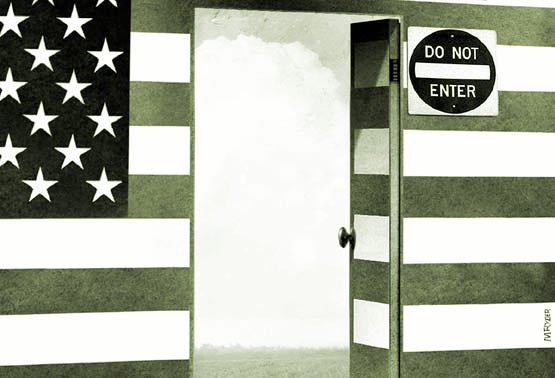
Let's look at the system first. It's safe to say that under our current system gaining a visa or green card to work in, live in or immigrate to the United States is incredibly difficult and confusing for people in most countries. Most visas and green cards, for instance, are given out via a random lottery that grants randomly selected people the right to enter the US. Would-be immigrants-cum-lotto winners from various countries, however, have different numbers of green cards and visas they can bid for. Until this past year, for instance, Russians were ineligible for green cards entirely.

Not only is this system totally random (literally) and based on opaque nation-based quotas, but even the types of visas that exist is labyrinthine and confusing: The best-known visa program is the green card, but while nearly a quarter of all US naturalized citizens in 2008 were Mexicans, for example, zero qualified for a green card.

Meanwhile, the status quo allows a mere 65,000 work visas under the H1-B program that brings in high-skilled immigrants. Last year, however, over 1,000,000 people became naturalized citizens. So at best 6.5% of people receiving citizenship are skilled workers -- not a good sign for a country that wants to compete with the rest of the world in a high-tech, globalized 21st century.

This, however, is not due to a lack of skilled workers who want to enter the United States. As the Economist reported last year, hundreds of thousands of doctors, computer programmers, engineers, lawyers and businessmen apply for H1-Bs each year.

So what happens to the many, many skilled immigrants who aren't among that 65,000? While in years past, those people would apply year after year hoping to one day get into America, other rich-world countries have caught on to the gains they can make while the US shooes away the world's best and brightest.

Canada, New Zealand and Australia now grant visas and residency based on "points" systems that allot points for education and skills. The UK allows in anyone who has graduated from the world's top business schools. For its part, America spins the PowerLotto wheel to let in 65,000 out of hundreds of thousands of educated would-be immigrants.

What do we have to show for this? Well, 25% of Silicon Valley companies were started by Indian or Chinese immigrants, and 40% of US PhDs are annually earned by foreigners. Sending that large number of Indian and Chinese PhDs home means the Silicon Valleys of tomorrow may be quite foreign-sounding places.

And not only do our immigration policies improve the competitiveness of other countries, but they objectively hurt the US as well. The Labor Department is projecting 2 million unfillable vacancies in US tech positions by 2014 because we send home all of the engineering graduates of US universities. Meanwhile, tech giants like Microsoft are rightly basing ever more of their operations in Canada, where immigrants are more welcome.


Perhaps not surprisingly the Economist also recently reported that new studies show American policies that restrict skilled immigrants are hurting our ability to innovate and create new, competitive companies. Another study released last month showed that the Chinese and Indian PhDs who once applied to remain in the US now simply go home to start their companies, given the economic growth in their home countries and the small chance of being allowed to stay in the US. Whereas 50,000 immigrants from those countries returned home in the last 20 years, the next five years are projected to see 100,000 Indians and Chinese leave the US.

Realizing the deleterious effects of US immigration policy, American technology executives, business leaders and academics have long called for dramatically increasing the cap on H1-B visas, or eliminating it entirely.

Instead, Congress seems eager to do just the opposite. The Employ American Workers Act (EAWA), part of the stimulus, bans banks that receive TARP money from hiring foreign workers, and Bank of America has already withdrawn offers to foreigners. Meanwhile, Indian media are reporting that Senators Charles Grassley (R-Iowa and a co-author of the EAWA) and Dick Durbin (D-Illinois) are trying to prevent foreign IT professionals from gaining H1-B visas.

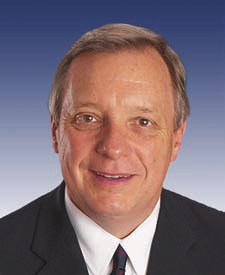
These men want you to be poorer and dumber: Grassley (left) and Durbin

Again, business leaders (who argue we need the world's best to fix our broken finance system and corporations) and academics (realizing that fewer job opportunities for foreigners means fewer foreign students means less revenue for US universities) are aghast that Congress is again taking aim at its own foot. But even the ultra-conservative Heritage Foundation is now worried, demanding a large increase in the number of H1-Bs because it reasons that having more smart people in the US is -- surprise! -- good for the economy. Unfortunately, Dick Durbin is unlikely to be influenced by that particular think tank, which may have had better luck gaining Washington's ear in the Bush days.

Finally, the largest source of high-skilled immigrants -- international students at US universities -- is increasingly fixing its sights on other destinations for study because of difficulties in obtaining a visa to stay in the United States, as the New York Times reported last month.

Who needs scientists?

That's only logical, given that the entire academic continuum of a foreign student's life in the US is under close scrutiny by the government. Yep, foreign students are monitored at all times under the SEVIS system that, as of January 2009, turns university employees into agents able to access student files and write about anything suspicious they do.

Once those foreign students who make it past SEVIS graduate, there's another juncture at which they may choose to go home. Any American who went to college probably knows a number of smart international kids who left the US after graduation either because they couldn't find a job "directly related" to their major and were not given a visa to stay, or because they didn't want to put up with the bureaucracy and uncertainty of trying to stay.

A Canadian acquaintance's story is indicative of the absurdity of demanding that foreign workers be employed in fields "directly related" to one's major. The acquaintance works at a charity that helps young Bronx residents learn computer and other job-related skills. She went last winter to the Caribbean for vacation and to apply for a new visa (an annual endeavor). She was denied a visa, however, because her degree (a Bachelor's and Master's in English from Cambridge University) did not "qualify" her for her job, which the consulate staff told her was in "social work." Since she still had a month left on her current visa, she flew back to the US planning to get some advice from her lawyer and reapply in a few weeks.

When transferring in Houston, however, she was stopped, handcuffed, and held in a Texas detention center for a night without being allowed to make a phone call or given a blanket to keep warm in her cold cell. She was then put on a plane to Toronto, where she had no friends, family or place to stay. Her crime? Because she had a month on her visa, she was an "immigration risk." Intervention from her employer and New York politicians helped her to renew her visa and re-enter the US.

This is how we treat the world's most educated and ambitious people. The people who can help America remake its banking sector, its energy economy, its healthcare networks, and its education system -- all while ensuring that our technology, software and entertainment companies stay at the top of the pack -- are told not to apply, and at risk of being handcuffed if they do.


Do we need foreign workers to fix the economy? Who knows. What's clear is that America has always been a magnet for the world's top scientists, from Joseph Priestly to Albert Einstein. Lesser scientists than they are capable of building tomorrow's most agile companies, creating jobs and expanding the economy. Immigration reform is needed to make sure the brains that keep an economy and a society going can find their way here. America built itself on attracting the world's most ambitious, hardworking and intelligent people. Unfortunately, they can no longer come here legally without great difficulties. Reform is needed because now is no time to neglect that tradition of attracting -- and welcoming -- the world's best and brightest.

Tuesday, April 7, 2009

So You Say You Want a Reset Button?

NEW YORK, New York -- Well, you know, we all want to change the world.

Or at least President Barack Obama certainly does, to the delight of Americans and non-Americans alike.

Americans are sick of being hated by other countries; other countries want America to change the way it interacts with them (ironically, it was for this same desire to change others' behavior that President W. Bush gained worldwide wrath). And these are generally fair sentiments.

One of the Obama administration's most visible attempts yet to kick off its foreign policy revolution is a move, first expressed by Vice President Joe Biden in February, to "press the reset button" in relations with Russia. Biden's words were later followed by a gift (as in, what you receive on your birthday, or for Christmas) from Secretary of State Hillary Clinton to Russian Foreign Minister Sergei Lavrov. The gift was a plastic button with the word "reset" inscribed on it in Russian.


Well, almost. The word was peregruzka. And that does not mean "reset," as the New York Times pointed out last month. In other words, the Obama administration went out of its way to inscribe a gift for Lavrov in Russian, only to blow the Russian like a 7th-grader who didn't study for his French test ... only to learn the test was in RUSSIAN!

How did this happen? Part of it is that, to a degree that is hard for most English speakers to fathom, the Russian language relies on a system of word-formation based on adding fixed prefixes and suffixes to a finite number of roots. The prefix pere- means to do something over. A bit like "re-" in English. And the root gruz means a load. So the construction peregruz would logically (and Russian is a very logical language) mean something like a reload.

But as any native speaker of Russian could tell you, while some technical applications -- think of a manual for a microwave in Yakutsk -- may use the word perezagruzka to mean reset, peregruzka is far from there. For better or worse, pere- can also mean to do something excessively, and here peregruzka would actually mean an overloading or overcharge. (In reports in the Russian press about Biden's original statement, the word used for reset in Russian was ... Reset. In English.)

Not surprisingly, Clinton's gaffe did not go unnoticed by Lavrov, her Russian counterpart. The mistake should "contribute to the advancement of Russian in America," Lavrov said.

Well, not quite ...

First impressions matter, and both the incredibly thoughtless mistranslation and Lavrov's reaction to it have great portent for any strategy based on the feeling that the US needs to "reset" the way it treats Russia. From the American side, the bad translation is as inexcusably (there are millions of native Russian speakers in the US! Couldn't they have run it by any one of them?) naive and lacking in forethought as is any talk about unilaterally "resetting" relations with Russia. From the Russian side, Lavrov's instinct to score a cheap point off Hillary is indicative of a Kremlin foreign policy entirely based around scoring cheap points off of "opponents" -- the greatest and most vilified of which is the US.

But why is it naive and thoughtless to "reset" relations with Russia? After all, judging by the ecstatic comments (now skirted off into the Internet ether) that Times readers left in response to the focus on bringing US-Russian relations back to the drawing board, Americans are relieved to hear about the "reset." But the fact is, for all of Bush's many foreign-policy foibles, the US has no need whatsoever to do penance before Russia.

In many ways, there weren't any large problems with US-Russian relations under 43: Bush largely ignored Russia, and that was a good thing. Russian officials since 1917 have been a bunch of pre-modern gangsters who today love to compare the United States to, for instance, Nazi Germany. The best policy in those instances is to do what Bush did -- keep a stiff upper lip, and let the world judge Putin's megalomania for what it is.

Granted, Bush did have mis-steps regarding NATO expansion. But that was less so because he encouraged Georgia and Ukraine to join NATO than because he failed to do it with Europe's support and in so failing was able to be labeled a unilateralist. Kosovo, on the other hand, was recognized with Europe's support -- and Russia, not the US, looks like the loser on that one.

I'd gander that history will show the largest mistakes made by the Bush administration vis-a-vis Russia were 1) when Dubs told the world he had "seen Putin's soul" while letting the man stamp out democracy and 2) the fact that the Bushies continuously failed to unite Europe with itself in policies touching Russia (involving energy, the former Soviet republics and democracy, e.g.).

Looking beyond the absence of any reason to atone for sins (not) done unto Russia, what consequences would any undue penance have? The smart money says it would not change Russia's behavior toward the US is in any positive way, but would merely cause Russia to smell blood in the water. I have no newspapers to cite here beyond personal experience, but when Russians sense weakness -- if you're alone at night, or if you're a racial minority -- they attack. This is especially true of the Kremlin, which takes the most base traits of many Russians and amplifies them. As its relations with its neighbors show, Russia is in many ways a medieval kingdom, like pre-Enlightenment Saxony.

In the case of Hillary's "reset" button gift, the short-term repercussion is that Lavrov, rather than smile and make a polite joke as an American or Belgian or Congolese or Korean diplomat would do, tried to score a cheapshot about teaching those dimwitted Americans foreign languages. The longer-term repercussion is that Russia will smell weakness in the US's bid to "reset" relations and will opportunistically seek to undermine American geopolitical interests while perhaps offering "olive branches" on flighty, noncommittal issues like nuclear non-proliferation. This is already manifesting itself: Chinese calls to unseat the dollar as the world reserve currency (a status that gives America undue influence and flexibility in borrowing money cheaply) originated last month in Moscow, shortly after the "reset" button was given to Lavrov.

The truest, and best, reset: Let them in

The one "reset" Washington should consider in regard to Russia is to dramatically expand access for Russians in getting to the US. No matter how many toy buttons or stuffed animals Hillary gives Lavrov, Russia will continue to rail against the US for domestic consumption (how else can we tell if Putin really is a strong leader than if he's taking on the hegemon with his bare hands?), indoctrinating further generations of US-hating Russians.

The US needs to let Russians come here, study, work, live, immigrate, vacation, buy property, whatever, and let them see that things aren't so bad, planting the seeds for a less anti-American populace and leadership in the future. Instead, we let a very small number of Russians get any sort of visa to the US, and treat them like prostitutes and criminals when they attempt do so. Again, this is based on personal experience rather than any Interweb articles I can cite. But it's another instance of how the Obama administration seems to be losing a few things in translation in its Russia policies.

Tuesday, March 3, 2009

America Takes Aim, Shoots Self in Foot

NEW YORK, New York -- The New York Times published another painful, "what the f&$# is wrong with us" story tonight about the US's bone-headed immigration policies driving away foreign students.

I've seen this happen to many friends, co-workers and fellow students. They want to remain in the US to study or work and contribute to making this country a better place, but our immigration laws push them out or make it pointlessly difficult to stay. Europe is more than happy to have them. As the Economist has brilliantly written, guess who shoots themselves in the foot? Yep: We do!

Particularly galling is this assertion by an immigration official:

The official said that time limits for visas were ordinarily a matter of reciprocal agreements between nations. [Belarussian scientist] Dr. Shkumatava’s case, he said, may have been further complicated because Belarus severely limits the number of foreign service officers the United States can have there at any given time.

That's a line of bullskit. Russians have to present US consular officials with their life stories in order to visit the US for a week. As a Russian, you need to include copies of birth certificates, property deeds, pay stubs, letters from your employer saying you have a stable job, and any records of family, spouses, etc. to prove you have someone "anchoring" you in Russia. Then you need to pay hundreds of dollars for a US contractor called Pony Express to deliver your materials to the US embassy (you can't deliver them yourself, of course!).

Then you wait for a phone call to arrange an interview. It could come at any time over the course of weeks after you pony up for Pony Express, or it might not come at all. Your interviewer generally treats you like dirt -- especially if you're a woman. Then you wait weeks again for a phone call saying you can get your visa, that you have another interview ... or you may not get a phone call at all.

Americans, on the other hand, pay the Russian Embassy $100 and get their visa that day. There is NO reciprocity; there is fear, mindgames and arbitrariness for highly educated, highly skilled Russians trying to come here. Why? Because we're afraid those educated, skilled people may try to stay in the US. What a disaster that would be.

Dr. Shkumatava, of MIT (credit: NYT)

Even English and Canadian friends have nearly insurmountable difficulties renewing work visas. One friend -- a Canadian who graduated from Cambridge -- was sent to an ICE detention facility after flying into Houston with a work visa that had only a month before it expired (she'd been denied a renewal because her major, English, didn't "qualify" her to be a charity worker teaching kids in the Bronx to read). She spent a night in a cold cell in Texas with no phone call allowed, and no clothes or blanket aside from the shorts and tank-top she was wearing. All because she majored in English.

Americans, do we want to run ourselves into the ground? For the love of God, call your elected representatives today and demand that they stop bowing to the bogeyman of "terror" and bring about rational immigration policies. If we don't want foreign students studying here, they'll find other places to go. And, sadly, our high schools today are in such a state that US students alone aren't going to allow our universities their reputation for being tops in the world.

Wednesday, February 25, 2009

Wednesday's Links: The $1 Trillion Man

BOULDER, Colorado -- I encounter a lot of news items in the course of each week while not doing my work, but I don't always have time to post about them, or I am simply too lazy or too engaged in other activities, like watching Law & Order and playing Donkey Kong (after a week, I can now make it to the third barrel stage, which I think is pretty good).

So, I have decided to create a new feature at the Walter Duranty Report - each Wednesday, I will post a compilation of some of my favorite links from the past week. Some of them are fresh news items, but most of them are random videos and strange sites that I came across while searching for the end of the internet.

FAIR: Babies are an anchor, pulling America down to the inky depths. According to the Federation for American Immigration Reform, pregnant illegal immigrants are flooding into this country just to have their babies on American soil - so-called "anchor babies" - and it is all the fault of the dastardly fourteenth amendment.

Deadspin: A-Rod is a terrible liar. There was not an ounce of truth in his crocodile-tear laden apology to, um, America? The Yankees? Madonna? Further proof that this guy is emotionally retarded. Perhaps the Onion was right.

Youtube: Gentlemen, we can rebuild [the economy]. I'm pretty sure this is what President Obama was talking about in his speech last night.


The Hockey News: At least Ontario has junior hockey. The blighted cities of Ontario, which actually leads Michigan as the world's largest car-producing region, can at least take comfort in watching their junior hockey teams as the Big Three collapse.

New Haven Independent: Beat down posse. The latest installment of editor Paul Bass' v-log news summary, in which he discusses some troubling trends in New Haven's community policing policies. Be sure to scroll down to a response from Mayor Destefano.

Denver Post: Real justice for victims. Colorado is contemplating scrapping its death penalty and using some of the savings (estimated at anywhere between $300,000 and $4 million per year) to investigate unsolved homicides.

60 Minutes: 18 is the new 21. Personal acquaintances of mine, former Middlebury College president John McCardell and Boulder PD chief Mark Beckner discuss the benefits of lowering the national drinking age.

Gawker: NYU sucks on so many levels. Hilarious video of the NYU jackasses who occupied the university food court. How you like "consensus" now?


Christian Science Monitor: Their hearts just weren't in it. The accused killers of Russian journalist Anna Politkovskaya were acquitted, but no one was really surprised since the prosecutors were not trying terribly hard to convict them.

Pilki FM: Head like a fucking orange. For the acolytes of RSK (that's Ricky Gervais, Stephen Merchant and Karl Pilkington for the uninitiated), you can listen to a stream of their old Xfm radio show 24/7.

Finally, I would like to point you towards a great news aggregating site, news*diet, which is linked in the menu to the left. A friend of mine runs it, and he periodically compiles a newsletter of noteworthy stories, which you can subscribe to via email. There is a lot of great content about government transparency and press freedom, though it is a bit heavy on sources related to sex trafficking - that just happens to be the author's area of research. So check it out, and get your fill of news.

Tuesday, January 27, 2009

Is Congress Economically Illiterate?

NEW YORK, New York -- I noticed something strange when doing my part to save the global economy from oblivion. Congresspeople, by and large, have not traditionally cared or thought much about the economy.

That statement, of course, begs two questions: 1) What ass goes around with this Jebus complex, and why?; and 2) How could you say something like that about the people who brought us Freedom Fries?

All things in turn.

After growing exasperated as craven Democrats sold out mass transit so that I can put $500 I don't need in the bank, I decided to write my Senators and representative to ask that they not give in to Republican ideological tax-cut demands.

Of course, Senator Tracy Flick doesn't have any functioning web site at the moment, so there was no way to write her. But the stranger thing was that none of the New York Congressional delegation that I looked at had any option available to speak out on the economy. When you write a Congressman, you usually have to fill out your name, address, etc., and then select the topic of your query from a pull-down menu. Time and time again, Congresspeople's pull-down menus included "Immigration," "Defense," and "Education." But nobody had an option for "Economy," and a minority had "Fiscal Policy" or "Taxes" or anything vaguely related to the economy -- even Chuck Schumer, legendarily beholden to Wall Street, doesn't seem to think that much about the economy, judging by the sorts of comments he expects to get from constituents.

Try it yourself here by searching for your Congressperson's contact page.

I guess the point is that Representatives and Senators don't expect to hear from constituents about the economy and may simply not really know or think much about the economy in the broadest terms themselves. Quite possibly that's why the US, unlike other countries, has never engaged in debate about adopting a competitiveness policy or taken measures (like school reform or granting more H1B visas to skilled workers) that would improve our economy. Perhaps it will also mean Congress fails to pass the stimulus bill that prevents 7% employment from reaching 15% (so I say as a strip porno noodie lounge advertises on CNN in prime time -- as sure a sign of recession as they come).