Showing posts with label China. Show all posts

Monday, November 2, 2009

Canada Shores Up Arctic Claims With Olympic Flame

BROOKLYN, New York -- The torch relay for the 2010 Winter Olympics in Vancouver began on Friday. The Olympic flame started its Canadian journey in Victoria, British Columbia, and over the course of 106 days, it will travel 28,000 miles to hundreds of Canadian towns and cities, arriving back in Vancouver for the opening ceremonies on February 12.

One of the communities the torch will visit is Alert, which sits on the northern tip of Ellesmere Island in the province of Nunavut. Alert is the northernmost permanently inhabited place on earth, located just 507 miles from the North Pole. The torch will be flown more than 1,700 miles from Churchill, Manitoba just so it can briefly touch down and greet the five permanent inhabitants of Alert, all members of the Canadian military who man the signals and weather stations there. Alert will not be the only stop north of the Arctic Circle - on its way back south, the torch will stop in Ausuittuq (also known as Grise Fiord) and Qausuittuq (Resolute) in Nunavut. It will also make stops in Kugluktuk (Coppermine), Nunavut, Inuvit, Northwest Territories and Old Crow, Yukon Territory.

This arctic leg of the relay is particularly interesting because it has obvious geopolitical overtones. In recent years, Canada has increased its military presence in the north in an attempt to shore up sovereignty that it sees as increasingly under threat. The region is gaining geostrategic importance. As ocean temperatures rise and sea ice retreats, the Northwest Passage through Canada’s vast northern archipelago may become a viable year-round shipping lane. The arctic also holds vast untapped supplies of natural resources, especially oil and gas, that may become accessible in the near future.

The main competitors for these arctic treasures are the United States and Russia. The US refuses to recognize Canada’s claim that the Northwest Passage is an internal waterway, asserting that it is international waters that foreign ships can ply without Canada’s approval. Russia, meanwhile, has claimed that its own territorial waters - and therefore its claims to undersea resources - extended to the North Pole and beyond, setting its maritime boundaries uncomfortably close to Canada. In 2007, in an apparent attempt to legitimize this claim, Russia sent a submarine to the bottom of the ocean at the Pole to plant a small Russian flag on the sea floor (they appear to be unaware that flag-planting ceased to be a legitimate way to make territorial claims sometime in the 17th century).


Now Canada is using the Olympics to further shore up its claims to the arctic, and the torch can be used to enhance sovereignty both externally and internally. Externally, the torch’s arrival in Alert signals to the world that Canada considers these far-flung regions as integral parts of their national territory. Internally, it binds these remote communities to the national center - Canadians who live in the arctic, or who are members of the First Nations minority, are just as much a part of the national celebration as the metropolitan south or Anglo-, French- or any other type of Canadian (the weekly television show Hockey Night in Canada plays a similar role).

Canada is not unique in doing this. Most host countries carry the torch through every one of their constituent regions. At the last Olympics, the Chinese government used the torch relay to reaffirm its territorial integrity, carrying it across the restive regions of Tibet and Xinjiang and even to the top of Mt. Everest (the Himalayan region has long been at the center of territorial disputes between China, India and Pakistan). Much of the torch relay in 2008 was besieged by protesters in foreign countries who spoke out against the Chinese government’s oppressive policies in Tibet and elsewhere, but once the flame reached China proper, it was met mostly with celebration of the Olympics as a symbol of Chinese global power and national unity.

During this march to Beijing, the American news media rediscovered the origins of the torch relay in the 1936 Berlin Games and spoke breathlessly about “Hitler’s Olympics” and the parallels with Red China and their nationalist spectacle. Chinese nationalism can be a terrifying and dangerous thing, and the government has shown a great deal of recklessness and a great lack of control whenever it unleashes nationalist anger. Nonetheless, the point here is that no one is above using sport, especially the Olympics, for promoting nationalism. The 1936 Olympics created many iconic images that linked sport to fascism, militarism, and racial prejudice. We like to think that instead we have inherited the mantle of Jesse Owens, who embarrassed the Master Race, but Berlin lives on at every Olympics. China was chided for its global torch tour, but no other country has shied away from the practice because of its Nazi origins. The International Olympic Committee has long been run by fascists, from Nazi sympathizer Avery Brundage to Francoist Juan Antonio Samaranch. The current body is filled by corrupt sycophants and apologists who hand the Olympics to the highest bidder, even if it is an oppressive dictatorship like China or Russia. We would all be better off if we just did away with the Olympics entirely - the institution is too corrupt and too compromised to even approach any of the lofty goals it aspires to.

Canada is using the Olympics, albeit in a tiny, insignificant way, to further its geopolitical agenda, but so does every other country that hosts the Olympics. When Russia inherits the Olympic flame in 2014 for the Winter Games in Sochi, it will undoubtedly be used for far more aggressive and chauvinistic nationalist purposes. It will likely make stops in Georgia's breakaway republics of South Ossetia and Abkhazia, but I bet that it will also be taken to the North Pole, either undersea or over ice.

Thursday, June 4, 2009

Wednesday Links: Baseball, Batons, and Bankruptcy

BROOKLYN, New York -- I have spent the past week wending my way across the United States (and Canada), seeing as many roadside attractions and minor league baseball games as humanly possible. In the coming days I will be publishing dispatches from Sioux Falls, South Dakota, and Buffalo, New York, as well as some links on places worth visiting should you ever find yourself in northern Iowa or southwestern Ontario. Itchy has also promised to emerge from hiding and complete his series on America's immigration policies.

This was a week of landmarks - of bloody crackdowns, bloody pogroms, and bloody bankruptcies. My brief detour through Ontario yielded a number of interesting stories, courtesy of CBC radio, and some old demagogues have found their singing voices.

Guardian: The internet is for porn, not protest. This week China chose not to commemorate the 20th anniversary of what they refer to as the "June 4th Incident"; instead, they marked the occasion by shutting down all manner of websites. In protest, many websites shut down voluntarily, citing Thursday as "Internet Maintenance Day."

CBC: Why read books when you can burn them? This week also marked the 28th anniversary of the destruction of the Jaffna Library (pictured) in Sri Lanka by a Sinhalese mob. The library, which housed one of the largest collections of Tamil-language texts in the world, was burned as part of a pogrom against ethnic Tamils after two policemen were killed at a Tamil nationalist rally on May 31, 1981. The destruction was a key moment in the formation of the violent separatist Tamil movement, which has supposedly been "defeated" by the Sri Lankan military after a 25-year civil war. Dr. Rebecca Knutsen, a professor of library science at the University of Hawaii-Manoa, has written extensively on the topic of "biblioclasm" and "libricide," including on the Jaffna incident.

The Wall Street Journal: P.J. O'Rourke hates pointy-headed busybodies. After driving more than 2,000 miles across 10 states, one province, and countless dirt roads and wide-open highways in my V-8 pickup, I must say that I sympathize whith O'Rourke's frustration. Trains and bicycles and other greener forms have transport have their romance, but it is tough to compete with the automobile as a symbol of freedom and exploration. So the next time you fill up your tank, pour a little out for GM and Chrysler.

CIUT.FM: Al-Jazeera English is not propaganda.
Tony Burman, the former editor-in-chief of the CBC, is now the managing director of Al Jazeera English. In this talk aired on the University of Toronto's community radio station, he speaks about his new network's focus on coverage of the global south, accusations of bias, and their efforts the secure a license to broadcast in Canada. Listen to this talk, and you will definitely consider tuning in to Al Jazeera English if you haven't already.

New York Times: Maybe if they made Freedom Toast.
In more depressing idiotic American immigration policy news, a French couple who immigrated to this country to open a bakery in the struggling logging town of Colebrook, NH are denied visas by the State Department.

Financial Times: Here's that green-collar job you've been promised, America.
The green energy sector has long been touted as a savior of American manufacturing, but the experience in the solar cell industry has not been encouraging. Like so many other industries, despite government subsidies and the need for inputs of advanced technology, solar cell manufacturing is drifting away from the US, Germany and Japan to lower-cost locations like China.

Toronto Star: The SkyDome seems much older. Toronto's SkyDome, now dubbed the Rogers Centre, turned 20 this week. Once the paragon of modern sports stadiums, back when it appeared every baseball and football game was destined to be played on turf in climate-controlled domes, the SkyDome has fallen behind the times, as have its occupants, the struggling Blue Jays.

Livejournal: Prokhorov will punch your face.
Russian metals magnate Mikhail Prokhorov was quite upset about something somebody said about his sister in the press. So, in true billionaire fashion, he has threatened to punch the person responsible in the face if they don't apologize within the week. He made this threat on his personal blog.

Youtube Stand-off: Churchill vs. Hitler. Here we bring you two videos that have brought me endless pleasure. The first comes from the geniuses who created the Autotune the News videos (I challenge you to find a more satisfying sound than Katie Couric singing the news). They have also remixed some historic speeches (the autotuned version of Martin Luther King, Jr.'s "I have a dream" speech is sublime), including these words from Winston Churchill. In similarly inspired fashion, someone else has taken the wild gesticulations of Adolf Hitler and set them to the theme song from The Jeffersons. I guess by "east side," he means "Poland." You decide which is more awesome.


One final note ... Last week the Memorial Cup, Canada's premier tournament for major junior hockey, was won by the Windsor Spitfires of the Ontario Hockey League. Located just across the river from Detroit, Windsor has fallen on hard times as jobs in the auto industry evaporate. Winning the Memorial Cup was a real bright spot for the city, but it was especially meaningful because the victory was dedicated to Mickey Renaud. Renaud was the Spitfires captain who died in February 2008 of a rare heart condition at the age of 19. Congratulations, Windsor, and Mickey and his family are in our thoughts.

Tuesday, March 24, 2009

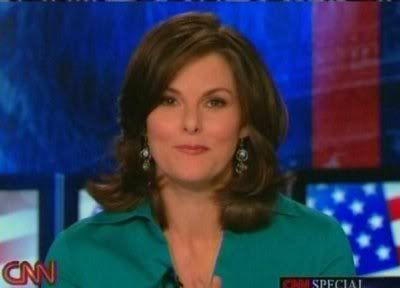
CNN-sheviks Out to Destroy Capitalism?

NEW YORK, New York -- We all knew that Ted Turner was married to Hanoi Jane some years ago, but only now is it becoming clear how much of her former ideology he seems to have adopted.

The nation is in a massive recession, jobs are vanishing like hotcakes, we're crippled by unprecedented household debt, a deflationary environment is setting in, individual net worth is plummeting faster than any time since the Depression, structural deficits are looking at long-term unsustainability, the financial sector is broken. And those are only the most obvious things that immediately leap to mind.

So with all that on your plate -- plus an ominously rising China demanding an end to the dollar as the global reserve currency of choice and long-term economic competitiveness issues that continue to go unaddressed -- what does CNN want to focus the American people's attention on? Why, the fact that a few bankers took home a bonus, of course! That's right, CNN has a weird, 7th-grade-crush-style obsession with the fact that a number of AIG employees were given bonuses after the firm was bailed out (numerous times) by the US government.

A good time to manufacture populist rage against the wealthy, no?

We can all agree that AIG's decision to pay out bonuses at a most inopportune moment is pretty boneheaded, but let's take a look for a moment at how pointless this issue is. It is neither the cause of the recession and financial mess, nor is fixating on it the solution to getting us past our woes. Moreover, the $162 million dollars paid out in bonuses at a company of tens of thousands of people was less than 0.1% of the total aid that AIG received. And since money is fungible, it's impossible to say that those bonuses "came from" government aid any more than they "came from" AIG revenues collected from families with policies in Iowa -- or Japan, for that matter. What it is, however, is a populist rage-inducing story that gives the public an easy villain and a comprehensible plot. Never mind that it's irrelevant, distracting and counter-productive.

I've been increasingly repulsed in recent months by CNN's dumb-it-down tabloid journalism, the most recent exacerbation of which is undoubtedly the thoughtless Campbell Brown. But the channel's most recent decision to take a turn as the crusading populist mouthpiece of choice is truly disturbing. I luckily wasn't near a TV most of last week when the "AIG bonus story" broke, thank God. But the two hours of CNN coverage I saw tonight, a week and a half after the fact, was appalling.

For anyone who has the sense not to watch CNN, I should add that at tonight's presidential press conference that channel's correspondent asked an inane question about why Obama hasn't macheted all AIG employees because some workers there were given bonuses. You can see the question asked here. No less than CNN's own Bill Bennett, one of the most destructive and shameless political figures in late-20th-century America, harped on the non-issue in the chatter that followed the press conference, leaving idiots-in-chief Campbell Brown and Ed Henry to blather on (and on and on) about those nefarious bonuses. Fast-forward 6:20 in for a glimpse of the idiocy:


The evening's edition of "Anderson Cooper 360" continued to beat its breast over this non-issue, marveling at what a doozy that Ed Henry laid for the finance-loving (and therefore untrustworthy) President Obama. And CNN's web site -- itself as well-designed as an AOL forum circa 1997 -- made sure to give top billing to the fact that Obama gave its correspondent a "tough answer" in a typically half-witted, solipsistic article. (Like almost all CNN web articles, it generally serves to do little beyond publicize some "event" that occurred on a CNN television program.)

But here's what really bothers me. No successful capitalist society can exist without a robust financial system able to give businesses the capital they need to grow. What we need to do is revive the financial sector, not make its individual members say "Uncle" and flee to Abu Dhubaibi, or whatever half-witted Emirate is offering free housing and lap dances to any Westerners willing to defect these days. The Obama administration is fortunately toning down its rhetoric, paving a path to hopefully returning to normalcy, despite earlier missteps.

But restoring the health of the financial sector becomes a lot harder when the country's largest cable news network is engaged in a full-fledged witch hunt against bankers. Indeed, CNN's stab at nascent Bolshevism is reminiscent of 1930s Europe and is beginning to make me frightened. The incessant tirades against "greedy bankers" and "pigs" -- how much farther do we have to go before we begin to hear talk of "Zionist conspiracies"? Europe has dabbled in hatred of financiers throughout its history. There's no need for the US, prodded by CNN, to go down that path traveled, appropriately enough, by fascist and Bolshevik alike.

Luckily, most actual humans don't seem to be very interested in the media's latest false god. As Joe Klein notes in Time, "Most of the anger we see and hear comes from people who are paid to be angry, on cue, on cable television--as opposed to people with actual grievacnes. ... It is said that the bonuses are an aspect of the bust that the "public" can understand; in truth, the bonuses are an aspect of the bust that reporters can understand."

A glance at the "blog" that accompanies "Anderson Cooper 360" shows a preponderance of viewers who are sick and tired of CNN's crucible of bonus-boners.

"I think Ed Henry thought he was going to get the President on a “gotcha question” but the President really got him," as one viewer said. "The media is seeming more out of touch all the time. We’re over AIG–we’ve all got bigger things to worry about. If you’re not part of the solution you’re part of the problem!" added another.

I tried to add a comment four times but was filtered out each time. The comment said, "Can we please stop fixating on the bonuses? We need a healthy financial system to get the economy back on track, yet CNN seems bent on turning Americans against bankers. This is a frightening development, and we'd all be better off if the media turns its attention toward the more serious questions of where we'll find economic growth in the future given that the country's most successful sector has imploded and taken millions of high-paying jobs with it."

That comment was apparently too critical. CNN's comments guidelines state that topics not use foul language or be off topic ... yet the vast majority of comments that did make it onto the "blog" were along the lines of: "@ John King is a pity … you are a great “blogger”! I love when you are blogging with us" or "I really don’t want to know who on Earth would want Michael Jackson’s socks. That’s icky to infinity." Good thing CNN is ready to ask the hard questions, huh?

So CNN has developed the sensibilities of Soviet Russia in pushing its anti-bonus agenda and frittering out criticism by viewers. This is a rather sad development for the country. The problems are vast. But the opportunities are even bigger. The time is ripe to be asking the questions whose consideration will hopefully set the path toward longer-term growth. What industries will fuel growth in the future? How do we train people to work in them? How do we get those businesses financed? When will the economy turn around? Why are deficits (structural and current-account) so big? How do we reverse them? Do we need to have a manufacturing sector again? If so, how do we compete against China?

Those questions are clearly very dull, though. Obviously people would rather focus on hating their slightly wealthier neighbors than determining where their own future prosperity will come from, right? Well, possibly not. For those of us who have half a brain and need something a bit less demagogic than CNN, I can wholeheartedly recommend the program that ran against AC360 on PBS tonight: "Ten Trillion and Counting." It's a fascinating account of the structural debt that George W. Bush left us. Watch the program online and ask yourself how we can get out of that debt. After all, somebody has to start asking these questions while Anderson Cooper warbles on about the Zionist bankers' plot to destroy "Main Street."

Monday, March 2, 2009

Roots of the Crisis Revealed: Krugman Jumps on the Wagon

NEW YORK, New York -- It looks like it's that time of the month again. No, not that time. It's time for the monthly article that seriously looks at the roots of the global economic collapse.

Any serious individual (i.e., anyone not in Congress) can tell you that "greed," which may be one of the Seven Deadly Sins, a state described by psychologist Erik Erikson, or an omnipresent emotion basic enough to be in Aesop's repertoire, cannot actually be blamed for the economic mess. Nor was it $35,000 toilets, corporate jets or suburban sprawl.

The real root of the crisis is America's willingness to become utterly dependent on imports. In recent years, as China became America's dominant trade succubus, the Chinese government's Central Bank, which takes $0.50 on every dollar entering China, built up huge reserves. Because sitting on foreign currency reserves mean they'll lose their value to inflation, it invested them back in the US. But because US companies were so busy shutting production in America and moving it to China, there were no factories for China to directly invest money in (this is called Foreign Direct Investment).

So it bought securities and derivatives based on US consumer and mortgage debt. That had the effect of keeping the dollar strong, which meant the US could keep interest rates lower than usual without fearing depreciation of the dollar that low interest rates normally cause. Low interest rates = cheap credit = debt-based bubbles. China was happy because all that US consumer debt meant its products had a market, its factories could keep humming, and employed workers weren't about to rise up in protest of their rights. The US was happy because we got cheap credit and cheap Chinese goods.

The Walter Duranty Report and NYT talked about this 2 months ago. The Economist picked up the torch a month ago. Paul Krugman talks about it today.

So what's the solution? The thick of it is that the US needs to export more and import less so that we can tackle the source of the savings glut at its head, which is the Chinese goods-addicted US consumer. Given the relative strength of the dollar right now, it'll be tough to increase exports to any place but a China with a free-floating yuan.

What we can do, then, given the difficulty of increasing exports, is make a concerted choice to support not only the US economy but the stability of the global economy by producing more in the US and buying US goods. If that sounds a bit too jingoist, compare it to the sacrifices we made in past generations by keeping "victory gardens" and buying US war bonds, e.g. Only by buying fewer Chinese goods can we get out of this -- and that will require a concerted effort as long as China offers exporters WTO-violating tax rebates, subsidizes factories, and keeps the yuan devalued.

More leverage and borrowing won't get us out of this. Only a re-industrialization of America will help re-balance the severely out-of-whack world trade equilibrium that has led to the savings glut, the debting of America, and the collapse of the whole system.

Thursday, January 29, 2009

More Stimulus-ball: Why Doesn't Jeff Immelt Want Uncle Sam to Buy American?

NEW YORK, New York -- The Washington Post reports tonight that many multinational firms angling to get a piece at the infrastructure spending in the stimulus package that is making its way through Congress are lobbying to strike a "Buy American" provision from the bill.

Following precedents from the New Deal and other federal public works programs, the provision would require materials used in infrastructure projects to be produced in the United States. Materials like steel and concrete would be especially large inputs, as would more advanced finished products. The objective, naturally, is to lift domestic output -- steel production is currently wilting at 43% of capacity, while without roughly 90% capacity, steel companies waste huge amounts of money keeping their furnaces and production lines running.

However, multinationals including General Electric, Caterpillar and aerospace companies are protesting that the measure amounts to protectionism and that foreign governments will in response make export of their products more difficult.

At first glance, GE & co. have no right to whine -- if the purpose of the stimulus is to create American jobs, it should actually attempt to do so; and if Washington is going to spend $1 trillion of taxpayer dollars, taxpayers have every right to demand they materially benefit from it. Few would disagree that taxpayers' interests, not those of GE (while also a taxpayer, its tax receipts pale in contrast to 200 million working Americans'), should take precedence.

On the other hand, the massive current-account deficits that have built up in the US (translation: we import way more than we export) will require a huge pick-up in exports down the road. To that end, the United States is right to pursue free-trade agreements with trading partners, and any sniff of American protectionism could well result in much more direct protectionism from other nations itching to bring up their own tariffs or spite American firms.

But if you look a little bit closer, that logic appears less solid.

A spokesman for Caterpillar provided the following rationale to the Post: "Any student of history will tell you that one of the most significant mistakes of the 1930s is when the US embraced protectionism. It had a cascading effect that ground world trade almost to a halt, and turned a one-year recession into the Great Depression."

They didn't call them "Hoovervilles" and not "New Deal-villes" for nothing

That's all technically true, but that protectionism came in the form of tariffs during the Hoover days, not the New Deal's "Buy American" provision. Stipulating that taxpayer-funded public works programs put taxpayers to work is a fairly routine practice in all local and federal public works projects. The most recent example I visited is the new Capitol Visitors' Center in Washington, D.C. As is standard practice, it used American-made materials. It may have come in in over budget and late, but that was the fault of security concerns, not materials suppliers, and nobody thinks it amounted to protectionism. Similarly, for security but also economic reasons, one of the largest areas of federal spending -- defense -- relies overwhelmingly on domestic production. That seems to sit fine with other countries.

Moreover, GE, Caterpillar and (presumably) Boeing may now be crying about stimulus provisions stipulating US-made products are used in road construction, but a potential reason for that is that they themselves will be at a disadvantage in procuring those contracts. GE and Boeing have spent years trying to move production from the US to China, seeing no reason at the time to invest in their historic home countries. But as the Economist notes, that lack of investment in US production, R&D and other capital projects was a major factor in the global financial collapse:
"After the dotcom bust, American firms turned cautious and investment spending was weak. That ruled out a natural home for foreign capital [in the US]. Faced with strong external demand for AAA-rated assets, the financial system got creative. Marginal home loans were packaged into supposedly safe securities. That supply of credit lifted house prices and spurred a boom in residential construction, which filled the gap in demand left by sluggish business investment."
In other words, if US companies had invested in American cap-ex, China's $2 trillion tidal wave of investment into bonds could've been put to more productive use than puffing up house prices and encouraging subprime mortgages and excessive consumerism. That China dumped money on consumers is as much the fault of US businesses that stopped investing in production as it is of the Chinese central government. And as the dollar remains a primary safehaven currency, capital inflows will only continue. Why allow GE, Boeing & co. to continue slicing investment in the US when inflows are looking for more productive investment than the credit-card debt derivatives they were able to find in the Outsourcing Age?

Perhaps, then, the "Buy American" provision is a cheeky way to show companies that while Washington doesn't demand they base production here to gain access to the domestic market (as China does) or grant WTO-violating subsidies in return for direct investment in facilities (ditto), there actually is a material benefit to investing in US-based facilities and employees in times like this.

In a word, the rush to move production to low-cost labor markets can hardly be said at this point to have been a smashing success in the United States. Any economist can tell you we spend too much and make too little. This crisis, and the stimulus, offer a decisive first step toward changing that.

Stepping back, crises are often the only times a people tends to reflect on the fundamentals of its economy, political system and society. So it is now in an America that had grown haughty and lazy in recent years. Even the Clinton-era lead negotiator who established Permanent Normalized Trade Relations with China now wonders whether that deal has actually helped the United States. At the time, it was thought PNTR would see a dramatic increase in both Chinese imports and US exports. Because of Chinese protectionism, exporter-subsidies, yuan policy and investment to keep the dollar weak, only half of that equation came true.

WWCD: Is Beijing's public spending likely to source from the US with its own workers losing jobs?

Perhaps GE and Boeing should do some reflecting of their own now: Rather than encourage the US government to plunge the polity into long-term debt buying Chinese construction materials and finished goods, is it not worth asking whether China, long hostile to imported goods (and now even more so), will actually grant access to its own public works program? Do not doubt that with Chinese factories closing, unemployment soaring and the yuan getting depreciated, any access GE gets to Chinese spending will be the direct result of agreement to build its goods in Chinese factories. China already doesn't allow US-made goods from DVDs to steel to banks to enter its market; Caterpillar or GE would only be able to tap the Chinese kitty if they do so with Chinese-made goods.

At the end of the day, it is frighteningly possible that Jeff Immelt's lobbying could be as disastrous as PNTR, resulting in a federally funded mass purchase of Chinese steel and electricity network equipment while GE nonetheless is shut out of China's public works program. To quote our Cold Warrior friend John McCain, "That's not change we can believe in."

Wednesday, January 28, 2009

Walter Duranty Report Vindicated on Chimerican Roots of Crisis

NEW YORK, New York -- Blame the corporate jets, the bonuses, the lack of regulation, Phil Gramm or Anderson Cooper's magical hair. All of these things (almost all of these things) have been blamed for the collapse of the global financial sector. And it's all populist cant.

The real, underlying reason:

The Walter Duranty Report said it a month ago.

The Economist says it this week.

China's rigged monetary and trade system, which creates unsustainable surpluses, and the United States' unholy appetite for cheap money were the joint cause of the world's economic ills (and the cause of a chunk of the 5 years of castle-in-the-sky growth that preceded their arrival).

I'll huff and I'll puff and I'll -- holycrap!

As The Economist notes, we may regulate the banking sector and dock John Mack's pay in coming years but there's almost nothing being done to attack the root of the problem. The Economist's prediction for the next potential great bubble: US public deficits funded by (you got it) Chinese purchases of US bonds.

And to think that in WWII Uncle Sam turned to the American people to buy his bonds; we now have neither the money nor the attention span nor the governmental will to make that small sacrifice for fiscal stability.

Friday, January 23, 2009

Let's Just Hope He's Serious

NEW YORK, New York -- Huzzah! Treasury Secretary-nominee Tim Geithner told a Senate committee today that he believed China was manipulating its currency, and a certain common sense that was hibernating during both the W. Bush and Clinton administrations seems to have opened an eye, however tentatively.

The yuan was estimated at 50% undervalued months ago, and it's depreciated since then. But why, we Americans who dread a debased dollar might ask, would China want to undervalue its currency? Well, it makes its goods artificially competitive, pushing out other producers'. Remember the last time you bought shoes, electronics, bags, pills, furniture, postcards, toothbrushes or for that matter long-lasting foods like garlic that were made/harvested in any place but China? Me neither. And a large part of the massive global imbalance in trade that leaves us unable to buy anything made anywhere but China even when we want to is due to the undervalued yuan/renminbi.

The Walter Duranty Report previously discussed the pivotal role that Beijing's trade and export policies played in bringing about the global downturn ("correction" might be the better term, given the utterly unsustainable course things had taken). And yet out of cowardice, paralysis before its awareness of the problematic dependency the US had developed on Chinese investment in Treasury notes, and a commitment to an ill-understood "free-trade" ideology, the Bush administration refused to call a spade a spade or lift even a finger to address the damage being done to the global economy by China's surpluses and trade policies. Ironically, then, Bush's pusillanimity did nothing but harm free trade -- both by perpetuating patently unfree trade and by doing long-term damage to trade by allowing structural problems to build.

Geithner's remarks will of course draw fire from the likes of Senate Republicans and WSJ editors who egged us into this ultimate Faustian bargain in the first place, and his timing is quite poor -- what the world does not need now is either the US or China to grow protectionist. But calling out China's protectionism is making the world less, not more, safe for protectionism at the end of the day. And the timing will never be good; China acts like a coddled, slightly autistic child that demands special treatment and bursts into a tantrum at the slightest perceived offense. Tim Geithner, here's hoping you're the man who finally says, "The gig's up."

P.S. Fact-checker:
The NY Times article on Geithner's remarks includes this quote: “Things have changed quite a bit since Hank Paulson made an issue of this,” said Edward Yardeni, an independent analyst, referring to Henry M. Paulson Jr., the just-departed Treasury secretary. “The Chinese trade surplus is shrinking dramatically and China’s economy is falling into recession. I think it really wasn’t necessary. It doesn’t accomplish anything.”

Here's the truth behind this claim: China's surplus for December was indeed down 0.3% versus November, when the surplus was a record $40.09 billion. Versus the previous December, the surplus was up nearly 20%, and the total 2008 surplus was up about 15%. Exports are falling no quicker than imports, since the government is reinstating WTO-violating export rebates and subsidies and devaluing the yuan to make imports prohibitively expensive. As for "recession"? After 13% growth in 2007, China's Q408 growth was a "mere" 6.8%. Oh, poo. So yes, Mr. Yardeni, bringing this up (even if 10 years too late) does accomplish something -- and the first results are in: China Central Bank Attacks Paulson’s ‘Gangster Logic.' Well done.

Wednesday, January 14, 2009

"Chinese Today"?

NEW YORK, New York -- The Chinese Communist Party feels its image needs a burnishing in "the West" and has decided to force one of its state papers to create international editions to spread propaganda, the FT reports.

It looks like China's exports slump hasn't sunk in quickly enough, if the CCP is still willing to waste money on useless propaganda gambits -- though this may counterbalance what I speculate may be the not-too-distant demise of Russia's main international propaganda outlet. For its part, the Kremlin's English- (kind of) language television mouthpiece, Russia Today (or "Russian Today," as non-English-speaking staff once called it mistakenly) is utterly unwatchable. I don't know anything about its viewership numbers, but with Russia's foreign reserves down ~25% since August, I wouldn't be surprised if the plug was pulled on it.

Ironically, the Chinese state paper chosen to be China's second organ of international propaganda (after People's Daily), the inoffensively named, could-be-anywhere-but-probably-not-owned-by-a-government Global Times, refused to confirm that it had been selected to create an international edition.

UPDATE, 1/14: The New York Times reports China is hoping to buy international media assets to start a major news network for propagandistic reasons to counter what it views as negative portrayals in Western and other media.

While many of the world's media outlets are cash-strapped and cutting back on reporters and other expenses, China's state-run media are flush with cash -- both from the state and the Western multinationals that have been advertising heavily in China while they cut back elsewhere. So thank Coca-Cola when China buys the Washington Post. 

This is what's known as the shit hitting the fan. Now, I don't think most Americans or West Europeans would fall for a propaganda outlet (either from China or elsewhere), since they're fairly savvy media consumers. But other areas where China has been trying to gain commercial, political and cultural influence, including Africa, Asia, Russia, the Middle East and Latin America, may be vulnerable once any big propaganda machine gets going and irons out its early kinks. Be afraid.

Tuesday, January 13, 2009

Film Recommendation: "The Ascent of Money" and Regaining Competitiveness

NEW YORK, New York -- PBS tonight aired a documentary that tells a history of capitalism and banking to trace the roots of the current economic crisis. I would recommend it for anyone unclear on the details of what got us here, to a global economic sinkhole, sclerotic stock market, and frozen banking system (that's probably almost all of us) and for those of us who may know the general story but are curious to see the people involved tell it to the cameras.

The 2-hour program (click HERE to watch it online in its entirety) is hosted by author, historian and Harvard professor Niall Ferguson, who based the documentary on his recent book of the same name. The film has its cringe-inducing moments. Any talk of "black swans" or admonitions that "but then again, they thought they were on Planet Finance; they were in fact on Planet Earth" were unfortunate.


Phantom of the NYSE.

Yet large swaths of the history, distant and recent, of capital markets are told in a limited time -- and told fairly well. Paul Volcker, George Soros, Enron executives and Bill Gross of Pimco are all bundled in with (somewhat awkwardly) cattle ranchers.

The biggest question mark, and one of the biggest conclusions, is the role of China in the US's economic mess -- "Chimerica," as Ferguson has coined this symbiotic Faustian bargain. The housing bubble and consumption bubble (bursting as we read) were inflated by China putting government-mandated savings from exports into US bonds, keeping money cheap for us Americans to grow ever fatter off China's wares. And Ferguson makes it clear that the future relationship between the two will have to change if our economy is to grow back its limbs (I've suddenly given the US economy starfish-like properties).

But, though Ferguson throughout chides bankers who didn't know enough history to understand the present and future, he doesn't himself wager any conjecture as to what will happen to the mixed blessing of "Chimerica," and to the US and global economies.

Ferguson's fellow Briton, the Jordie and Yale historian Paul Kennedy (and, given his surname, a potential ethnic Scotsman), is much quicker to offer a forecast for the future, and in today's WSJ he foresees a geopolitical and economic decline for the US in the coming years. This is of course not a new thought -- after all, the US intelligence services had it before -- and it lies on presuppositions about the ability of China and India (a tiny, extremely defective economy) to continue growing at world-record paces. But Kennedy's vision of the future is certainly a possibility, and must thus be guarded against.

One truly interesting point of his is to note the glibness with which politicians seem to be assuming foreign governments (with China front and center) will eagerly lap up the bonds to be issued to pay for President-elect Obama's proposed stimulus package. Kennedy contrasts the spendthrift ways of today's United States -- reminiscent of the wastrel monarchies of Louis XIV in France and Philip II in Spain -- with the way America issued debt as recently as WWII. Back then, we relied on ourselves to buy bonds, rather than sell our future to the Chinese Communist Party-animals (would that they were real college party-animals!).


Which of these is not like the others? ... And which will Obama be like?

Once again, the difficulties and limits (which we seem to be reaching rapidly) of "Chimerica" are evident. Maybe Obama will sound the call for Rosies the Riveter, but even if he doesn't, individual Americans need to issue and heed their own calls to stop spending all their earnings at Wal-Mart buying another Chinese lamp they don't really need. We need to impose some self-restraint on ourselves again, and rediscover the ethos that once made us productive, imaginative, frugal and visionary. Maybe I'll even go dust off my Emerson.

P.S. More on the above: David Sanger, New York Times correspondent and author of "The Inheritance: The Challenges Obama Confronts," speculates on Charlie Rose (here) that, had George W. Bushtard not invaded Iraq, the US would have used his second term to engage a debate about our economy and economic competitiveness with China. That did not happen. It didn't happen with a bang. Hopefully, in 3 years, as Obama gears to run for re-election and recession slowly slips away, we'll be able to return to that topic.

Saturday, January 10, 2009

How many yuan (or is it renminbi?) does Michigan cost?

NEW YORK, New York -- This is so sad it's funny. Luckily, rather than invest money in moving the country toward the mass transit the rest of the world has embraced for decades (and we embraced pre-WWII), which would create a recession-shielded, massive source of demand for trains and light-rail that could be produced in Michigan, Obama's following Dubs and giving us all $500 checks to (in my case) put in our savings account, (in most people's cases) pay off debt, or (in a few people's cases) buy Chinese electronics. Enough $500 tax refunds and we can re-prop up demand for consumer goods so China can afford Michigan. Bravo.

Dear Economist: What should I charge China for Michigan?

By Tim Harford

Published: January 10 2009 02:29

Here in Michigan we have a problem: the automobile industry. Thanks to foreign competition and the doubtful management of the Big Three, the state’s economy is in serious trouble. Should we just sell the state to the Chinese? There is a history of this in Michigan – we once traded the city of Toledo to Ohio in exchange for the upper peninsula. So perhaps it would be a good idea. But what would be a good price?
Mrs J, Michigan

Dear Mrs J.,

Make sure you don’t sell yourselves cheap. According to the US Bureau of Economic Analysis, Michigan’s GDP was $382bn in 2007. This is an attempt to measure the value added to all goods and services in Michigan, which includes anything from haircuts to assembling a car – but not, for instance, any components imported from out of state.

The $382bn figure is impressive. It would sneak Michigan into the top 25 economies in the world. Even China’s GDP is less than nine times greater.

So how much would it cost to buy $382bn of productive power? No corporation adds nearly as much value; the economist Paul de Grauwe reckoned that in 2000, value added was $67bn for Wal-Mart and $53bn for Exxon, the two largest companies. Their market value at the time was about five times their value added.

If the same ratio applies, buying Michigan would cost the Chinese almost $2 trillion –roughly what China’s State Administration of Foreign Exchange has to spend. All this assumes that Michigan’s residents, like Wal-Mart’s employees, would be free to leave if they didn’t like the new management.

Still, don’t hold out too long: even before the credit crunch hit, Michigan’s GDP per head was falling in real terms. This may be the right time to sell.

Questions to economist@ft.com

Saturday, December 27, 2008

Examining China's Role in the US's Economic Woes: The Times Takes the Lead

BOSTON, Mass. -- The New York Times today published a piece on the Faustian Bargain of our day: the tacit agreement between China and the US for China to produce most of what US consumers buy for their various quotidian needs while US buyers act as an easy market for China.

The piece, by Mark Landler (view it here), is a good summary of something that is both so obvious and so significant that it almost doesn't need to be reported, yet it is appalling that it's reported so seldom: China's role in the easy-money, cheap-credit binge the US economy has been hydrophobic on since ... the 80s ... Clinton introduced PNTR with China in 1999 ... the tech boom crashed ... OK, there are many starting points. The reporting here is decent, though it's more like a synposis than anything indicative of the scope of the subject. But, significantly, I hope it's a first step to understanding in much greater detail the root of a collapsing American -- and global -- economy. There were many factors that went into the housing -- and general consumer -- bubble that continues today, and from which we'll still be seeing much worse effects for another year or more. The mess was caused by banks pushing up profits via off-balance sheet credit default swaps and sketchy investments; homeowners and consumers who forgot that they need to have money to finance exorbitant purchases; a weak Congress totally ignorant of what was going on; and Alan Greenspan.


You boys BOTH deserve a medal for that one!

But the overvalued dollar and macroeconomic factors allowing Americans to obtain credit without any connection to their income didn't come from banks or consumers themselves. And Greenspan couldn't just keep rates suppressed at 1% from June 03 to June 04 when the US was at war without fearing major repercussions for the dollar and investment if he didn't know there was a major, major buyer out there ready to purchase US bonds and T-notes no matter the interest rates.

For years, the Chinese government has carried out a carefully calibrated policy to essentially appropriate from exporters $.50 on every dollar entering China from export purchases. The Chinese government invested the majority of the unprecedented amount of money that accumulated in US treasury notes and other bonds, including US mortgage bonds. That was intentionally done to keep the yuan/renminbi low, the dollar strong (if they held those reserves in yuan, the opposite effect would have been achieved, e.g.), and interest rates low in the US. That fueled the credit binge that allowed homeowners and consumers to seemingly defy economic law (until they no longer did) and banks to have 35-to-1 leverage rates (i.e., for every dollar of capital a bank actually had, it controlled $35 in assets, many of them tied to mortgages and consumer debt, bought with borrowed money).


Keep interest rates low so we can sell our products and be employed and not demand our rights, all of which serves the good of lucky scientifically harmonious society

While American society and the media have rightfully chewed out the US government and banks for being complicit in the credit fiasco, the larger, underlying problem remains China -- and for reasons I do not understand (is it fear of retribution, that China will dump its dollars and create a run on the US dollar? is it unwilingness to open this Pandora's Box and see how bad things really are? is it lobbying pressure applied by US businesses invested in China or Chinese state/economic interest lobbies?) we still have not addressed the structural problems stemming from our addiction to Chinese government investment and cheap Chinese goods -- or China's addiction to the US consumer.

This is a slow economic bleed for the US, and if we don't address this, we'll be absolutely toast in the long term. We need to use some teeth to get China to adhere to the WTO rules it's agreed to follow and "normalize" its trade regime. Given that China is a leading economic heavyweight, it needs to stop being classified as a "poor" country not subject to everyone else's rules in the WTO. It needs to abandon protectionism, end its illegal subsidies and VAT rebates to exporters, float the yuan on world markets to end its long period of undervaluation, and allow foreign companies to operate normally (without 100%-Chinese incorporated JVs with local state companies) on its territory. Failing all of these things, the US government needs to finally stick up for the interests of the US with coordinated action with Japan and the EU including WTO lawsuits and potential tariffs. Yet guess what? US Treasury Secretary Henry Paulson continues to play the fool, calling the biggest problem of the day "hopelessly academic" and glibly saying that it takes a "crisis" to bring about change. Mr Secretary, you've got your crisis, now when are you reversing gear on the policy you yourself admit is a dud?


You're a hell of a guy, Phil Knight

But more importantly, US executives, consumers and government officials need to recognize the importance of investing in competitiveness in the domestic market to ensure their long-term success. That means doing what the Germans, Japanese, Finns, Koreans and French do: investing in advanced manufacturing techniques to make production cost- and quality-efficient at home, rather than investing in new facilities in China to exploit cheap labor. The latter route may be good in the short run, but long term it will do nothing but hollow out the US operations of a company: Like telecoms company 3Com, when your production is all in China and most other US companies also have their production there, soon your operations are all their as are your customers. At that point, there's no reason to continue as a US company, while it makes more sense to sell to a Chinese competitor. And those competitors come about via local workers leaving your factories to take government offers to create Chinese-owned competitors. So you sell for cheap to a competitor who beats you on cost and connections in China that never would've existed had you and your fellows not gone for the cheap-labor move. In short, exploiting cheap labor is long-term bad for your company, destroys shareholder value -- and it screws over your kids' economic future.

I have lived in the former Soviet Union. It's ugly. And I can see the US heading in that direction if we too allow our economy and production base to be hollowed out -- as the USSR did by growing dependent on oil, gas and a generally BS castle-in-the-sky economic system. I increasingly am inclined to describe our economy as just that -- a castle in the sky, built on Chinese government investments fueled by Chinese government-subsidized production of goods to Americans living and losing their jobs amid decaying, unused old factories and who wouldn't be able to afford the goods were it not for the Chinese government investments fueled by ... (it's the song that doesn't end -- till it does!).


What you really don't want. Trust me

Thanks to the Times for finally opening up this issue -- but what the hell took you people so long? Three WTFs to Congress for still refusing to address this, the biggest systemic threat to the country at a time when it's proved insane not to address our systemic failures in time.

(Side note: Try using your post-Christmas sale shopping to buy exclusively non-Chinese things. It's really, really hard -- and leaves you feeling satisfied when you can find a non-Chinese product. Moreover, it gives you an appreciation for how addicted to Chinese goods we are. And, if any other overly robust market -- tech stocks, houses -- must come down, then it seems there's something akin to a bubble in Chinese products. They're inescapable, omnipresent, and seem too good to be true. And, given our dependence on them, they probably are. I have no idea how this bubble could fall apart, but they always do, and this one will too. What happens if Taiwan declares independence and the US supports it? We'd be without boots, shower curtains, mops, TVs, computers, sunglasses, watches, auto parts and -- increasingly -- certain food and medicine until we gave in to China's demands. Reliance on one trade partner -- no matter how closely geopolitically aligned your interests are -- and they aren't here -- is dangerous. Chinese goods could well be the next great bubble.)


Ah, symbolism

Friday, December 19, 2008

From the Dept. of Things That Sound Totally Illegitimate

New York, NY -- Um, right, so the Chinese Communist Party is now telling Bank of America it can't sell its stake in China Construction Bank, one of China's biggest lenders. The CCP, in other words, has effectively frozen BoA's assets.

That's great. That doesn't sound sketchy in the least. I see a bright future for us all, given that the management of a bank deemed "way the hell too big to fail" is run by people with the decision-making capabilities to allow a significant amount of their assets to be held by the CCP.


(On a side note, I'm beginning to understand how it is that the dumbest lacrosse players managed to get jobs after college with the biggest banks: Because banks aren't morally lacking; they're lacking in brains and sense. Finance, like a Wal-Mart, is full of half-witted, low-skilled salespeople who aren't allowed to unionize.)

http://cache.daylife.com/imageserve/07uGbzb4jVaZ5/610x.jpg
Heckuva job, Kenny!

Anyone know of any good Icelandic banks?

And now for your moment of zen: The FT reports the following:

BofA shelves $3bn plan to cut CCB stake

By Sundeep Tucker in Hong Kong and Jamil Anderlini in Beijing

Published: December 18 2008 23:32 | Last updated: December 18 2008 23:32

Bank of America has shelved a $3bn (€2.1bn) sale of China Construction Bank stock following objections from Beijing, igniting fears that some cash-strapped overseas investors could struggle to offload their lucrative holdings in the country’s banks.

The US bank, which in 2005 was part of a wave of foreign investment into Chinese banks, last week hired UBS to help sell a chunk of Hong Kong-listed shares to reduce its overall ­holding in CCB to less than 17 per cent.

The offer was priced at a discount of 15 per cent to CCB’s current share price and was quickly covered by US and European institutional investors, said people familiar with the matter.

However, only hours before it was due to be unveiled on ­Monday morning, the share sale was pulled on the instructions of Ken Lewis, BofA chairman and chief executive, following a phone call with Guo Shuqing, his CCB counterpart, according to people familiar with the situation.

The precise reason for the 11th-hour abandonment remains unclear, but dealmakers in the region believe that the Chinese government was unhappy about the timing of the share sale, the first such attempted divestment by a foreign investor following the expiry of a lock-in period.

The share sale could have triggered a fall in CCB’s share price just as Beijing is trying to garner support for its largest banks and arrest a stock market slide.

Foreign financial institutions, including Goldman Sachs, Dresdner Bank, Temasek and Royal Bank of Scotland, hold shares in China’s leading banks worth billions of dollars and analysts say they could be tempted to sell down stakes to raise capital when their three-year lock-in periods start to expire from next month.

“Bank of America cancelling those trades has made the other foreigners realise they don’t exit at their discretion; they exit at the discretion of the Chinese government,” said one Asian dealmaker who asked not to be identified.

The Chinese government cannot prevent trading of Hong Kong-listed shares, but deal­makers said it was likely that BofA was warned of repercussions to its future business on the mainland if it carried out the sale.

Thursday, November 20, 2008

Chinese Democracy Finally Achieved

BROOKLYN, New York -- Chinese Democracy has finally come to pass. No, the People's Republic of China has not had free and fair national elections, nor has it permitted an independent press, or the free exercise of religion. Rather, Axl Rose and company have finally completed their record that was more than 17 years in the making.

Expect there to be mass arrests of Chinese Guns N' Roses fans who are just trying to use the Internet to find out more about their favorite band.

The New York Times likens Mr. Rose to another singer who had a catastrophic meltdown which led to years and years of promising an album that never came, My Bloody Valentine's Kevin Shields. Rose has shaken that monkey off his back, but as the Guardian described in 2004 - Shields' first interview in 12 years - he was still saddled by an inability to finish off the follow-up to 1991's Loveless, as well as being surrounded by a dozens of chinchillas.

UPDATE: It appears as if Guns N' Roses has genuinely raised the ire of the Chinese authorities. According to the Economist, the Global Mail, a communist party newspaper, said the album was part of a Western plot "to control the world using democracy as a pawn." The government has blocked access to websites related to the band, and not just to the forbidden search term of the new album's title.

Axl Rose does mention the banned religious group Falun Gong in his lyrics, as well as the violent suppression of dissidents. Overall the album is an absurdly overproduced shriekfest devoid of political substance, but it looks like it won't be officially distributed in China - that probably won't stop anybody for getting it who wants it, though.

Wednesday, November 19, 2008

"The New New Deal"

NEW YORK, New York -- So, what country is going to get us out of the global slowdown/credit crunch/recession/financial crisis/depression/incomparable disaster? That's a question that a number of European and Asian executives, financiers and officials took up this week in Barcelona, with speakers apparently divided between the US and China as the potential savior of the global economy.

While some of the European participants in the Global China Business Meeting, sponsored by Horasis, a Swiss consultancy, reportedly said China and other "emerging" countries would pull the world out of recession, others noted the limitations of China as a global economic power and called on the US to do more:

“China cannot replace the U.S. economy as the engine of global growth,” said Chang Dae Whan, chairman of Maeil, a South Korean newspaper company. “We’re going to need a huge stimulus package from the United States, on the order of $2 trillion, to get the global economy out of the financial crisis. So far, we’ve only seen about $700 billion. As a result, next year I expect to see more pain and fear.”

As Mr Chang noted, the US government will need to do a lot more if it wants to be the country that leads the world from the recession. As
Clive Crook wrote a week ago, the stimulus package recently announced by the Chinese Communist Party, at approximately $600Bn, represents some 15% of China's GDP. When that package was announced, the US Congress was dithering about passing a stimulus thought to be $100Bn to $200Bn (0.75% to 1.5% of GDP).

And though nobody can really say what will end the global slump we're heading into, a (temporary) return to Keynesian economics seems to be the best solution I've heard. As Paul Krugman writes, we should recognize that we are in extenuating circumstances: The usual lever that policymakers have on the economy -- interest rates -- no longer seem to have any effect on, well, anything. When we fall into those sorts of troubled waters where the usual policy mechanisms have come asunder, an FDR-style shot in the arm is needed.

You start building roads and public transportation and magically people have productive (i.e., non-Wal-Mart/retail) jobs building real things; factories open up to build trains, trolleys, solar panels and turbines; and even if you don't have a silver bullet for the economy immediately, it's a step in the right direction -- more paychecks means fewer foreclosures and, eventually, rising consumer confidence. Of course, the physical end product, improved infrastructure, yields tangible and long-lasting economic benefits as well.

Obama's plans for the economy include a $60Bn National Infrastructure Bank that would coordinate targeted, intelligent funding of important infrastructure projects across the country and an renewables-based energy strategy. There are also worker-retraining and Broadband Internet accessibility plans. But perhaps the most interesting -- and certainly most overlooked -- aspect of his economic plans is a call to build up a 21st-century manufacturing sector based upon advanced technologies. You put federal funding toward researching robotics and advanced manufacturing techniques that eliminate much of the labor component in the production of goods and it suddenly becomes realistic to make things in the US for export. And that as a result of increased competitiveness, not protectionism. With that production comes new factory jobs and, more importantly, R&D, distribution and managerial jobs.

No, the old factory jobs making sneakers or textiles won't come back as they were. But if we can build new, roboticized techniques to produce those goods, we'll be able to do so at competitive costs by cutting way down on labor, and in doing so we won't be building up massive trade imbalances or eroding higher-margin jobs designing what factories make or managing what those factories do.

The US, then, needs to pass a larger stimulus package not only to prove it can throw more public money at a recession than China can or even because it needs to end the current recession. Done correctly, a stimulus package could pull the country out of its longer-term economic funk and create a sounder footing for the future.

For 8 years it's been quite clear that the direction of the US economy -- moving toward ever-greater levels of consumer spending and household debt and ever-less production of actual, exportable goods -- has been unsustainable and reckless in the long term. Median incomes are trapped in a long-term decline, and unemployment is soaring after 4.3 million manufacturing jobs were lost in 1998-2008.

It seems equally clear that embracing services (financial or otherwise) as a substitute for a full, diversified economy with a significant manufacturing sector leads to its own problems: From the producer countries' point of view, why should they sit by and make everything while "services" nations take the plum, high-paying jobs? From the employers' POV, why should you continue to pay bankers in NYC loads when you can pay bankers in Mumbai $10K per year? And from the POV of common sense, why have managers and consultants in London when everything you actually produce is in China? Why not have the managers and consultants where the action is actually happening and remove the difficulty of communication and coordination?

By using the opportunity presented by the current mess to begin to think about the long-term sustainability of the economy and change the fundamentals, we could end up doing more good than we're bargaining for. As a starting point, let's admit that the "Chimerica" team seems to have ended up with egg on its face: By keeping the yuan down and its exports hyper-competitive in the US, the Chinese government amassed a $2 trillion warchest in recent years through seizing $0.50 on every dollar US consumers send to China. Much of that money made its way back to the US in the form of purchases of US dollars and Treasury notes, as well as US mortgages and credit. China, in other words, invested in certain types of US bonds and securities that had the effect of keeping its own currency down and keeping credit cheap for US consumers. That cheap credit and devalued currency meant US consumers kept on buying Chinese products out of thin air -- our Castle-in-the-Sky Economy. And it ended ... not very ... well, you get the picture.

The massive current-account deficits the US built up from 1999 (when Bill Clinton allowed Permanent Normalized Trade Relations with China) and a reliance on credit propped up by China -- rather than production of real goods -- for consumer purchases were going to come crashing down sooner or later. It seems, oddly, like we got off easily as they crashed just 8 years after Clinton's PNTR took effect. Now is our time to pull out of this Faustian bargain before we resurrect it.

Obama and Congress need to pass a package big enough to make a fundamental difference, and Obama must continue to have the sense to invest in building up the US manufacturing sectors rather than think (wrongly) that the US can be a nation of consultants, bankers, lawyers ... and janitors and Wal-Mart salespeople ... and nobody in the middle, and still have a functioning economy.

Whether the US is able to get its act together and pull the world out of recession is obviously yet to be determined. However, it seems this crisis offers America a fairly interesting opportunity to put its long-term economic fundamentals on sounder footing.

A few relevant articles:
http://online.wsj.com/article/SB122644805168418989.html
http://www.nytimes.com/2008/11/09/business/09blinder.html?scp=2&sq=blinder&st=cse
http://www.nytimes.com/2008/11/09/business/09shiller.html?scp=1&sq=shiller&st=cse
http://www.ft.com/cms/s/0/126fdcea-aec9-11dd-b621-000077b07658.html