Thursday, April 16, 2009

Mustache of Globalization Headed for Poorhouse

BOULDER, Colorado -- General Growth Properties, the second-largest mall developer in the US, filed for Chapter 11 bankruptcy Thursday. It is with no small amount of glee that we report this news because of the connection between this company and the world's worst geographer, Tom Friedman.

Friedman's wife Ann is the daughter of Matthew Bucksbaum, who founded GGP in 1954. The family's net worth was estimated at $4.1 billion just two years ago, but as the company's stock has fallen in value to 50 cents from over $40, that fortune has shriveled by 97%.

The man who waxes (his mustache) on endlessly about how the world is flat, and globalization will make the poorest of the poor richer than their wildest dream, if only they can get on Facebook, or something, and has all of a sudden developed a superficial, pop environmental sensibility, is actually a multi-millionaire spouse of a strip mall empire heiress. The poor and destitute of the world certainly look different when you are flying business class on Lufthansa and playing golf at an exclusive Bangalore country club.

I won't waste my time or yours by rattling off all the inane, sophomoric, bewildered things that Friedman has said over the years in his books and his unreadable New York Times column. I will leave that job instead to former Moscow Times reporter and Mongolian basketball star Matt Taibbi, who offers two masterful take-downs of Friedman in New York Press. I will just say this - globalization is interesting not because it makes the world "flat" and even, but because it is highly uneven, which is what leads to things like growing income inequality, the explosion of slums, and the creation of new migration and citizenship regimes. Any geography student worth their salt knows this, but Tom Friedman is too busy sucking down the climate-controlled air in his 11,400-square-foot mansion in Maryland to recognize this simple fact.

So, let's just enjoy watching him getting pied in the face and do some Tom Friedman column Mad Libs from McSweeney's.

Wednesday, April 15, 2009

Wednesday Links: Happy Tax Day

BOULDER, Colorado -- Today we are going to ignore all of the teabagging that is going on across the nation, because those people are nuts and ignorant. Instead, we bring you news about race in America (the two stories may be linked, however), as well as stories about the dastardly deeds of the unhirable fools from the Bush administration and some urban ruins of bygone eras.

Colorado Matters: Come fly the racist skies.
Until 1963, there were no black commercial airline pilots in the United States. Carriers actively discriminated against black pilots, claiming that racist passengers would refuse to fly with them if they hired blacks, or that they would not be able to put them up in hotels during layovers in segregated southern cities. Then Marlon Dewitt Green took his case all the way to the Supreme Court, which ruled in Green v. Continental Air Lines that the practice was unconstitutional.

Hartford Courant: Do-over! In more recent race-and-hiring-practices news, my hometown could be approaching a landmark Supreme Court case. A group of 15 New Haven firefighters have taken the city to court over its hiring practices. The men all took a test to determine promotions, and they received the top 15 scores - unfortunately, 14 were white, and one was Hispanic, and there were only 15 promotion spots available. Because there were no black candidates who scored in the top spots, the city decided to hire nobody. The Court will hear oral arguments in the case, Ricci v. Destefano, later this month.

NASHI: All deposed presidents of former Soviet republics may now begin boarding.
Everyone's favorite government puppet right-wing youth movement, Nashi, demonstrated earlier this week at the Georgian embassy in Moscow to show their "solidarity" with the Georgian people who are clamoring for President Saakashvili to resign. They've even bought Mikhael a ticket to DC, where everyone (especially John McCain) loves him. It's worth noting that these are the same people who were baying for the blood of every last Georgian during last summer's war over South Ossetia.

The New Yorker: Mr. Feith, there are some men here to see you. They have a warrant.
At looks like at least six members of the Bush administration can look forward to a life like Henry Kissinger - that is, they can never leave the country, and probably can't travel to some US states, for fear of being arrested. British attorney Philippe Sands first identified the "Bush Six" in his book Torture Team, and Spanish Judge Baltasar Garzon has upheld the indictments of the former officials on charges of torture.

Strange Maps: The Rochester Subway. From 1927 to 1956, Rochester, NY, once one of America's most successful boomtowns, had its very own subway. The system consisted of a single line that was placed in the former bed of the Erie Canal, which had been diverted around the downtown. Today, all that remains are a few concrete trenches and overpasses.

New York Times: Keep smallpox alive.
One of New York Cities oft-forgotten islands is the quaint Roosevelt Island, located in the East River between Manhattan and Queens. Perhaps it's forgotten because for most of its history it has been home to prisoners, mental patients, and people suffering from wildly-infectious diseases. Now the city is trying to keep part of that history alive by restoring the ruins of the island's famous smallpox hospital.

Tuesday, April 14, 2009

Enough With the Teabagging Already

BOULDER, Colorado -- While walking down the street in Boston recently, my mother found this flier on the ground. She had no idea what it said, so she mailed it to me to translate. The flier is back from the last election, and it was put out by the Massachusetts Senior Action Council, a grassroots community organizing group that lobbies for the rights of seniors. Here's what it says:
What would you do if 40% of your revenues were taken away?

Approving ballot question 1 threatens to eliminate $12.7 billion (around 40%) of the state budget by ending the Massachusetts income tax.

On Tuesday, November 4, say NO on ballot question 1. Today times are hard enough, and it's not worth it to make them worse.
The story behind this is that some tax-protesting fools got a measure on the Massachusetts ballot this past November that would have amended the state constitution and outlawed the income tax. Luckily, the voters of Massachusetts were wise enough to vote down this suicidal libertarian proposal 70% to 30%.

These same survivalist cranks [Note: In the interest of full disclosure, I will admit that as a semi-professional academic, I was born and raised in a secret Comintern camp in communist Hungary and sent to this country to brainwash college freshmen with propaganda about "income inequality" and "post-structuralism." Additionally, that guy is right, and the change over to digital TV is a conspiracy to brainwash America] are likely going to spend tomorrow "teabagging" Obama by chucking tea bags into whatever body of water they can find with their CPAC friends. At least the elderly Russians in Massachusetts have more sense than the Republican operative nitwits who are organizing tomorrow's fake "grassroots" movement, which is nothing more than a pathetic partisan ploy to try and gain some electoral legitimacy.

Who was it again that oversaw the greatest expansion in government spending since Lyndon Johnson? And who oversaw the near doubling of the national debt? And who had a secret, illegal wiretapping program to spy on American citizens? And who operated a global network of secret prisons to kidnap and torture people? Oh right, I forgot - Barack Obama is the Nazi fascist communist gay Muslim terrorist free-spending wealth-redistributor. I hate to sound so partisan myself, but this nonsense tax protesting, and the fake populist outrage over invented government intrusion into our daily lives by the new administration, is positively sickening, and let us speak of it no more.

Sunday, April 12, 2009

Updates on the Action in Chisinau From the Moldova Maven

BOULDER, Colorado -- My Romanian-speaking associate who has inexplicably chosen to study the country that I like to call "The Mississippi of the Former Soviet Union" offers up a number of additional juicy details on last week's unrest over elections.

1) Many opposition activists had claimed that the government received a special delivery of tear gas canisters from Moscow to deal with the protests, though both the Russians and Moldovans deny it.

2) It turns out many of the provocateurs on the government payroll to start the looting were wearing t-shirts that read "Basarabia: Romanian soil."

3) Either this dude is the world's most awesome protester, or he had a little help riling up the crowds with his EU and Romanian flag waving, as this video shows.

4) Here's what Fiodor Ghelici, a member of Moldova's Civil Congress of NGOs, had to say about the violence, as quoted by Infotag: "Everything that happened was a trap and the opposition got caught. It is obvious that had the authorities not wanted those buildings looted they would have taken clear-cut measures. I do not mean arms and batons used against the youth. But several thousand policemen with belts would have established order." There's a bit of money in the whole thing, too, for contractors that are cozy with the government. "In question are tens of millions of lei and some construction companies are already looking forward to repairing the parliament and the president's office," Ghelici said.

5) Meanwhile, the gangsters across the border in Tiraspol claim to have been unnerved by the incident.

6) As we mentioned earlier, international media were barred from entering the country during the protests. Dumitru Minzarari from the blog Political Moldova had this to say: "According to the Romanian ActiveWatch media monitoring organiztion [sic] and the Romanian Center for Investigative Journalistm [sic], on 7 april, at least 18 journalists who tried to come to Chisinau from Romania were stopped at the border, and turned back at the border crossing points Galati-Giurgiulesti, Oancea-Cahul. Moldovan border-guards invoked reasons as malfunctioning of their computerized system, and requested multiple papers such as written invitations, special medical insurance, press accreditation from Moldovan Foreign Ministry, while in order to cross the border only passport was needed for these journalists [under the usual visa regime]. They represent press agencies such as Associated Press, EPA, France Press, Intact Images, NewsIn, Mediafax, Reuters, and newspapres Evenimentul Zilei, Jurnal National, Ziua, and TV channel Realitatea TV."

The Spaceman Opens Cuba

BOULDER, Colorado -- I recently watched the film Spaceman: A Baseball Odyssey, about the life and career of Bill "Spaceman" Lee, one the greatest left-handers ever to pitch for the Red Sox. The film is mostly about Lee long after he was blackballed and driven out of baseball for his outspoken opinions in 1983. Lee never stopped playing, and at the age of 62, he still travels the world looking for places to pitch. The film follows Lee on a barnstorming trip to one of his favorite places, Cuba.

"Goddammit, I love Cuba," Lee says. "They play baseball for all the right reasons. They play it because they love it." One of the most long-overdue changes in American policy that Barack Obama has promised is the lifting the punitive and useless embargo on Cuba. If it ever does happen, we should thank people like Bill Lee for maintaining strong relationships with the people of the island and showing them that we both share a deep and important love, that of baseball.

Being a graduate student, I have the luxury of being able to drive around the country for several weeks every summer. I visit friends, see various roadside attractions, fish, eat lots of catfish and ribs, but mostly I go to baseball games and listen to them on the radio. Between May and September, wherever you are in America, at nearly any time of day, you can find a ballgame on the radio. Major League, Single-A, rookie ball, college ball, American Legion, high school - I listen to all of it, and I love visiting ballparks big and small.

Lee is one of the last barnstormers, and in the film he talks about his hero, Satchel Paige, who pitched more than 2,000 games in his career. "I won't win as many games as him, but I will have pitches as many games as him." It's a damn shame that the dedicated fans in these small towns don't get a chance to see the big league stars in their backyards anymore. Lee plays the game because he loves it. He loved pitching for the Red Sox, and fans will always remember him for his abject and unbridled hatred of the Yankees. Players feel little allegiance to city or team these days, but Lee never, ever would have done what Roger Clemens, Wade Boggs or Johnny Damon did and foresake the Sox for a few extra bucks in the Bronx. Even if he hated Sox management and he hated his coaches, he loved his team and his adopted city, and we loved him back.

Friday, April 10, 2009

Psychiatry In Russia: A View From 1955

BOULDER, Colorado -- In 1955, American filmmaker Albert Maysles traveled to the Soviet Union to document their practice of psychiatry. He produced a short film about his trip, Psychiatry in Russia, which was aired on American television the following year:


The most striking difference that Maysles notes between Russian and Western psychiatric practice is the former's reliance on Pavlovian theory, which does not emphasize psychoanalysis and talking therapy as much as the Freudian psychology predominantly in use in the United States at the time. Obviously, much in the film should be taken with a grain of salt - while most Soviet mental health professionals were undoubtedly conscientious and caring, their statistics on the low incidence of mental illness and the success of treatment are highly exaggerated. That said, American psychiatry at the time was in large measure barbaric, inhumane, and damaging to many patients. Lobotomies were still in wide use in the US in 1955, while the Soviet Union had banned the practice five years previous.

Maysles' film misses another important aspect of Soviet psychiatry, though his amateur foray could hardly be expected to capture one of the most oppressive practices of the Soviet state - committing political dissidents to mental institutions. The practice became widespread towards the end of Stalin's rule in 1953, and subsequent regimes, especially that of Brezhnev, used the practice to muzzle and incarcerate hundreds, if not thousands, of political opponents. The favorite stock diagnosis was "sluggishly-progressing schizophrenia," which had no symptoms other than the inability to function peaceably and obediently in Soviet society. Fighting for "truth and justice" was considered a sign of extreme paranoia, and even the failure to believe in Marxist ideology was labeled a form of psychosis.

Unfortunately, the practice is not unheard of in contemporary Russia. In 2007, journalist and opposition activist Larisa Arap wrote an article about sexual abuse and other vile mistreatment of children at a mental health facility in the Murmansk Region. After the story was published, Arap was detained by police while visiting another hospital for a personal appointment. Hospital staff then drugged her and committed her against her will to a mental facility. Medical staff moved her to another hospital in the city of Murmansk and refused to give any information to her family about her condition or even her whereabouts. Finally, she was released after being held for 46 days, during which time she was repeatedly beaten, drugged, and force fed after she went on a five-day hunger strike to protest her detention. She was only discharged on the condition that she agree to continued out-patient psychiatric care, and Russian courts have repeatedly upheld her detention as legal.

In February of this year, the Russian Constitutional Court ruled that it was illegal to involuntarily commit patients without a court order, which could only be issued with a recommendation from a court-appointed expert. Like so many decisions by the Russian courts, it is unlikely that this one will be fully and forcefully implemented by the government. Because this incident was not an isolated one, nor was it the work of a few corrupt and deranged individuals. So little of the Soviet state has been dismantled in Russia, and the security services employ many of the same coercive practices that they did in communist times. Add to a police force wholly untrained in the ways of democratic law enforcement (the emphasis there should be on the law) a political leadership born of that very same coercive apparatus, and you get a society in which medicine, which is meant to heal people, is used as a political weapon.

Maysles is still alive and well, and he is currently working on a documentary about the affair of Menahem Mendel Bailis, entitled Scapegoat on Trial. Bailis was a Russian Jew who was accused of murdering a 13-year-old boy to use his blood to make matzoh in 1913, and it was the last of the so-called "blood libel" trials against Jews in Europe.

Thursday, April 9, 2009

America's Love-Hate Affair With Educated Foreigners: Stop Hating, For the Love of God (Pt. 1 of 3)

NEW YORK, New York -- President Barack Obama is planning to push a comprehensive immigration reform bill that would include legalizing the status of the estimated 12 to 20 million illegal aliens in the United States, the New York Times reported today.

That news came amid both a period of media attention toward illegal immigration and a number of immigration-related political decisions. While the political events have unfortunately tended to take aim at highly educated would-be legal immigrants, it is clear that the role of illegal migrants in the United States is becoming increasingly relevant on the back of concern about the economy and jobs.

The illegal migration issue heats up again

The Times’ report may be the most significant development since the illegal immigration began bubbling up in recent weeks, but it is already not the most recent. Following this news, the Wall Street Journal reported this evening that Obama chief of staff Rahm Emanuel has lately softened his stance on illegal immigration.

The Walter Duranty Report has previously advocated the need for comprehensive immigration reform and increased numbers of legal immigrants. However, I find the Obama plan, as described in the New York Times, to be a potential disaster for including what appears to be a blanket amnesty for illegal aliens – something that I find morally debatable but unacceptable from the point of view of upholding the rule of law, giving all would-be immigrants an equal playing field, justifying the considerable effort and blood expended by the country’s 1 million annual legal immigrants, and the way it may threaten any lasting reform.

Over the next few days, I'd like to put together a few pieces representing my thoughts on this subject at the moment. Those pieces will cover three areas: Why Immigration Reform Is Necessary; Why a Blanket Amnesty for Illegal Aliens Is Wrong; and What to Do.

WHY IMMIGRATION REFORM IS NECESSARY

America’s immigration system is broken. We have previously said that fixing it is the single most important thing the country will need to do to prosper in the long term, and that continues to hold true. Without going into the moral or historical arguments in favor of immigration, we'll focus on three economic arguments that present a case for reforming a system that keeps out skilled immigrants:

1. Today's antiquated, restrictive system cannot accommodate the numbers of skilled immigrants who want to enter the United States, especially in relation to unskilled immigrants;

2. Skilled would-be immigrants not allowed into the United States are wooed by other nations to improve their economic competitiveness; and

3. Our biggest pool of skilled immigrants (foreign students) is increasingly alienated.

Let's look at the system first. It's safe to say that under our current system gaining a visa or green card to work in, live in or immigrate to the United States is incredibly difficult and confusing for people in most countries. Most visas and green cards, for instance, are given out via a random lottery that grants randomly selected people the right to enter the US. Would-be immigrants-cum-lotto winners from various countries, however, have different numbers of green cards and visas they can bid for. Until this past year, for instance, Russians were ineligible for green cards entirely.

Not only is this system totally random (literally) and based on opaque nation-based quotas, but even the types of visas that exist is labyrinthine and confusing: The best-known visa program is the green card, but while nearly a quarter of all US naturalized citizens in 2008 were Mexicans, for example, zero qualified for a green card.

Meanwhile, the status quo allows a mere 65,000 work visas under the H1-B program that brings in high-skilled immigrants. Last year, however, over 1,000,000 people became naturalized citizens. So at best 6.5% of people receiving citizenship are skilled workers -- not a good sign for a country that wants to compete with the rest of the world in a high-tech, globalized 21st century.

This, however, is not due to a lack of skilled workers who want to enter the United States. As the Economist reported last year, hundreds of thousands of doctors, computer programmers, engineers, lawyers and businessmen apply for H1-Bs each year.

So what happens to the many, many skilled immigrants who aren't among that 65,000? While in years past, those people would apply year after year hoping to one day get into America, other rich-world countries have caught on to the gains they can make while the US shooes away the world's best and brightest.

Canada, New Zealand and Australia now grant visas and residency based on "points" systems that allot points for education and skills. The UK allows in anyone who has graduated from the world's top business schools. For its part, America spins the PowerLotto wheel to let in 65,000 out of hundreds of thousands of educated would-be immigrants.

What do we have to show for this? Well, 25% of Silicon Valley companies were started by Indian or Chinese immigrants, and 40% of US PhDs are annually earned by foreigners. Sending that large number of Indian and Chinese PhDs home means the Silicon Valleys of tomorrow may be quite foreign-sounding places.

And not only do our immigration policies improve the competitiveness of other countries, but they objectively hurt the US as well. The Labor Department is projecting 2 million unfillable vacancies in US tech positions by 2014 because we send home all of the engineering graduates of US universities. Meanwhile, tech giants like Microsoft are rightly basing ever more of their operations in Canada, where immigrants are more welcome.


Perhaps not surprisingly the Economist also recently reported that new studies show American policies that restrict skilled immigrants are hurting our ability to innovate and create new, competitive companies. Another study released last month showed that the Chinese and Indian PhDs who once applied to remain in the US now simply go home to start their companies, given the economic growth in their home countries and the small chance of being allowed to stay in the US. Whereas 50,000 immigrants from those countries returned home in the last 20 years, the next five years are projected to see 100,000 Indians and Chinese leave the US.

Realizing the deleterious effects of US immigration policy, American technology executives, business leaders and academics have long called for dramatically increasing the cap on H1-B visas, or eliminating it entirely.

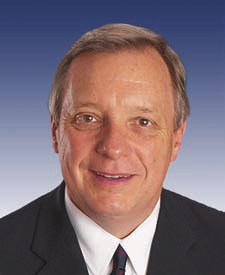
Instead, Congress seems eager to do just the opposite. The Employ American Workers Act (EAWA), part of the stimulus, bans banks that receive TARP money from hiring foreign workers, and Bank of America has already withdrawn offers to foreigners. Meanwhile, Indian media are reporting that Senators Charles Grassley (R-Iowa and a co-author of the EAWA) and Dick Durbin (D-Illinois) are trying to prevent foreign IT professionals from gaining H1-B visas.


These men want you to be poorer and dumber: Grassley (left) and Durbin

Again, business leaders (who argue we need the world's best to fix our broken finance system and corporations) and academics (realizing that fewer job opportunities for foreigners means fewer foreign students means less revenue for US universities) are aghast that Congress is again taking aim at its own foot. But even the ultra-conservative Heritage Foundation is now worried, demanding a large increase in the number of H1-Bs because it reasons that having more smart people in the US is -- surprise! -- good for the economy. Unfortunately, Dick Durbin is unlikely to be influenced by that particular think tank, which may have had better luck gaining Washington's ear in the Bush days.

Finally, the largest source of high-skilled immigrants -- international students at US universities -- is increasingly fixing its sights on other destinations for study because of difficulties in obtaining a visa to stay in the United States, as the New York Times reported last month.

Who needs scientists?

That's only logical, given that the entire academic continuum of a foreign student's life in the US is under close scrutiny by the government. Yep, foreign students are monitored at all times under the SEVIS system that, as of January 2009, turns university employees into agents able to access student files and write about anything suspicious they do.

Once those foreign students who make it past SEVIS graduate, there's another juncture at which they may choose to go home. Any American who went to college probably knows a number of smart international kids who left the US after graduation either because they couldn't find a job "directly related" to their major and were not given a visa to stay, or because they didn't want to put up with the bureaucracy and uncertainty of trying to stay.

A Canadian acquaintance's story is indicative of the absurdity of demanding that foreign workers be employed in fields "directly related" to one's major. The acquaintance works at a charity that helps young Bronx residents learn computer and other job-related skills. She went last winter to the Caribbean for vacation and to apply for a new visa (an annual endeavor). She was denied a visa, however, because her degree (a Bachelor's and Master's in English from Cambridge University) did not "qualify" her for her job, which the consulate staff told her was in "social work." Since she still had a month left on her current visa, she flew back to the US planning to get some advice from her lawyer and reapply in a few weeks.

When transferring in Houston, however, she was stopped, handcuffed, and held in a Texas detention center for a night without being allowed to make a phone call or given a blanket to keep warm in her cold cell. She was then put on a plane to Toronto, where she had no friends, family or place to stay. Her crime? Because she had a month on her visa, she was an "immigration risk." Intervention from her employer and New York politicians helped her to renew her visa and re-enter the US.

This is how we treat the world's most educated and ambitious people. The people who can help America remake its banking sector, its energy economy, its healthcare networks, and its education system -- all while ensuring that our technology, software and entertainment companies stay at the top of the pack -- are told not to apply, and at risk of being handcuffed if they do.

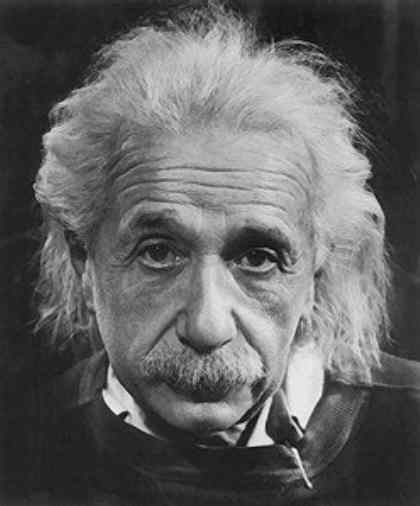
Do we need foreign workers to fix the economy? Who knows. What's clear is that America has always been a magnet for the world's top scientists, from Joseph Priestly to Albert Einstein. Lesser scientists than they are capable of building tomorrow's most agile companies, creating jobs and expanding the economy. Immigration reform is needed to make sure the brains that keep an economy and a society going can find their way here. America built itself on attracting the world's most ambitious, hardworking and intelligent people. Unfortunately, they can no longer come here legally without great difficulties. Reform is needed because now is no time to neglect that tradition of attracting -- and welcoming -- the world's best and brightest.

Wedneday Links: Play Ball!

BOULDER, Colorado -- This week we bring you some stories on how baseball makes math fun, Mikheil Saakashvili and his sexual perversions, and the tantrums of the Military-Industrial Complex. So let's get right to it.

Happy Opening Day! Who wants to do some math? In celebration of the start of the 2009 baseball season, we offer you a few pieces on my favorite aspect of the game, arcane statistical analysis! Eric Neel at ESPN.com writes about how fielding like they're wearing boxing gloves has relegated the likes of Bobby Abreu and (sadly) Adam Dunn to MLB's backwaters, thanks to more sophisticated statistical techniques that prove sucking with the glove really does hurt a team. From the New York Times, Alan Schwarz looks at Diamond Mind, a powerful statistics package that allows anyone with a computer to run their own massive simulations. No more Strat-o-Matic dice and cards for me! And finally, Dana Carvey offers his impression of George Will and his Heideggerian take on the national pastime, in game show form.

New York Times: Who wants a porno massage? Mikheil Saakashvili, that's who! The embattled Georgian president has become quite cozy with an American masseuse with a rather unorthodox technique. His political opponents have made hay out of his massage sessions, but Saakashvili is apparently content to be the Marv Albert of Georgia.

Hearst Photography Biennial: Don't touch that! The winning submission in this year's competition is a collection of photos of the old ladies in Russian museums who shadow your every move to make sure you don't touch anything or take pictures without paying for permission to do so. They can be sour-tempered and mean or enthusiastic and informative, adding a great wealth of knowledge to museum exhibits that are usually pretty short on information.

The Daily Show: America's worst Senate delegation? Barack Obama is upping military spending, but on the wrong stuff, apparently. Northrop Grumman, Lockheed Martin and Boeing want the government to spend money on overpriced, exotic weapons, which we need to kill Somali pirates in rubber dinghies. In this clip Jon Stewart does his stellar impersonation of Joe "GWOT" Lieberman, the Droopy Dog of the Senate. Tag-teaming with Chris Dodd, the handmaiden of AIG, Countrywide, and other financial felons, they make perhaps the worst pair of silver-haired representatives in the country (well, outside of the South).

The Daily Show With Jon StewartM - Th 11p / 10c
Full Metal Budget
thedailyshow.com
Daily Show
Full Episodes
Economic CrisisPolitical Humor


Global Detention Project: Lock 'em up. From the Military-Industrial Complex to the Prison-Industrial Complex, the Global Detention Project recently launched its website. It is an inter-disciplinary research project that examines state responses to migration and the networks of detention facilities that are expanding across the globe. The site features a map of all the immigration detention centers in the US, which they count at 961, with a total capacity of 33,400 detainees. This is only a small portion of America's incarcerated population, which currently stands over two million. Some have had enough of this modern Great Confinement, including the Economist and Sen. Jim Webb of Virginia.

Tilt Shift Photography: Make mine miniature. Don't you wish everything looked like a model train set? Through the wonders of tilt-shift photography, you can accomplish just that. The effect can be achieved either through the use of a special lens or by digitally-altering your photos, which you can upload to this site. The results are quite amazing. Filmmaker Keith Loutit has made a series of films depicting Sydney in this minaturized form.

Moldovans Protest Parliamentary Vote, Violence Sparked by Government Provocateurs?

BOULDER, Colorado -- Moldovan authorities regained control of the country's parliament and presidential administration buildings Wednesday after the capital Chisinau had been gripped by demonstrations sparked by Sunday's parliamentary elections. Protesters claimed that there was widespread vote-rigging by the government. Moldova's communists, led by the country's president Vladimir Voronin, did far better than expected, winning nearly 50% of the vote, ensuring their ability to form a government and choose the next president.

The protests, which began Monday, were led mostly by Moldovan youth movements. More than 10,000 people gathered in the city streets, many waving signs telling people to "trash" the communists. By Tuesday, the protests had devolved into rioting, and the authorities sent in riot police. Protesters stormed the parliamentary building, setting fire to furniture and hurling objects out of the windows, and it was not until Wednesday that the police managed to regain control of the building. Police made 193 arrests over the past three days, and more than 200 police and civilians were injured during the violence.

While sparked by political grievances, the protests also centered around economic concerns. Nearly a third of the country's adult population travels abroad for work, and remittances made up 36% of Moldova's GDP in 2007, making it the most remittance-dependent economy in the world. However, the economic downturn in Europe has caused jobs to dry up, and many workers, especially young people, have been forced to return home, unemployed and dissatisfied with the economic and political stagnation they are witnessing there.

Several of the protesters were waving Romanian and EU flags, demanding closer ties with their western neighbor. The government took this as a sign of foreign provocation, accusing Romania of inciting the riots. While there is a strong Romanian nationalist movement within Moldova, most citizen want closer ties with Romania and the European Union because EU membership would allow easier access to job markets for Moldovan workers and provide the country some degree of collective security from Russia, which supports and occupies its breakaway region of Transdnistria. During the unrest in Chisinau, Transdnistria sent troops (many of them Russian "peacekeepers") to its western border to seal off access, apparently fearing the unlikely scenario that someone from Moldova would flee to the gangster republic.

Some are now speculating that the worst of the violence was actually instigated thugs organized and paid by the Moldovan government. Unimedia has posted photos of several young men they claim were mainly responsible for ransacking the parliament, and may have been told to do so by the police. There are photos of people raising EU and Romanian flags atop the parliament with policemen clearly visible in the background, making no effort to stop them. The site also includes a video of police allegedly placing stones and other projectiles around the parliament for their paid provocateurs to throw.

Russian nationalist and all-around crackpot conspiracy theorist Alexander Dugin somehow managed to place the blame for the riots on Barack Obama. [Note: the preceding link comes from the Moscow News, a Russian government-owned propaganda rag now edited by apologist fool Tim Wall.] He claims that the American government has organized a "color revolution" for Moldova, much like the public uprisings that toppled governments in Ukraine, Georgia and Kyrgyzstan, events he also blames on the US.

Meanwhile, protesters are also putting pressure on Georgian president Mikheil Saakashvili. Tens of thousands gathered in front of parliament to demand his resignation, citing his dictatorial rule and brazen mishandling of relations with Russia, which culminated in last summer's disastrous war in South Ossetia. The protests come on the twentieth anniversary of a brutal crackdown of independence protesters in Tbilisi by Soviet authorities. Soldiers and police killed twenty civilians that day, which is now considered a formative moment in the Georgian independence movement.

Many of the protests in the Moldovan capital were organized by the help of social networking sites Twitter and Facebook. Unfortunately, the country's Internet service provider is the state-owned (and awfully-named) Moldtelecom, which promptly cut off access to the services. Most foreign journalists were not allowed access to the country during the violence, meaning much of the information was disseminated by participants via the Internet. The pictures in this post come from unimedia.info, which contains several galleries of photos and videos of the protests.

While the parliamentary voting was nominally approved by foreign observers as fair, many in Moldova believe that the vote was rigged to keep the communists in power. Voronin will have to step down from the presidency in a few months, as he has reached the constitutional limit of two four-year terms, but it may be very important for him to have a say in choosing his successor. In a move similar to Boris Yelstin passing power to Vladimir Putin in 1999, in part to ensure that the Yeltsin family's corruption would not be investigated by his successor in the Kremlin, the 67-year-old Voronin could keep his own ill-gotten riches safe by passing power to a close political ally. There has been some speculation that he may even choose his son Oleg, though the corruption allegations that have swirled around him make that unlikely.

Tuesday, April 7, 2009

So You Say You Want a Reset Button?

NEW YORK, New York -- Well, you know, we all want to change the world.

Or at least President Barack Obama certainly does, to the delight of Americans and non-Americans alike.

Americans are sick of being hated by other countries; other countries want America to change the way it interacts with them (ironically, it was for this same desire to change others' behavior that President W. Bush gained worldwide wrath). And these are generally fair sentiments.

One of the Obama administration's most visible attempts yet to kick off its foreign policy revolution is a move, first expressed by Vice President Joe Biden in February, to "press the reset button" in relations with Russia. Biden's words were later followed by a gift (as in, what you receive on your birthday, or for Christmas) from Secretary of State Hillary Clinton to Russian Foreign Minister Sergei Lavrov. The gift was a plastic button with the word "reset" inscribed on it in Russian.


Well, almost. The word was peregruzka. And that does not mean "reset," as the New York Times pointed out last month. In other words, the Obama administration went out of its way to inscribe a gift for Lavrov in Russian, only to blow the Russian like a 7th-grader who didn't study for his French test ... only to learn the test was in RUSSIAN!

How did this happen? Part of it is that, to a degree that is hard for most English speakers to fathom, the Russian language relies on a system of word-formation based on adding fixed prefixes and suffixes to a finite number of roots. The prefix pere- means to do something over. A bit like "re-" in English. And the root gruz means a load. So the construction peregruz would logically (and Russian is a very logical language) mean something like a reload.

But as any native speaker of Russian could tell you, while some technical applications -- think of a manual for a microwave in Yakutsk -- may use the word perezagruzka to mean reset, peregruzka is far from there. For better or worse, pere- can also mean to do something excessively, and here peregruzka would actually mean an overloading or overcharge. (In reports in the Russian press about Biden's original statement, the word used for reset in Russian was ... Reset. In English.)

Not surprisingly, Clinton's gaffe did not go unnoticed by Lavrov, her Russian counterpart. The mistake should "contribute to the advancement of Russian in America," Lavrov said.

Well, not quite ...

First impressions matter, and both the incredibly thoughtless mistranslation and Lavrov's reaction to it have great portent for any strategy based on the feeling that the US needs to "reset" the way it treats Russia. From the American side, the bad translation is as inexcusably (there are millions of native Russian speakers in the US! Couldn't they have run it by any one of them?) naive and lacking in forethought as is any talk about unilaterally "resetting" relations with Russia. From the Russian side, Lavrov's instinct to score a cheap point off Hillary is indicative of a Kremlin foreign policy entirely based around scoring cheap points off of "opponents" -- the greatest and most vilified of which is the US.

But why is it naive and thoughtless to "reset" relations with Russia? After all, judging by the ecstatic comments (now skirted off into the Internet ether) that Times readers left in response to the focus on bringing US-Russian relations back to the drawing board, Americans are relieved to hear about the "reset." But the fact is, for all of Bush's many foreign-policy foibles, the US has no need whatsoever to do penance before Russia.

In many ways, there weren't any large problems with US-Russian relations under 43: Bush largely ignored Russia, and that was a good thing. Russian officials since 1917 have been a bunch of pre-modern gangsters who today love to compare the United States to, for instance, Nazi Germany. The best policy in those instances is to do what Bush did -- keep a stiff upper lip, and let the world judge Putin's megalomania for what it is.

Granted, Bush did have mis-steps regarding NATO expansion. But that was less so because he encouraged Georgia and Ukraine to join NATO than because he failed to do it with Europe's support and in so failing was able to be labeled a unilateralist. Kosovo, on the other hand, was recognized with Europe's support -- and Russia, not the US, looks like the loser on that one.

I'd gander that history will show the largest mistakes made by the Bush administration vis-a-vis Russia were 1) when Dubs told the world he had "seen Putin's soul" while letting the man stamp out democracy and 2) the fact that the Bushies continuously failed to unite Europe with itself in policies touching Russia (involving energy, the former Soviet republics and democracy, e.g.).

Looking beyond the absence of any reason to atone for sins (not) done unto Russia, what consequences would any undue penance have? The smart money says it would not change Russia's behavior toward the US is in any positive way, but would merely cause Russia to smell blood in the water. I have no newspapers to cite here beyond personal experience, but when Russians sense weakness -- if you're alone at night, or if you're a racial minority -- they attack. This is especially true of the Kremlin, which takes the most base traits of many Russians and amplifies them. As its relations with its neighbors show, Russia is in many ways a medieval kingdom, like pre-Enlightenment Saxony.

In the case of Hillary's "reset" button gift, the short-term repercussion is that Lavrov, rather than smile and make a polite joke as an American or Belgian or Congolese or Korean diplomat would do, tried to score a cheapshot about teaching those dimwitted Americans foreign languages. The longer-term repercussion is that Russia will smell weakness in the US's bid to "reset" relations and will opportunistically seek to undermine American geopolitical interests while perhaps offering "olive branches" on flighty, noncommittal issues like nuclear non-proliferation. This is already manifesting itself: Chinese calls to unseat the dollar as the world reserve currency (a status that gives America undue influence and flexibility in borrowing money cheaply) originated last month in Moscow, shortly after the "reset" button was given to Lavrov.

The truest, and best, reset: Let them in

The one "reset" Washington should consider in regard to Russia is to dramatically expand access for Russians in getting to the US. No matter how many toy buttons or stuffed animals Hillary gives Lavrov, Russia will continue to rail against the US for domestic consumption (how else can we tell if Putin really is a strong leader than if he's taking on the hegemon with his bare hands?), indoctrinating further generations of US-hating Russians.

The US needs to let Russians come here, study, work, live, immigrate, vacation, buy property, whatever, and let them see that things aren't so bad, planting the seeds for a less anti-American populace and leadership in the future. Instead, we let a very small number of Russians get any sort of visa to the US, and treat them like prostitutes and criminals when they attempt do so. Again, this is based on personal experience rather than any Interweb articles I can cite. But it's another instance of how the Obama administration seems to be losing a few things in translation in its Russia policies.